

The ‘1 Nojor’ media platform is now live in beta, inviting users to explore and provide feedback as we continue to refine the experience.
As Israel intensifies strikes on Iran, Russia remains unusually silent, avoiding military intervention due to its ongoing war in Ukraine and strategic economic ties with Gulf states. Drawing lessons from its failed gamble in Syria, Moscow is instead positioning itself as a neutral mediator. While Iran’s regime faces collapse, Russia sees a chance to retain influence through diplomacy, not force. Rising oil prices from the chaos also benefit Russia economically—turning regional instability into strategic opportunity.
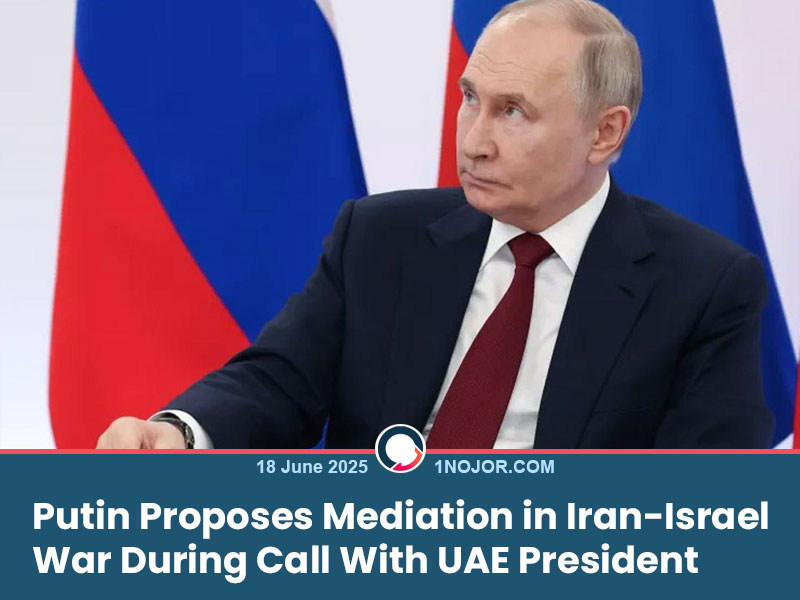
Russian President Vladimir Putin has offered to mediate between Iran and Israel amid escalating tensions in the Middle East. In a conversation with the President of the United Arab Emirates, Putin expressed serious concern over the growing conflict and called for an immediate de-escalation. Both leaders reportedly agreed on the urgency of finding a diplomatic resolution. Meanwhile, Russian state media suggested that the conflict could inadvertently benefit Russia's oil market.
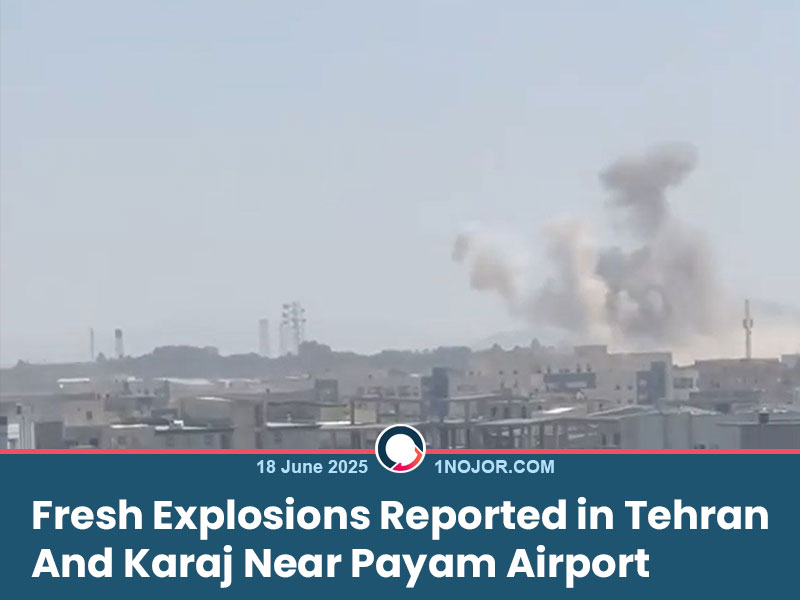
Fresh explosions were reported in Iran's capital Tehran and the nearby city of Karaj. Local sources confirmed that loud blasts were heard near Payam Airport in Karaj, while simultaneous explosions were also reported in the eastern outskirts of Tehran. While authorities have not yet confirmed the specific targets or extent of the damage, a government spokesperson acknowledged that two Iranian banks had recently come under cyberattack. In response, internet access was temporarily restricted in certain areas to manage the situation.
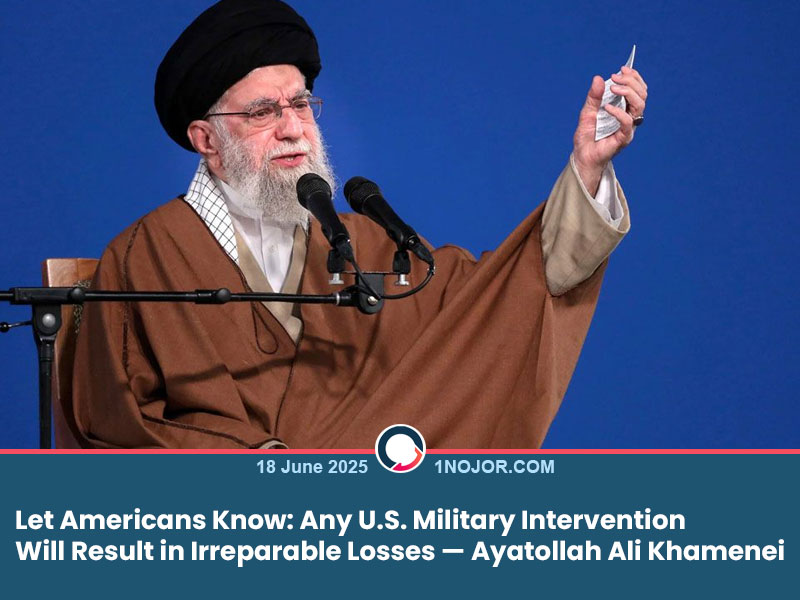
Iran’s Supreme Leader Ayatollah Ali Khamenei issued a stern warning to the United States on Wednesday during a televised address, declaring that any form of U.S. military intervention against Iran would result in "irreparable damage" to America. "Those familiar with Iran’s history know that this nation does not respond to threats," he said. Khamenei also warned Israel, stating it would be forced to pay the price for its "miscalculations," and reiterated that Iran will never surrender or accept defeat under pressure.
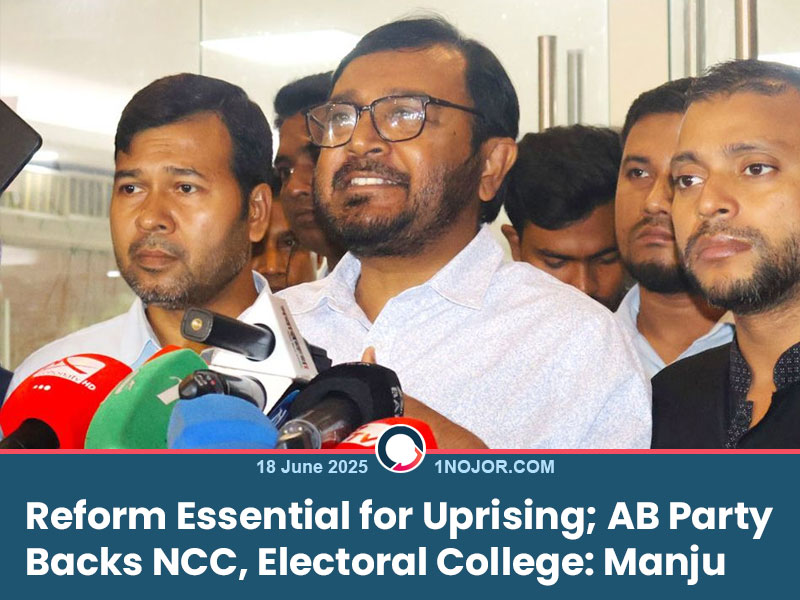
AB Party Chairman Majibur Rahman Manju, speaking at the National Consensus Commission (NCC) dialogue, emphasized that meaningful reforms are essential to honor the spirit of the recent popular uprising. He stated that under the guise of the executive branch, appointments to key constitutional positions have long been made solely based on Prime Minister Sheikh Hasina’s personal preferences. Manju pointed to instances where even Supreme Court judges have publicly declared themselves "pledged politicians," and blamed partisan and incompetent appointments for systemic failures—such as the unprecedented leakage of Public Service Commission exam papers. He stressed that to ensure democratic accountability and prevent the recurrence of fascist tendencies, the AB Party supports the formation of the NCC and endorses the electoral college system for electing the President.
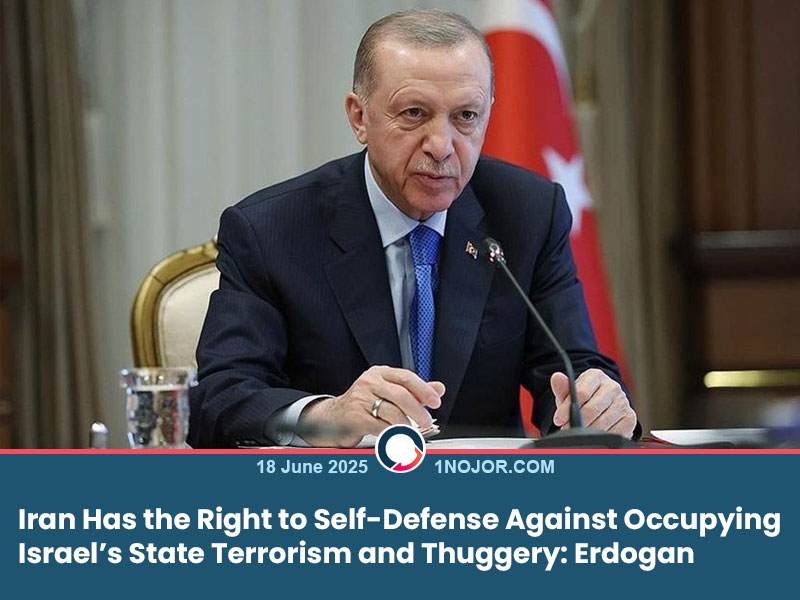
Turkish President Recep Tayyip Erdoğan stated that Iran has the right to defend itself against what he described as “Israeli state terrorism and thuggery.” Calling Israeli Prime Minister Benjamin Netanyahu a “war criminal” and the “greatest threat to regional security,” Erdoğan compared his actions in Gaza to those of Adolf Hitler. “Netanyahu’s crimes in Gaza surpass even the horrors of the Nazis,” the Turkish leader declared.
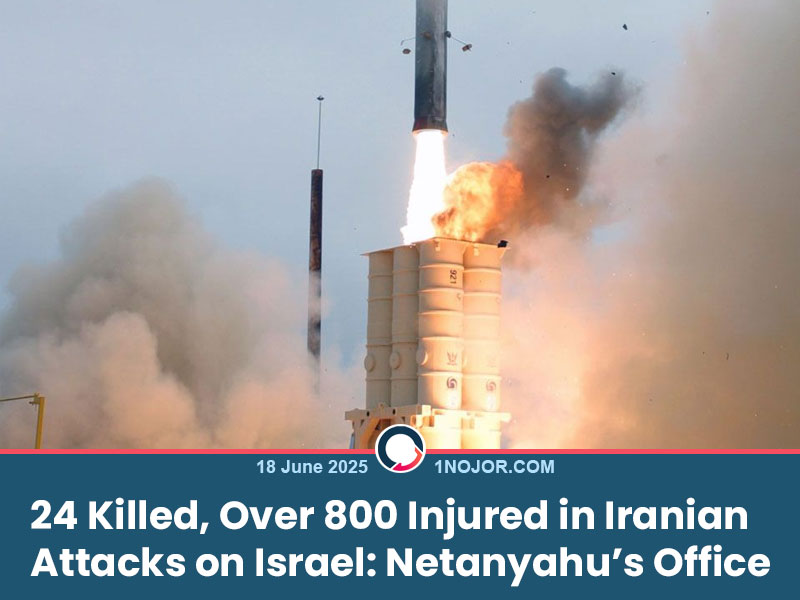
According to Israeli Prime Minister Benjamin Netanyahu’s office, 24 people have been killed and more than 800 injured in Iran's retaliatory strikes on Israel. Over 3,800 residents have been evacuated to safety. Tehran has launched more than 400 missiles and hundreds of drones toward Israel, the office stated. In response, Israeli airstrikes have reportedly killed over 240 people in Iran, including more than 70 women and children.
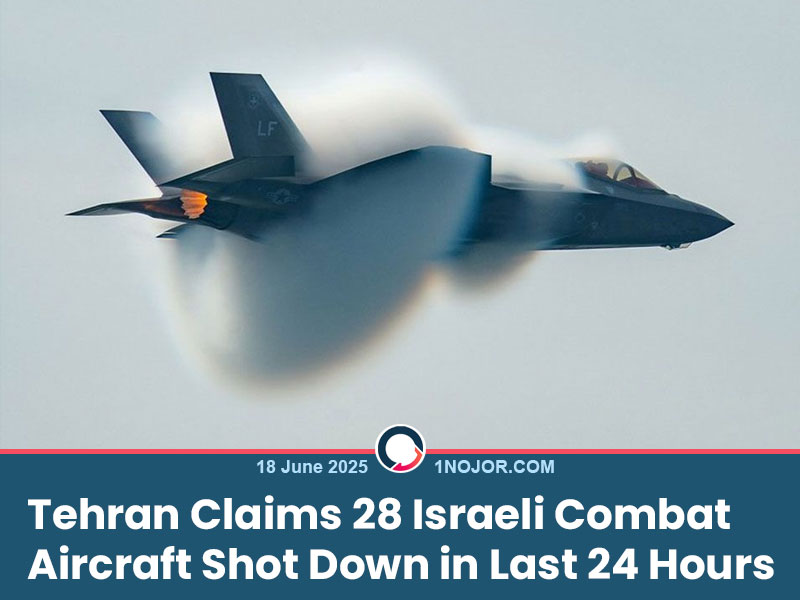
Tehran has reported the downing of 28 Israeli aircraft over the past 24 hours, including Hermes drones—long-range surveillance and attack UAVs frequently used by Israel in Gaza, Lebanon, and Syria—as well as F-16 and F-35 fighter jets. Iran also claims it has intercepted several manned aircraft and successfully countered Israel’s electronic warfare systems.
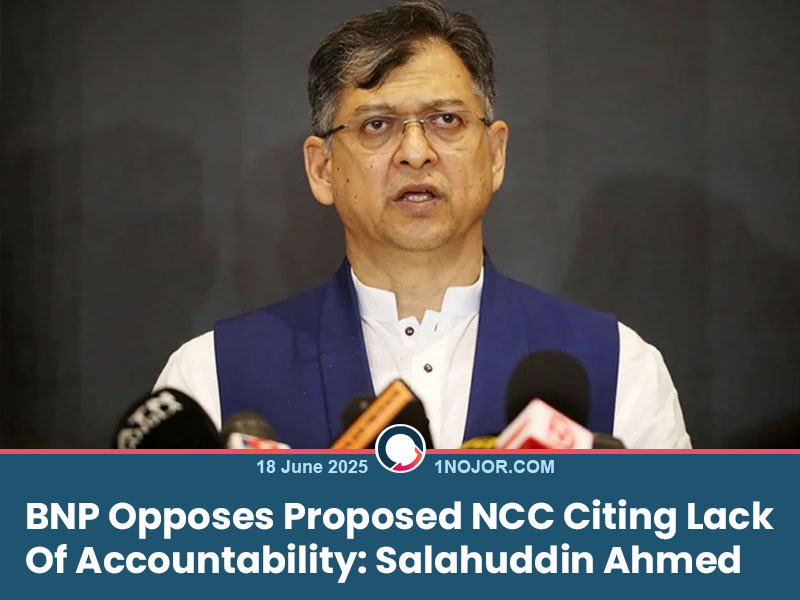
BNP leader Salahuddin Ahmed voiced opposition to the proposed National Constitutional Commission (NCC), citing concerns over inadequate accountability. He argued that the responsibilities intended for the NCC are traditionally carried out by the executive, legislature, or through constitutional provisions. “Creating a new body for these tasks may disrupt institutional balance,” he said. On the matter of presidential elections, he emphasized that members of parliament, along with an upper house if formed, should elect the President, rather than introducing a new electoral mechanism involving approximately 70,000 votes from the grassroots level.
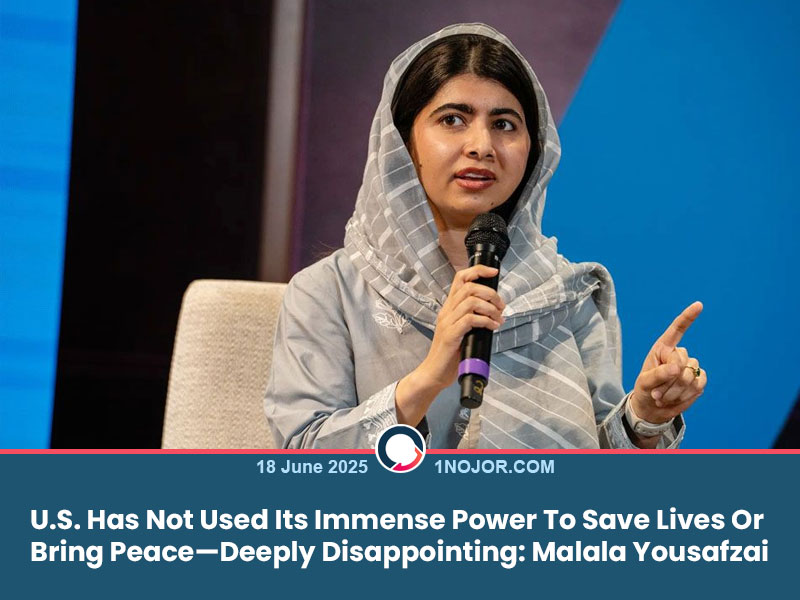
Nobel Peace Laureate Malala Yousafzai criticized the United States for not using its immense global influence to stop the mass killings in Gaza. “It’s deeply disappointing that the U.S. hasn’t acted effectively to save lives, restore peace, or stabilize the region,” she said. Malala urged stronger U.S. action to push for a ceasefire and facilitate humanitarian aid. “I have spoken out about Gaza since 2014—claims of silence are false,” she emphasized.
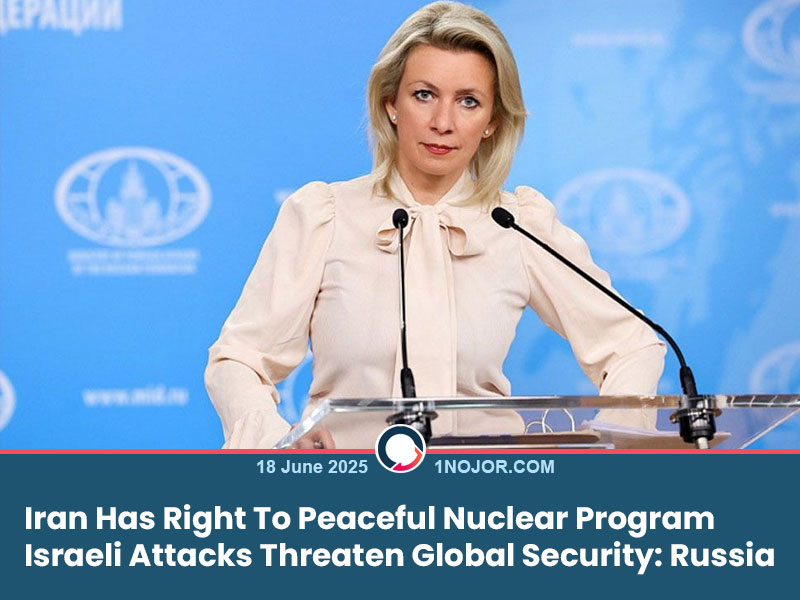
Maria Zakharova, spokesperson for the Russian Foreign Ministry, affirmed Iran’s legitimate right to pursue peaceful nuclear programs. She condemned Israel’s recent attacks on Iranian nuclear facilities, stating they pose a “direct threat to regional and global security.” “Middle East nuclear threats are not theoretical—they are real and escalating,” she warned. Russia’s UN envoy Gennady Gatilov also demanded international accountability for Israel’s actions.
Nurul Islam, Co-Chairman of the Bangladesh Secretariat Employees Unity Forum, has demanded a 50% dearness allowance. He warned that protests would continue at the Secretariat if the ‘Public Service (Amendment) Ordinance 2025’ is not repealed. “We’ve prepared for rallies across all eight divisions,” he stated. “The government’s so-called dialogues have betrayed our trust. Bureaucrats complicit in authoritarianism must be held accountable.” Currently, the government plans to provide a 15% allowance for grades 1–9 and 20% for grades 10–20 employees.
Professor Mamun Mahmud, Convener of Narayanganj BNP, urged party members to remain vigilant against infiltration by opportunists. “Many associates of the ruling party are now trying to join BNP after August 5, some offering as much as one lakh taka,” he said. “I warn our leaders and activists—don’t sell your decades-long political career for the lure of money,” he added, stressing that fascist elements must not be allowed into the party.

In a rare display of political civility, BNP’s Salahuddin Ahmed, NCP’s Nahid Islam, and Jamaat-e-Islami’s Syed Abdullah Mohammad Taher held hands and shared a symbolic message of solidarity. The gesture took place during a break in the National Consensus Commission’s ongoing discussions on reforms related to the women’s reserved seats, bicameral parliamentary system, and the process for appointing the Chief Justice. Following the moment, Salahuddin warmly embraced Nahid Islam in a show of goodwill.

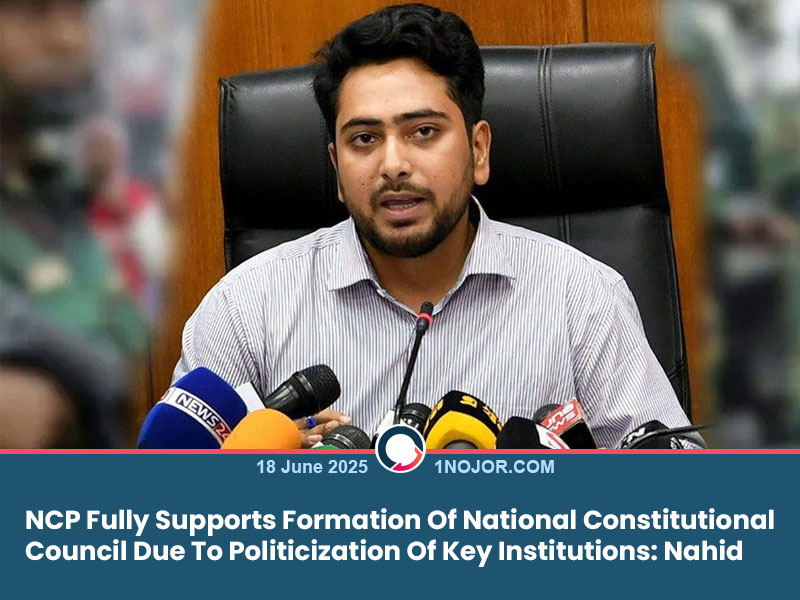
Nahid Islam, Convener of the Nationalist Consensus Party (NCP), expressed full support for the formation of a National Constitutional Council (NCC). He stated that over the years, key constitutional bodies such as the Election Commission, Public Service Commission, Anti-Corruption Commission (ACC), and the Human Rights Commission have been politicized. “Partisan control has undermined their credibility, particularly damaging the electoral process,” said Nahid. “We want these institutions to function independently, free from government interference, and reflect the aspirations of the people.”
The ‘1 Nojor’ media platform is now live in beta, inviting users to explore and provide feedback as we continue to refine the experience.