

The ‘1 Nojor’ media platform is now live in beta, inviting users to explore and provide feedback as we continue to refine the experience.
Jamaat-e-Islami leader Dr. Rezaul Karim launched a scathing attack on Israel, accusing it of genocidal acts that surpass the brutality of pre-Islamic barbarism. He declared that Israel has become a terrorist state and called for its complete eradication from the world map. Karim urged a global boycott of not just Israeli products but also Jewish establishments worldwide. He warned that unless Israel halts its aggression, Muslim youth will be forced to march on Israel.

Islamic scholar Maulana Mizanur Rahman Azharī announced he will physically attend the “March for Gaza” mass protest organized by the Palestine Solidarity Movement Bangladesh. The march will begin from Shahbagh and end at Manik Mia Avenue on April 12 (Saturday). He called on people from all walks of life—regardless of political affiliation—to unite for humanity, justice, and Gaza.

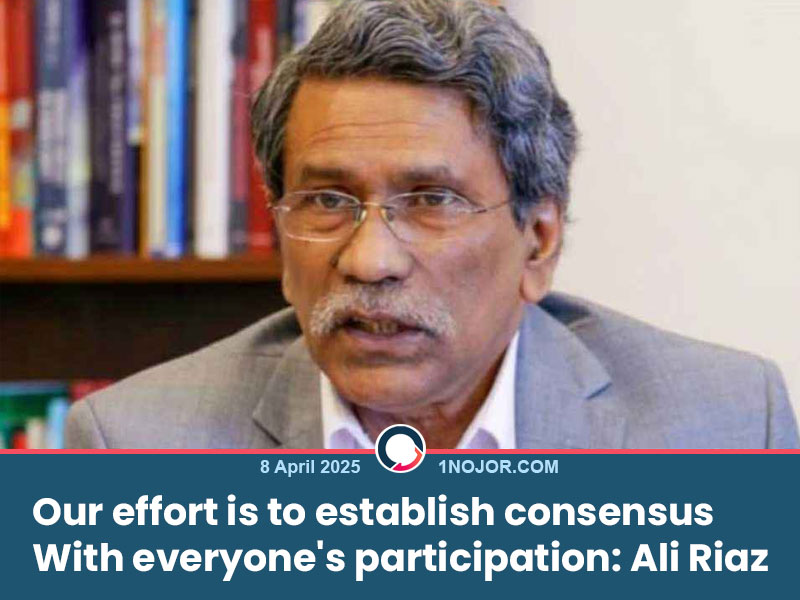
Ali Riaz, Vice President of the National Consensus Commission, emphasized the need for inclusive dialogue to build a true national consensus. Speaking during talks with the AB Party, he said that representation should not be limited to a specific group and that citizens must have avenues to participate in reform discussions. Public input will be gathered through the commission’s website and national surveys, with detailed plans to be announced soon.
The U.S. has revoked student visas of over 400 international students, including five from Bangladesh, for participating in pro-Palestine protests. Senator Mark Rubio claimed many were involved in violent activities. Coordination with universities led to their identification. Restrictions on employment for those involved in protests have also been introduced. Harvard University condemned the move, stating that students were targeted and arrested without its consultation.

As part of the ‘Bangladesh Investment Summit 2025,’ organized by the Bangladesh Investment Development Authority (BIDA), a delegation of 70 foreign investors visited two special industrial zones in Chattogram on the summit’s opening day. They toured factories and received a briefing from Youngone Corporation about its operations in the Korean Export Processing Zone (KEPZ). Investors inquired about product lines, export volumes, employment statistics, and challenges in foreign investment. Despite administrative hurdles, representatives noted that Bangladesh remains a profitable investment destination.

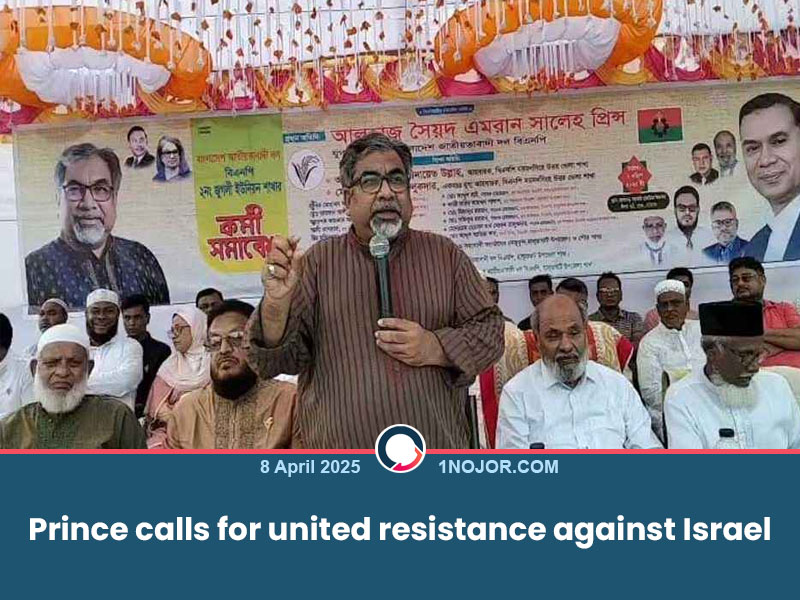
BNP leader Emran Saleh Prince has called on the Muslim world to unite in resistance against Israeli aggression. Highlighting the global protests against the Gaza attacks, he said the world cannot remain silent in the face of such atrocities against Palestinian men, women, and children. He urged the United Nations to take decisive action and demanded timely national elections to address broader conspiracies.
French President Emmanuel Macron strongly condemned Israel’s recent attacks on Gaza and the breach of ceasefire agreements. Speaking at a joint press conference in Cairo with Egypt’s President, Macron called for immediate talks to establish a ceasefire. He reiterated France’s opposition to the forced displacement of people from their homeland and the occupation of Gaza and the West Bank. Macron described the Israeli aggression as a gross violation of international law and a direct threat to regional security. He joined a summit with Egyptian President El-Sisi and Jordan’s King Abdullah II.

Commerce Advisor Sheikh Bashir Uddin has written to the U.S. Trade Representative seeking the removal of unfair tariffs on Bangladeshi exports. He noted that while Bangladesh imposes an average 6.10% duty on U.S. imports (with raw cotton and iron scrap at 0% and 1% respectively), the U.S. has withdrawn preferential treatment and imposed 15% tariffs on all Bangladeshi goods. Bangladesh is now considering adding 100 more U.S. products to its duty-free list as part of ongoing trade cooperation under the bilateral TIFA agreement.

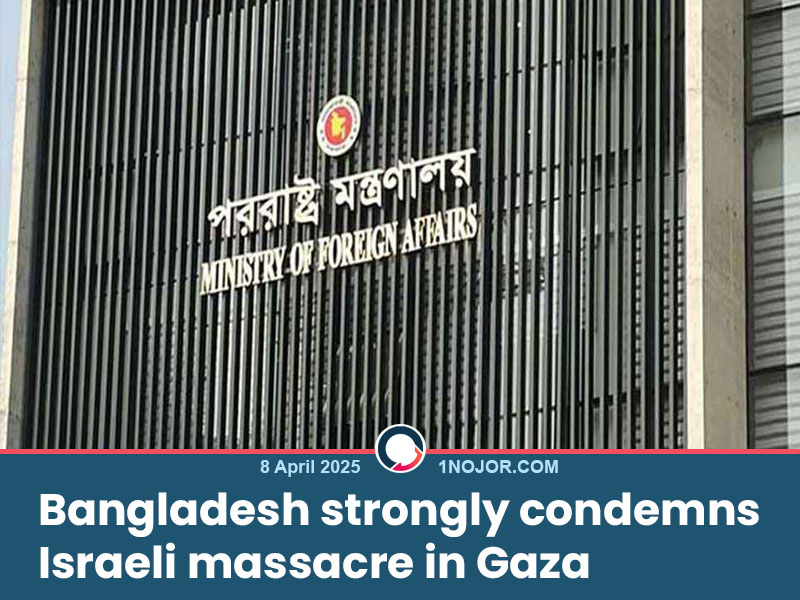
The government of Bangladesh has issued a strong condemnation of Israel’s continued attacks and gross human rights violations in Gaza. In an official statement, it noted that since the ceasefire breach, Israeli strikes have killed numerous Palestinians, many of them women and children, while also blocking humanitarian aid. Bangladesh urged Israel to cease all military actions and uphold international humanitarian law and called upon the UN and global community to take action. It reiterated support for a two-state solution based on pre-1967 borders.
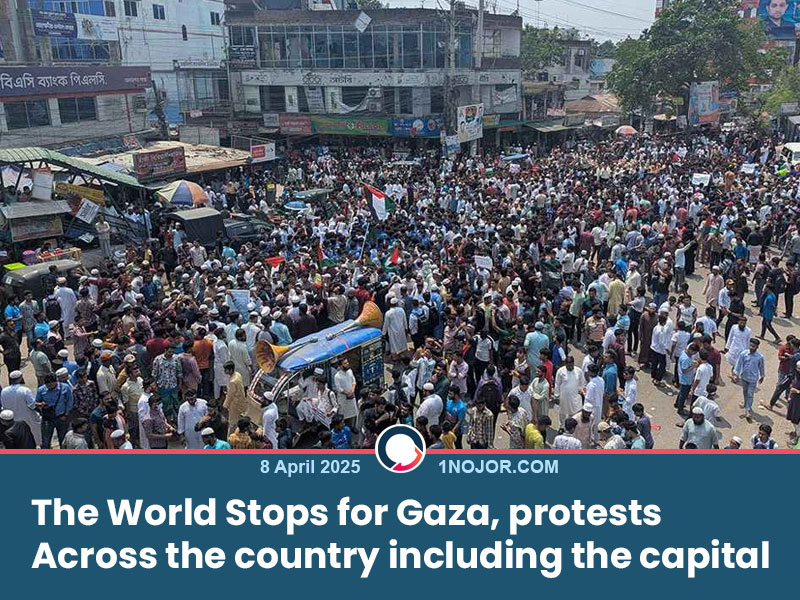
As part of the global ‘The World Stops for Gaza’ campaign, protests and human chains were organized across Bangladesh. Demonstrations were reported in Science Lab, Mohammadpur, and Badda, with students boycotting classes and exams to join. Employees from various institutions also participated, holding placards that read “Free Palestine” and “Stop Killing in Gaza.” BUET students, along with demonstrators at the Raju sculpture and university campuses like JU, RU, JnU, BRUR, BAU, RUET, CUET, GUB, MaWUB, and DUET, joined in support.
Following the launch of 10 rockets toward Ashdod and Ashkelon on Sunday night, Hamas spokesperson Jihad Taha stated that the group possesses the capability to shake Israel. In an interview with Al Jazeera, Taha criticized the international community’s inaction against what he called Israel’s genocide and war crimes in Palestine, carried out by a fascist regime. He said the attacks on Ashdod and Ashkelon were acts of defense. Taha condemned Israeli minister Itamar Ben-Gvir’s visit to the Temple Mount and vowed that as long as Israel continues its occupation, land seizures, and desecration of holy sites, the resistance will persist.

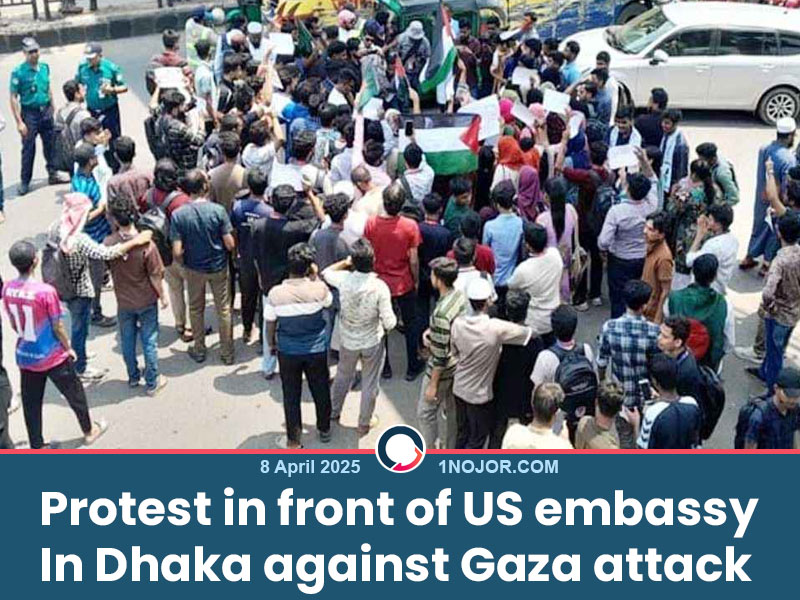
As Israeli attacks in Gaza intensify, a group of youth staged a demonstration in front of the U.S. Embassy in Dhaka to show solidarity with the Palestinian people. Protesters stated their unwavering moral stance against this brutality and chanted slogans in support of Gaza. Security forces, including military personnel, were deployed in the area, forming a human barrier and conducting searches. Police later confirmed that the protest remained peaceful.
Sargis Alam, Chief Organizer of the NCP, accused Indian PM Narendra Modi of further cementing his status as an extremist Hindu nationalist. Referring to the approval of the controversial Waqf Bill, Alam called it a “black law” that compromises India’s secular democratic ideals. He stressed that true national consensus in India requires removing leaders like Modi from power.

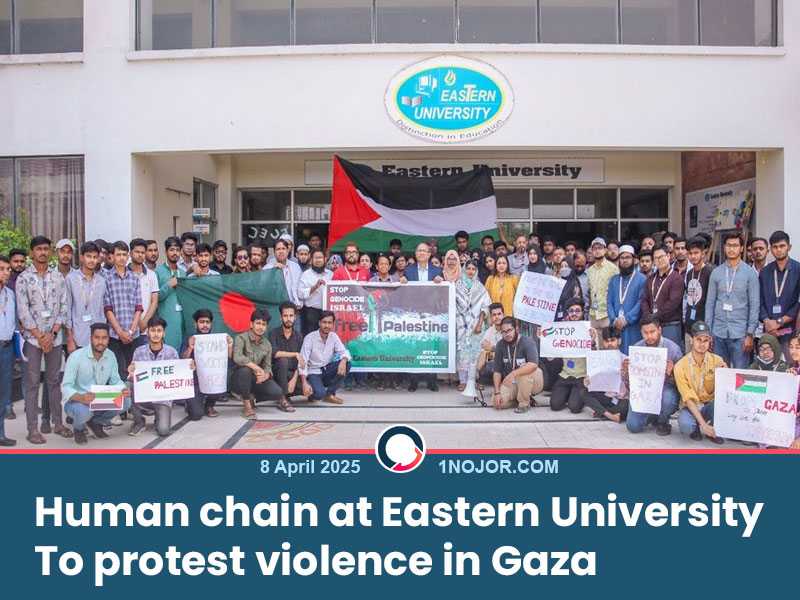
Students, faculty, and staff of Eastern University formed a human chain in front of the university’s main gate on Monday to express solidarity with the people of Palestine. They protested peacefully against the ongoing violence and humanitarian crisis in Gaza, holding placards, participating in prayers, and condemning the oppression and human rights violations. The protestors demanded an immediate end to the attacks and called for an end to the occupation of Palestinian territories. Academic activities at Eastern University were suspended for the day. Several other private universities, including BRAC, ULAB, and East West, also observed a “No Work, No Class” day in solidarity with Palestinians.
At a protest rally in Dhaka against Israeli aggression in Gaza and India’s controversial Waqf Bill, the Dhaka Committee of the National Committee for People’s Rights (NCP) voiced strong condemnation. Speaking at the event, NCP Member Secretary Akhtar Hossain declared, “Just as a ‘July revolution’ has occurred in Bangladesh, a day will come when Palestine too will witness its own July.” He criticized global powers that continue to defend Israel’s crimes against humanity and called on the international community to take immediate and effective steps to stop the genocide in Gaza. Akhtar also demanded the cancellation of surveillance equipment procured from Israel during the Awami League’s tenure, labeling it a threat to Bangladesh’s sovereignty and independence. The protest also included strong condemnation of India’s recently passed anti-Muslim Waqf Bill, with NCP leaders accusing both Israel and India of targeting Muslim communities with oppressive policies.

The ‘1 Nojor’ media platform is now live in beta, inviting users to explore and provide feedback as we continue to refine the experience.