

The ‘1 Nojor’ media platform is now live in beta, inviting users to explore and provide feedback as we continue to refine the experience.
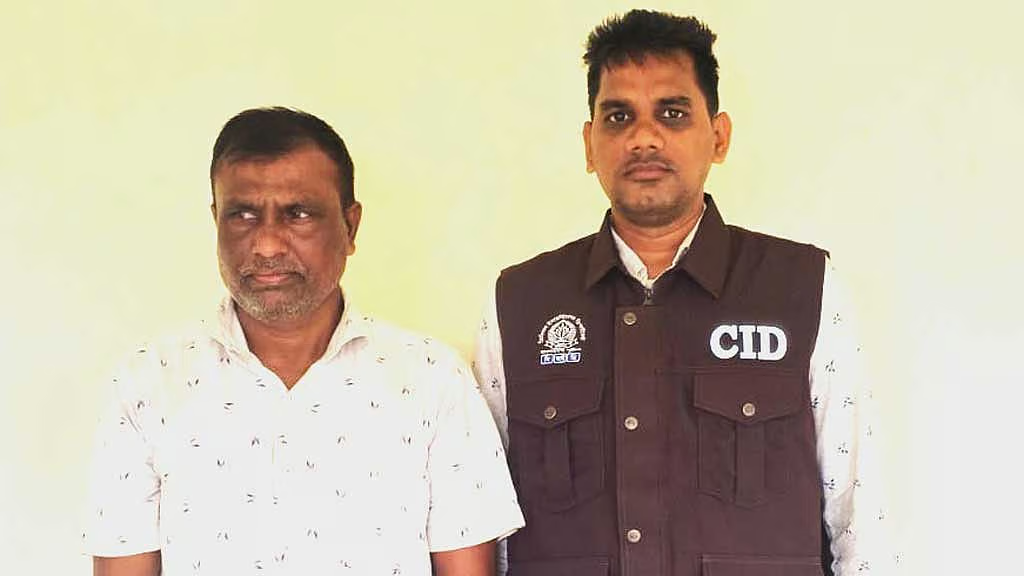
Eighteen Bangladeshi migrants died in the Mediterranean Sea in March 2026 while attempting to reach Greece through a human trafficking network. The Criminal Investigation Department (CID) arrested Mohammad Mikail Islam, 52, from the Sylhet airport area on Monday in connection with the case. He is a resident of Mithapur village in Dirai upazila, Sunamganj. The arrest followed a case filed by the father of one victim, identified as Masum (pseudonym), at Dirai Police Station. According to the case statement, Masum and Mikail were from the same village. The trafficking group promised to send Masum to Greece in exchange for 1.3 million taka, with partial payments made before and after arrival. Masum’s family paid 400,000 taka through a bank and 150,000 taka in cash to Mikail. After being taken to Libya, Masum and 44 others were sent by boat toward Greece on March 21. Adverse weather left the vessel stranded for days, leading to severe shortages of food and water. Eighteen Bangladeshi passengers, including Masum, died from hunger, thirst, and exhaustion. Survivors said traffickers ordered the bodies to be thrown into the sea. The CID’s anti-human trafficking unit is currently investigating the case.
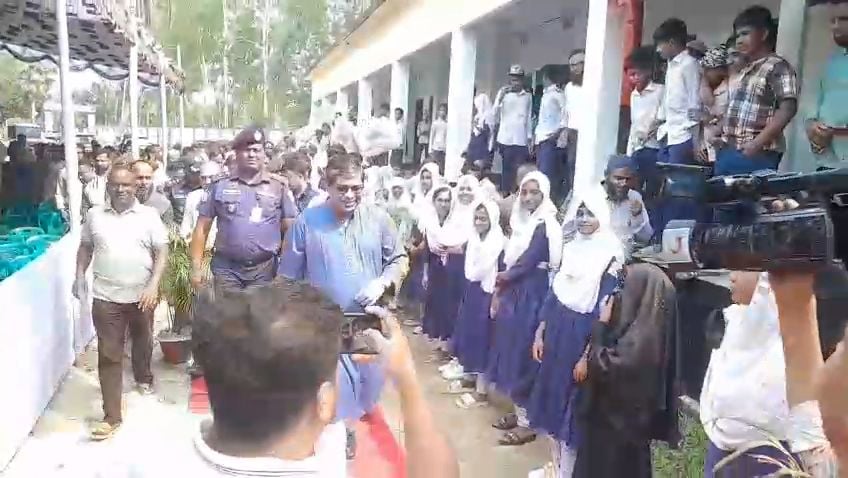
State Minister for Local Government Mir Shahe Alam has come under renewed criticism in Shibganj, Bogura, after more than fifty students were reportedly made to stand under the scorching sun for about 20 minutes to welcome him. The incident occurred on Wednesday, June 17, at the Rokeya Sattar Secondary School field during a government event distributing family cards and saplings to 428 beneficiaries. The program was part of the Family Card distribution initiative announced by Prime Minister Tarique Rahman. The event was attended by the Bogura Deputy Commissioner, Superintendent of Police, and other officials. Videos of students standing in the heat went viral online, sparking widespread criticism and questions about the justification for involving schoolchildren in such a manner. A student said classes were shortened for the event, while a parent and the head teacher gave differing accounts of class schedules and participation. The Shibganj Upazila Nirbahi Officer said he was unaware of the matter, while the Bogura Deputy Commissioner defended the program as a state event permissible at school grounds during special occasions.
Iraq’s campaign in the 2026 FIFA World Cup began with a heavy 4–1 defeat to Norway, but the match became historic for another reason. In the 58th minute, 22-year-old midfielder Zidane Iqbal entered the field, becoming the first footballer of Pakistani origin to play in a FIFA World Cup. Despite Iraq’s disappointing performance, Iqbal’s appearance marked a milestone for both Iraq and South Asian football. Iraq also ended a 40-year drought by scoring their second-ever World Cup goal through striker Ayman Hussein. Born in Manchester to a Pakistani father and an Iraqi mother, Iqbal was eligible to represent England, Pakistan, or Iraq internationally. He ultimately chose to play for his mother’s country, Iraq. Proud of his mixed heritage, Iqbal wears boots featuring both the Iraqi and Pakistani flags, symbolizing his dual identity. His football journey began at Manchester United’s academy, where he became the first Iraqi to play for the senior team in 2021 before joining Iraq’s national side in 2022. Although Iraq’s loss was a setback, Iqbal’s debut and Hussein’s goal are expected to remain memorable moments in football history.

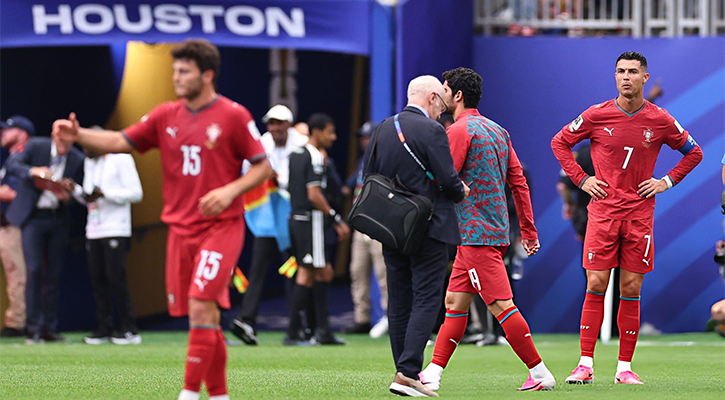
Portugal began their World Cup campaign with a disappointing 1-1 draw against DR Congo on June 18, 2026. Despite dominating possession and creating several chances, Roberto Martinez’s side failed to secure victory. João Neves opened the scoring in the sixth minute with a header from Pedro Neto’s cross, but Portugal could not extend their lead. Cristiano Ronaldo, largely ineffective throughout the match, missed a clear opportunity to restore the advantage in the second half. DR Congo gradually grew into the game after conceding early. The African side equalized in first-half stoppage time when Yoane Wissa headed in from an Arthur Masuaku corner. In the second half, Portugal had a goal disallowed for offside and survived a close attempt from Cédric Bakambu. Despite late substitutions, including Rafael Leão and Gonçalo Ramos, Portugal could not find a winner. The result saw Portugal drop two valuable points in their opening match, while DR Congo celebrated one of the most significant results in their football history.
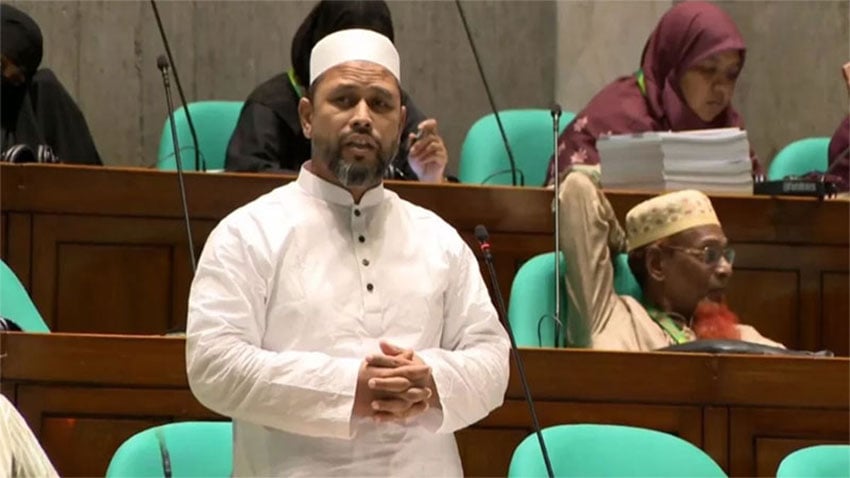
Jamaat-e-Islami lawmaker Hafez Abdul Muntakim from Nilphamari-4 has drawn widespread criticism after claiming in parliament that his father was martyred in the 1971 Liberation War, though his father is reportedly alive. On June 14, during a budget discussion in the National Parliament, Muntakim spoke about his family's contributions to the war, asserting that his father and grandfather were martyrs and that his family had 47 freedom fighters. However, a field visit to his village home in Dholagach, Syedpur, revealed that his father, Md Abdul Kader Sayedee, is still living. Following the circulation of his remarks on social media, users and observers examined his election affidavit and public records, discovering inconsistencies. According to his affidavit and Wikipedia, Muntakim was born on January 10, 1981, a decade after the war ended, prompting questions about his claim. Facing criticism, Muntakim later clarified that he meant his grandfather’s brother, not his father, was martyred. Under parliamentary rules, the Speaker has the authority to remove or nullify any unparliamentary or misleading statements from the official record.
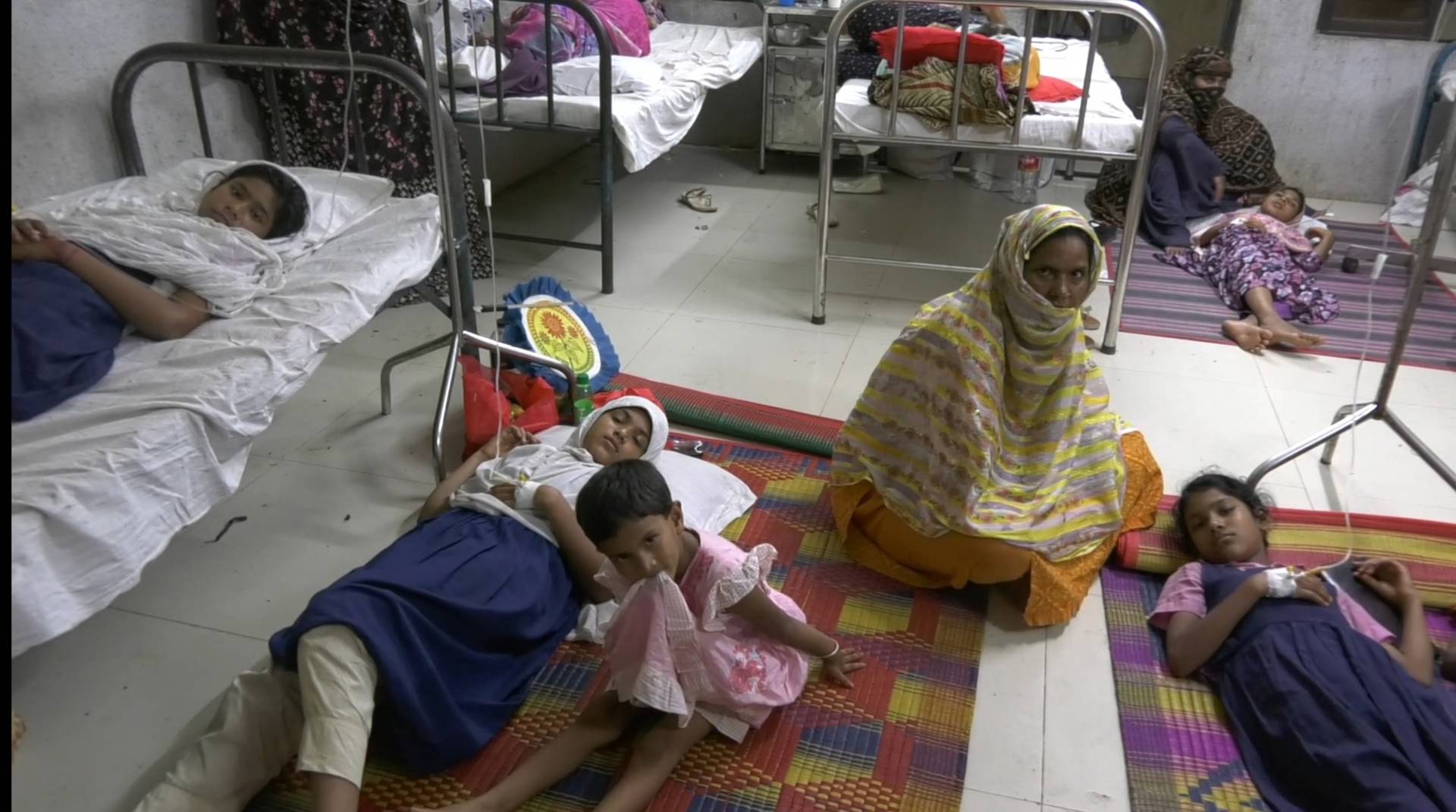
Fifteen students of a primary school in Chapainawabganj Sadar upazila fell ill after eating food provided under the school feeding program. Ten of them were admitted to the 250-bed district hospital between Wednesday afternoon and 8 p.m., according to District Primary Education Officer Saiful Islam and hospital resident physician Mahbub Hasan. Saiful Islam said the students of Salim Dolpara Government Primary School were served eggs and bread under the program. Shortly after eating, several students began to feel unwell. Initial treatment was given locally, but ten students were later hospitalized as their condition worsened. The food had been supplied by a local NGO, Gram Unnayan Karmo (GUK). Samples of the food have been collected and sent for laboratory testing. Dr. Mahbub Hasan said the hospitalized students are now in stable condition. He suggested that low-quality or unhygienic food and excessive heat might have caused the illness. Attempts to contact GUK officials were unsuccessful. The NGO had previously been fined for similar incidents in other schools in the district.
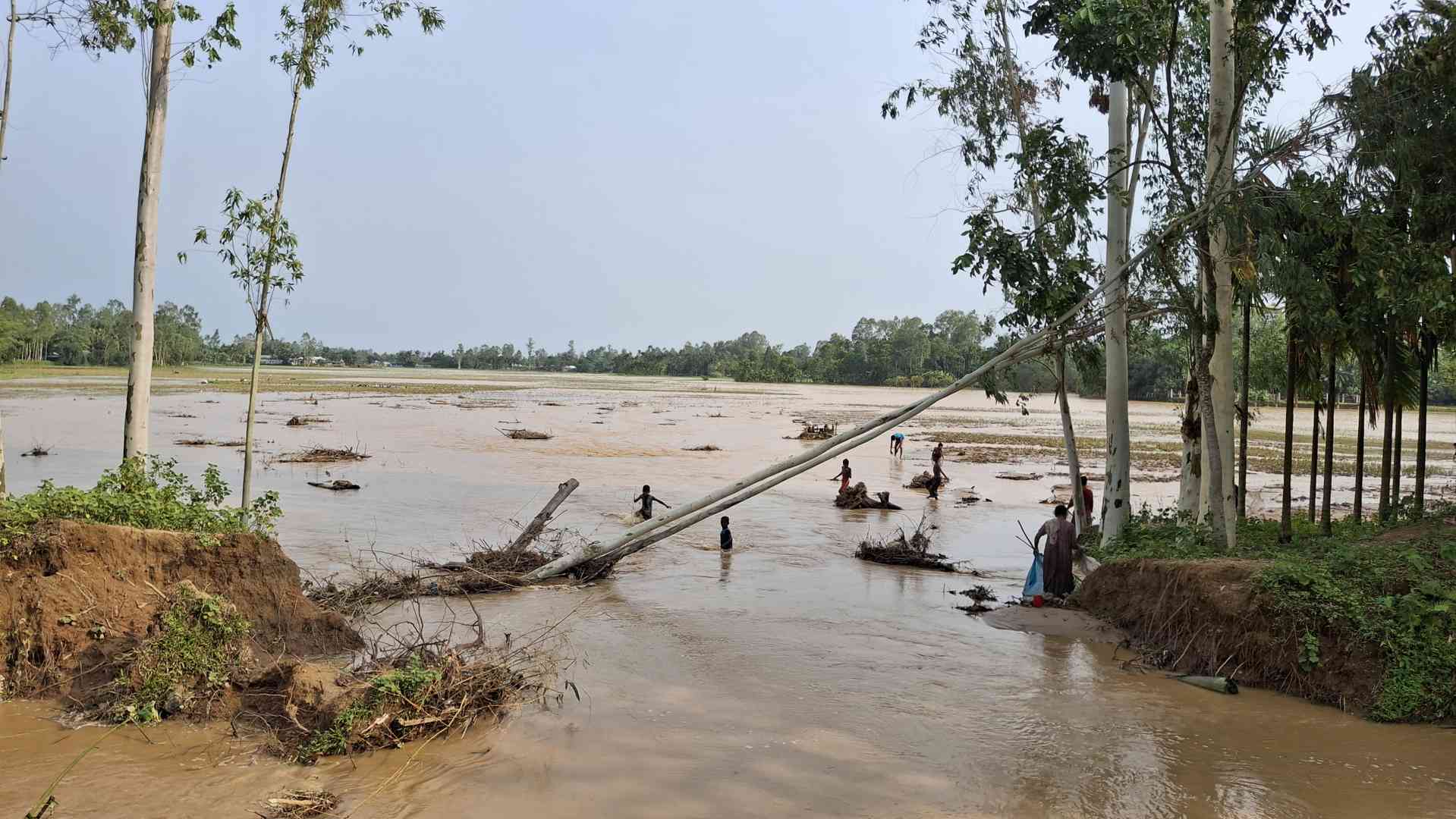
An embankment in the Palashtola Bakkar Mor area of Dhanua Kamalpur Union, Bakshiganj upazila of Jamalpur district, was breached by floodwaters following heavy rainfall and hill runoff. The breach has allowed water to enter low-lying areas, raising fears among local farmers of severe damage to Aus paddy and jute crops. According to local sources, a section of the embankment had already collapsed about a month ago due to heavy rain, causing significant losses to Boro paddy at that time. Despite the earlier damage, no effective repair work was undertaken, and the recent downpour and hill floods have worsened the situation. Farmers now fear that hundreds of acres of farmland could be submerged if the embankment is not repaired immediately. Local farmers have urged the administration and the Water Development Board to take urgent action to repair the damaged embankment and protect their farmland and crops from further destruction.
U.S. President Donald Trump and Iranian President Masoud Pezeshkian have signed a memorandum of understanding (MoU) aimed at ending ongoing conflicts between their countries and allies. The signing took place at the Palace of Versailles in Paris, where Trump confirmed the agreement while attending the G7 summit. French President Emmanuel Macron shared a short video of the signing on social media, and Iran’s government later confirmed Pezeshkian’s electronic signature on the document. Pakistani Prime Minister Shehbaz Sharif, who mediated the talks, announced that the agreement takes effect immediately. According to Iran’s Foreign Ministry spokesperson Esmail Baghaei, the MoU was signed electronically from separate locations, with no formal ceremony planned. The 14-point document outlines an immediate and permanent ceasefire across all fronts, mutual respect for sovereignty, and a 60-day timeline to reach a final agreement. It also includes provisions for lifting U.S. sanctions, restoring maritime trade, and initiating a $300 billion reconstruction plan for Iran. The final accord will be submitted to the UN Security Council for approval. The early signing came a day before a planned ceremony in Switzerland, signaling both nations’ urgency to implement the ceasefire and begin the peace process.

In Feni, a group of activists from the banned Awami League organized a sudden flash procession on Wednesday morning. Around 15 to 20 young men wearing masks marched under the banner of Feni Sadar Upazila Awami League along Station Road. The event drew attention after a video clip of the procession spread on Facebook later in the day. The video showed participants carrying a banner featuring images of Sheikh Mujib, Sheikh Hasina, and Alauddin Nasim while chanting slogans in support of the Awami League and Sheikh Hasina. The procession began at Station Road and ended at the nearby railway station platform. Police later conducted an operation in the area and arrested four individuals who had taken part in the march. Feni Model Police Station Officer-in-Charge Gazi Muhammad Fouzul Azim confirmed the arrests and said that legal action is underway regarding the incident.

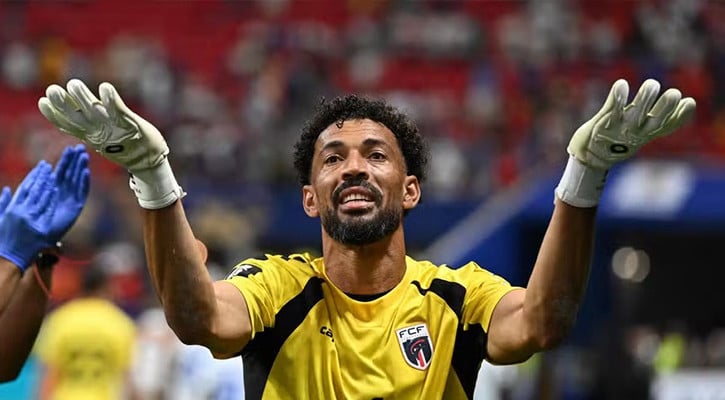
The United States administration has stepped in to assist the mother of Cape Verde goalkeeper Vozinha after she was unable to attend her son’s historic World Cup debut against Spain due to visa and financial barriers. The match, which ended in a 1-1 draw, was one of the biggest surprises of the 2026 tournament, with Vozinha’s performance earning global attention. His emotional revelation that his mother could not be present because of strict US visa rules and a high security deposit prompted a response from the US State Department. According to a CNN report cited in the source, a State Department representative confirmed that they had contacted Vozinha’s family and promised full diplomatic support for the visa process. The department clarified that the large deposit requirement, introduced during the Trump administration for citizens of about 50 countries including Cape Verde, would not apply to close relatives of World Cup players. However, officials noted that no visa application from Vozinha’s mother had yet been recorded, as she currently lacks a valid passport and is in the process of obtaining one. The US government’s intervention has raised hopes that once the passport issue is resolved, Vozinha’s mother may soon join the stands to witness her son’s achievements firsthand.
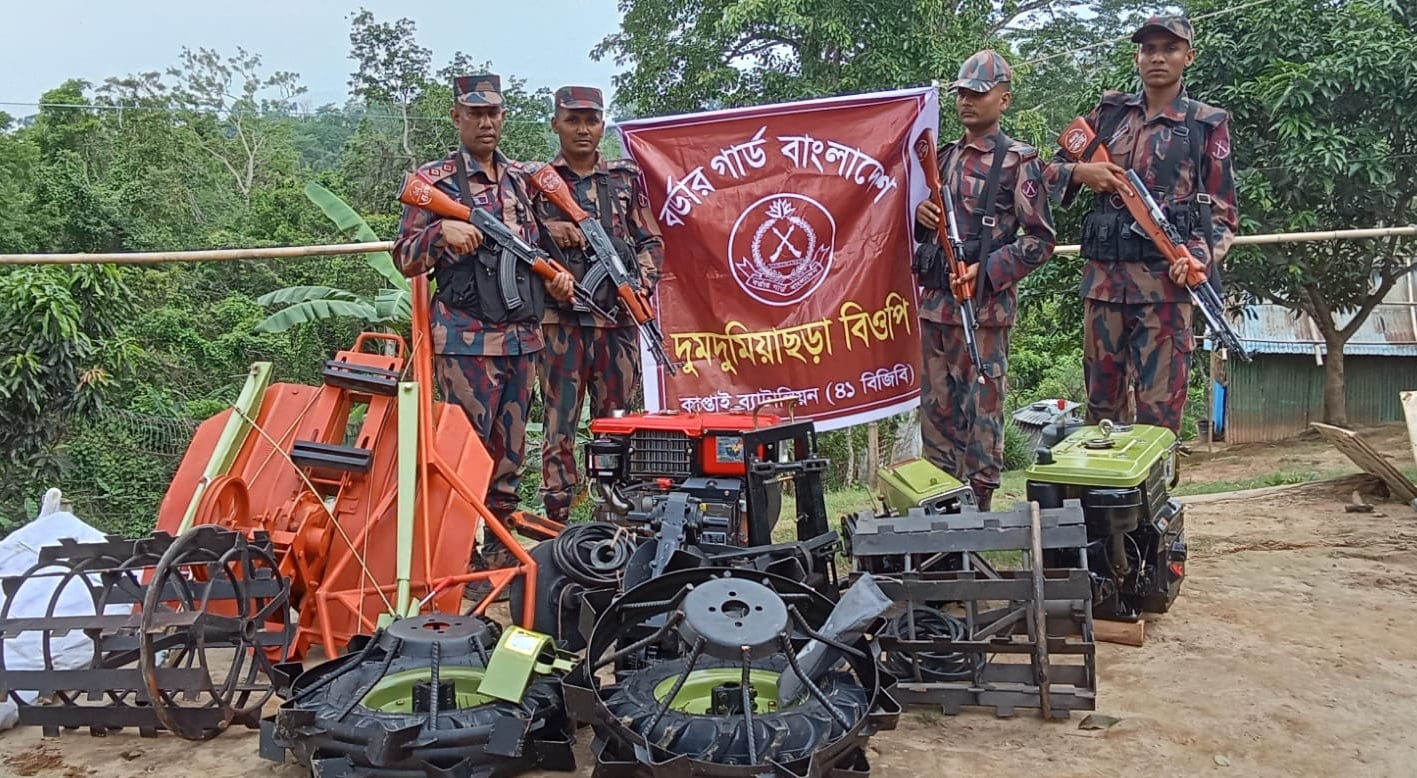
The Border Guard Bangladesh (BGB) has intensified vigilance and professionalism to ensure border security, prevent smuggling, and stop the illegal transfer of state assets. Lieutenant Colonel Kawsar Mehdi, commander of the Kaptai Battalion, confirmed the heightened alert following a recent operation in the Dumdumiyachhara area of Rangamati. During the operation, BGB personnel seized two mini power tillers and related equipment that were being transported to India for smuggling. The seizure, valued at approximately four lakh taka, took place at a checkpoint under the Dumdumiyachhara Border Outpost. According to BOP Commander Naib Subedar Amirul Kawsar, the confiscated goods are being processed for handover to customs authorities following legal procedures. Lieutenant Colonel Kawsar stated that BGB operations will continue in the future to prevent all forms of illegal activities along the border.
A BNP activist named Mithu Ali, aged 50, died after being trampled during a reception event celebrating the release of BNP leader Abdullah Al Raihan in front of Chapainawabganj District Jail on Wednesday afternoon. Another person was injured in the incident. Witnesses said the crowd became uncontrollable as hundreds of party members gathered to welcome Raihan, who had been released on bail in a case involving the assault of a police constable. Raihan, president of the Gomostapur Union BNP, had been arrested on May 9 in connection with the case filed by Constable Md. Shawkat. After his release, supporters greeted him with garlands, slogans, and a motorcycle rally. During the celebration, Mithu Ali collapsed amid the heat and crowd pressure and was later declared dead at Chapainawabganj District Hospital. Police confirmed the incident and said an investigation is underway. The death has cast a shadow of grief over the area and sparked political discussion locally.
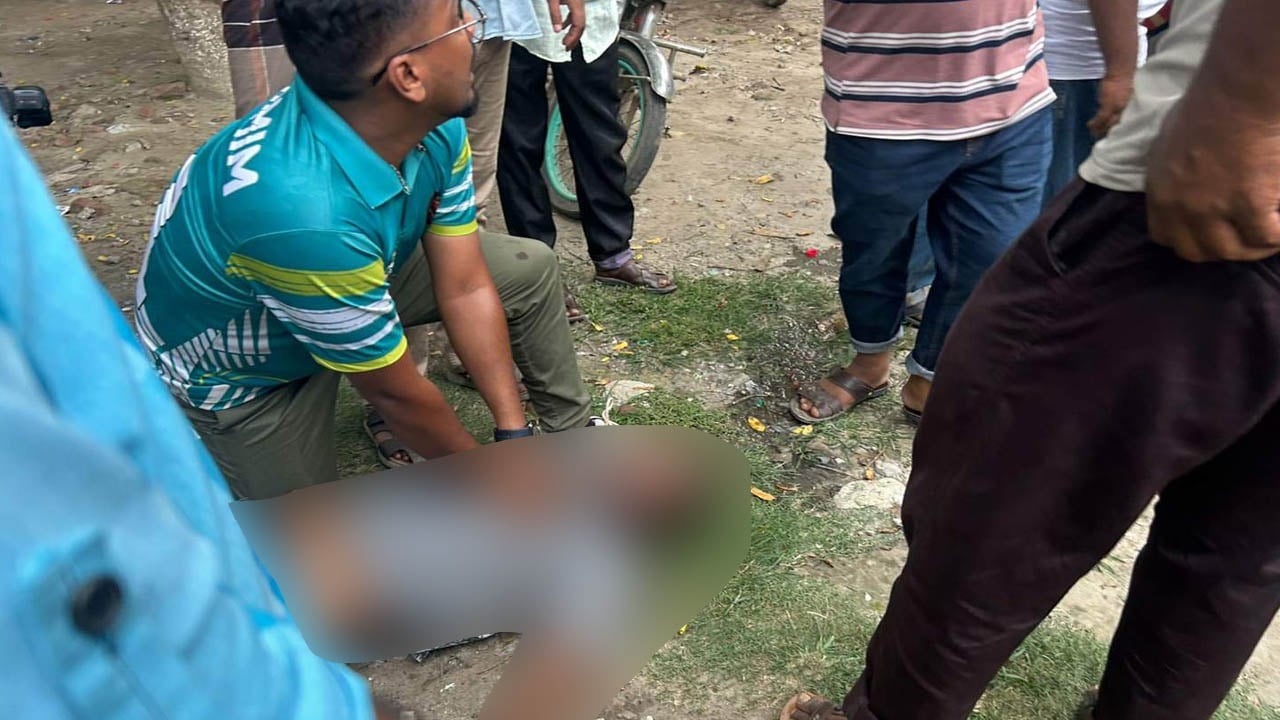
Russia’s state nuclear corporation Rosatom has announced that its experts will soon return to Iran’s Bushehr nuclear power plant. The statement came as Rosatom called for diplomatic solutions and mutual understanding regarding Iran’s nuclear program. Rosatom chief Alexey Likhachev said the Bushehr facility remains a top priority for the company and welcomed efforts involving the International Atomic Energy Agency (IAEA) to reach an agreement on Iran’s nuclear activities. Likhachev urged the IAEA to consider the interests of all parties involved in the negotiations. The announcement follows earlier security concerns after multiple attacks on the Bushehr plant during U.S. and Israeli military operations against Iran. In April, Rosatom had withdrawn about 200 personnel from the site due to heightened risks. The latest statement signals Russia’s intention to maintain long-term involvement in the Bushehr project while reaffirming Moscow’s preference for dialogue and diplomatic resolution amid ongoing international tensions over Iran’s nuclear program.

Two school students drowned in the Meghna River at Sonargaon in Narayanganj on Wednesday afternoon while bathing with friends. The victims were identified as Meraj Hossain, a tenth-grade student of Barnamala School, and Kayes Bhuiyan, an eighth-grade student of A.K. School and College. Both were residents of Dhaka. Their bodies were recovered by a fire service diving team four hours after they went missing. According to classmates, a group of seven students from the two schools skipped classes and went to the river to bathe. Two students initially went underwater, and when Meraj and Kayes tried to rescue them, they were swept away by the river’s current. None of the students knew how to swim. Upon receiving the news, the Narayanganj Fire Service launched a rescue operation and later handed over the recovered bodies to the families. Officials from the fire service and the local river police described the incident as tragic and confirmed that the bodies were recovered and returned to the families after the operation.
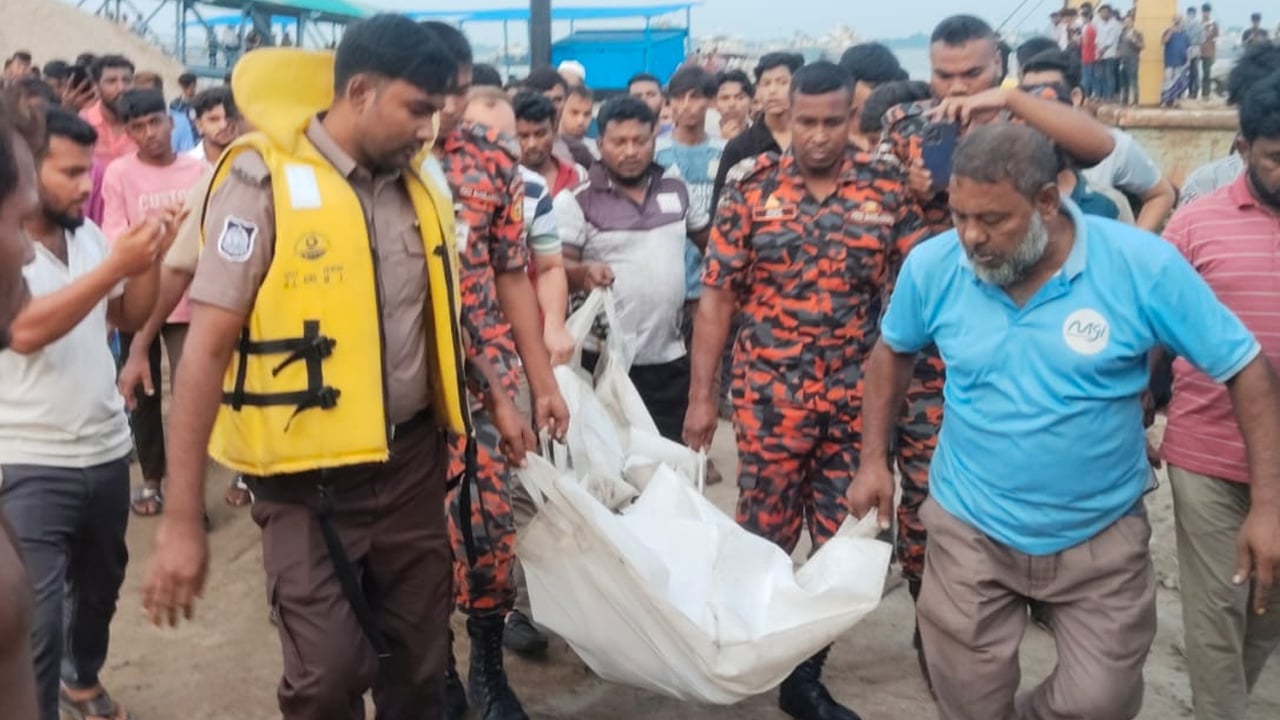
Dhaka Deputy Commissioner Farida Khanam has said that the Family Card program will become a symbol of empowerment for underprivileged families. She made the remarks on Wednesday at the inauguration ceremony of the Family Card program held at the Ruhitpur Upazila Parishad field in Keraniganj. In this third phase, a total of 1,275 families from two unions of Keraniganj upazila are receiving the cards. Farida Khanam explained that the initiative reflects the government’s vision that the family, not the individual, is the core unit of development. The Family Card aims to bring genuinely poor, helpless, and disadvantaged families under an integrated social security framework. Currently, more than 95 social safety programs are being implemented through 23 ministries, and the Family Card is designed to unify these scattered services under one platform. She added that the card will help transform social security from a donation-based system into a citizen’s right and may eventually serve as a universal social identity card for accessing government services more easily.
The ‘1 Nojor’ media platform is now live in beta, inviting users to explore and provide feedback as we continue to refine the experience.