

The ‘1 Nojor’ media platform is now live in beta, inviting users to explore and provide feedback as we continue to refine the experience.
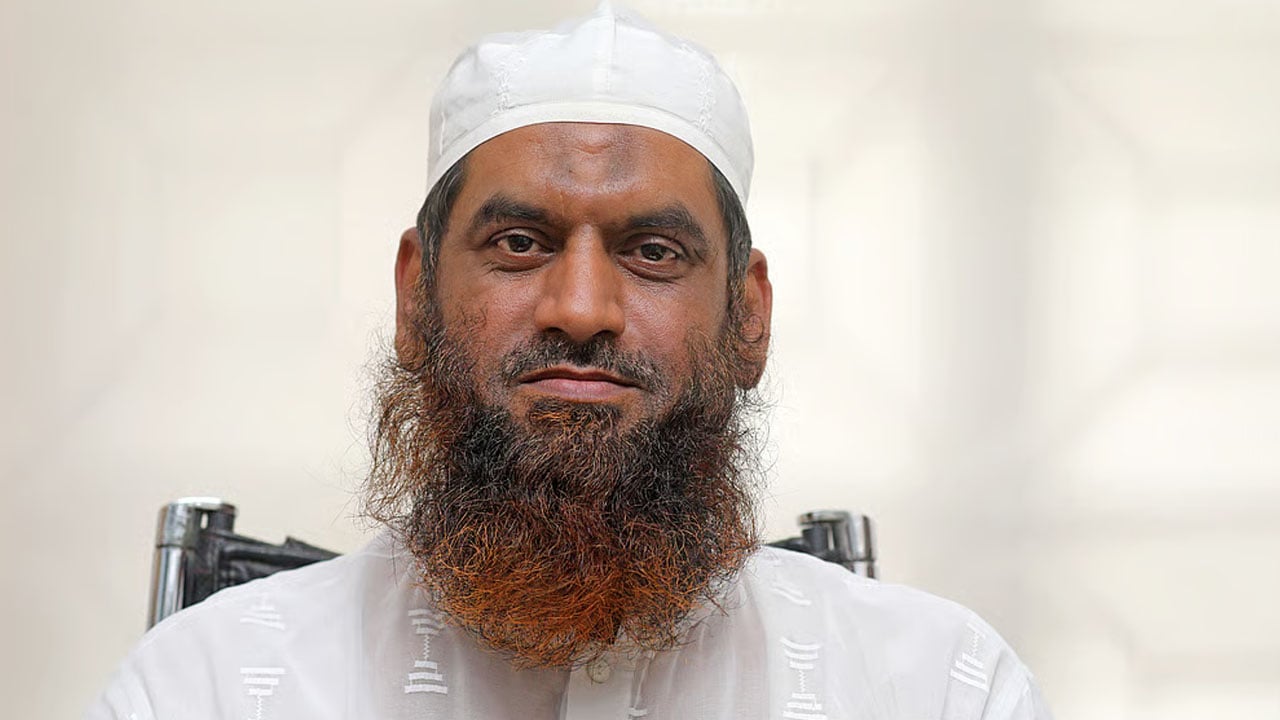
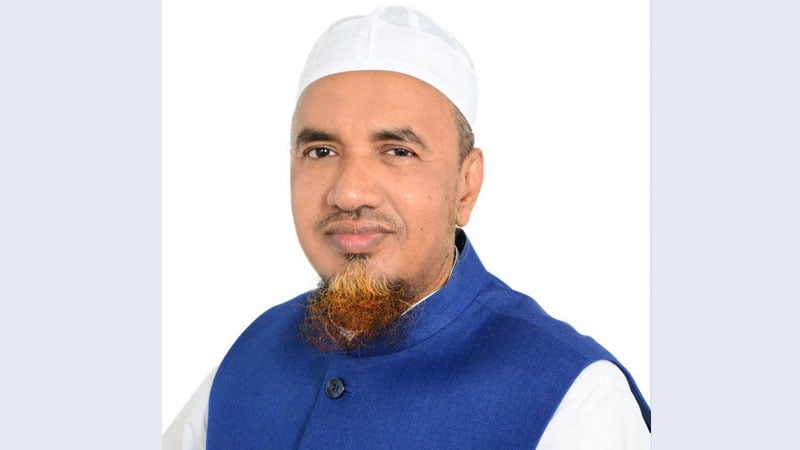
Bangladesh Khelafat Majlis Amir Maulana Mamunul Haque stated that the BNP is a failed version of the Awami League, while the Awami League is a successful BNP. In a Facebook post on Friday, he criticized the current government for mishandling several issues, including the Islamic Bank crisis, inflation, and the appointment of music teachers in primary schools. He expressed concern that the BNP government is repeating the authoritarian tendencies of the Awami League at the beginning of its tenure. Haque alleged that the government’s actions toward Islami Bank Bangladesh PLC could destabilize the economy and weaken Islamic banking. He warned that the involvement of groups like S. Alam Group in the banking sector might lead to economic chaos and a decline in remittance inflows from expatriates. He also criticized the government’s decisions regarding Ad-Din Hospital and the installation of a large statue in Gaibandha, saying these moves have caused public anxiety. He further argued that both major political parties exploit Islamic groups for political gain, urging for a balanced and respectful relationship between Islamic scholars and political forces.
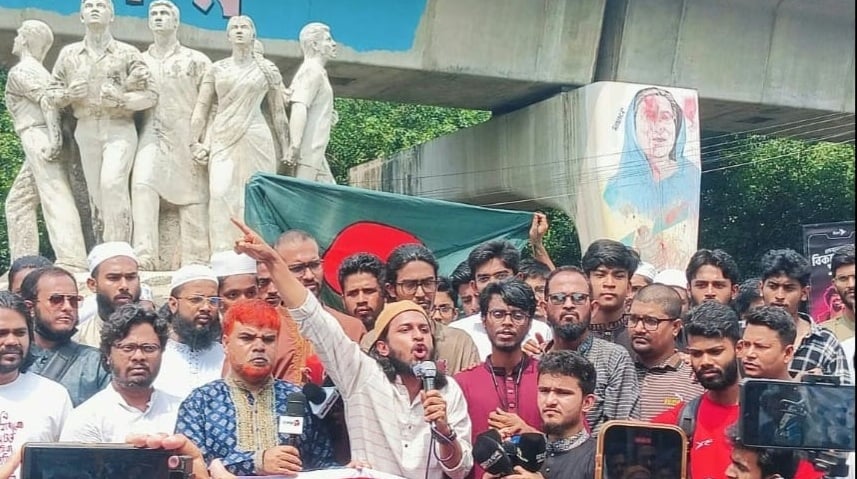
Rajshahi University Central Students’ Union General Secretary Salahuddin Ammar has alleged that successive governments, including the current one, are using the murder of Sharif Osman Bin Hadi as a political tool. Speaking after Friday prayers on June 12 at a protest organized by Inquilab Mancha at Dhaka University, Ammar claimed that the government highlights the Hadi murder trial whenever national crises arise, such as fuel price hikes or accidents. The protest march, organized by Inquilab Mancha, demanded a full investigation into Hadi’s killing, the repatriation of accused individuals, and swift justice. Member G A Sabbir said the group had given the government a one-week deadline to present a clear plan for the trial but received no response. He warned that if the government fails to clarify its stance soon, the organization will seek accountability from relevant ministries and may stage sit-ins at Shahbagh. Speakers reiterated that identifying local perpetrators, bringing fugitives back, and ensuring a speedy trial are state responsibilities. They vowed to continue their movement until justice is served.
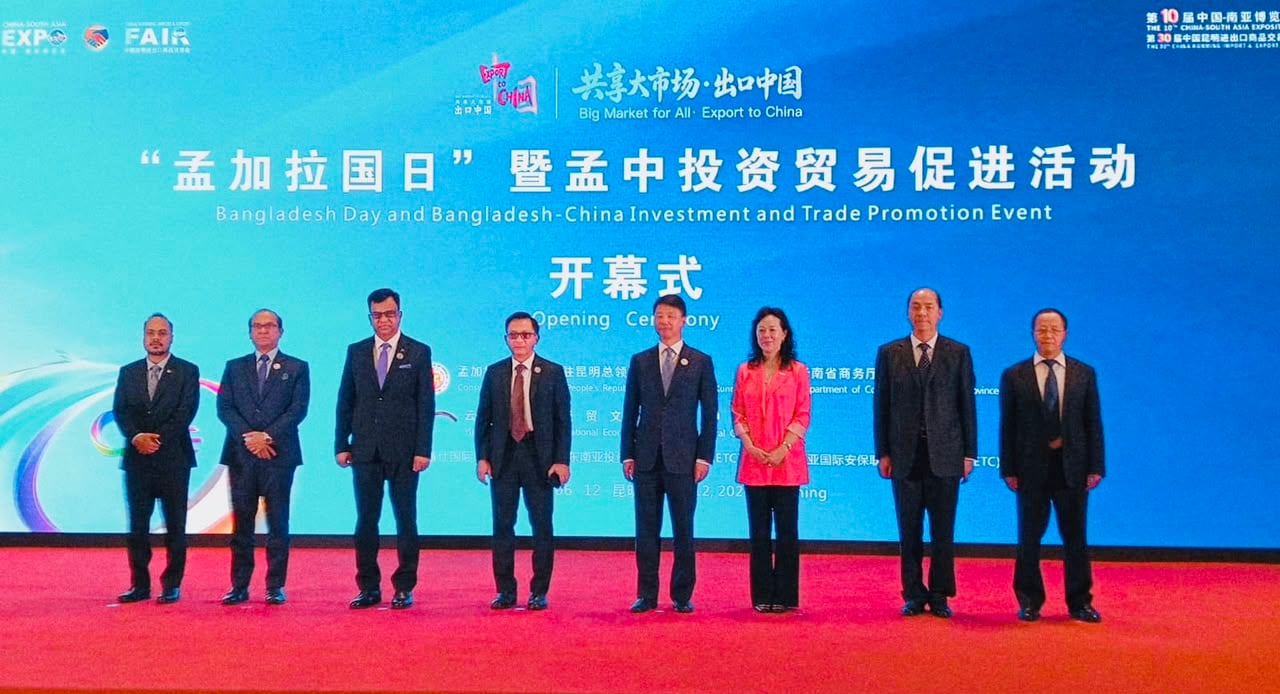
Bangladesh’s Minister of Commerce, Industry, Textiles and Jute, Khandaker Abdul Muktadir, announced that the country’s new democratic government is committed to strengthening Bangladesh–China relations based on mutual respect, sovereignty, equality, and shared prosperity. He made the remarks on Friday during the inauguration of ‘Bangladesh Day’ on the second day of the China–South Asia Expo in Kunming, Yunnan Province. The minister highlighted that the government is working sincerely to build sustainable relations that bring tangible benefits to both nations, reflected in the record participation of Bangladeshi companies at the fair. Muktadir described the celebration of ‘Bangladesh Day’ in Kunming as a symbol of the deep friendship and mutual trust between the two countries. He invited Yunnan’s business community to invest in Bangladesh and increase imports from the country. The event also featured a seminar titled ‘Bangladesh–Sourcing with Quality and Competitiveness,’ attended by officials and business representatives from both nations. The 10th China–South Asia Expo and 30th China Kunming Import and Export Fair 2026 began on June 11 and will continue until June 16, with 2,300 exhibitors from 68 countries participating.
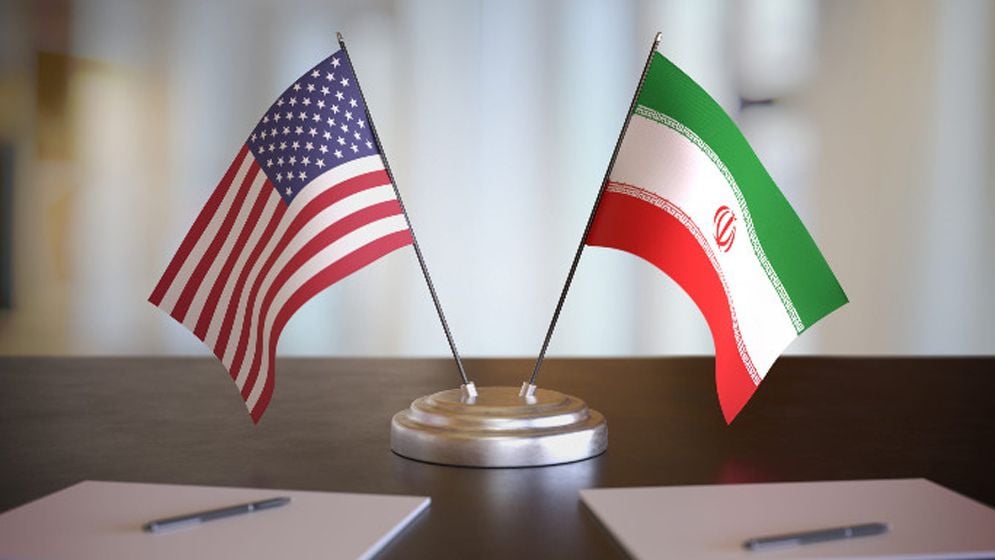
A potential agreement between Iran and the United States could be reached on Sunday in Geneva, Switzerland, according to a report by Israel’s Haaretz citing an Iranian source. The proposed deal reportedly includes provisions for a ceasefire across all fronts, including Lebanon. The source told Reuters that the draft agreement also proposes lifting sanctions on Iranian oil exports and releasing several billion dollars’ worth of Iranian assets frozen abroad. A senior leader of Lebanon’s armed group Hezbollah stated that Iran would not agree to any deal that excludes a resolution to the situation in Lebanon and the ongoing conflict there. Iran has long maintained that halting Israeli attacks in Lebanon is a key condition for any broader understanding with Washington. If finalized, the agreement could mark a significant step toward easing regional tensions, though details of implementation and official confirmation from either side remain unclear.
Bangladesh’s Minister of Power, Energy and Mineral Resources Iqbal Hasan Mahmud stated that the country has not experienced any fuel shortage despite global conflicts and disruptions in energy supply. Speaking at a post-budget press conference on June 12 at the Osmani Memorial Auditorium in Dhaka, he said that while other countries faced severe shortages, Bangladesh’s fuel supply remained stable. The minister explained that the government is working to ensure long-term energy security by revitalizing the state-owned exploration company Bapex, intensifying gas exploration onshore and offshore, and targeting 5,000 megawatts of solar power generation by 2030. He noted that although Bangladesh gained maritime boundaries years ago, effective exploration had not been undertaken until recently. The government now plans to procure five new rigs for Bapex and expand exploration activities. Mahmud added that due to global instability and disruptions around the Hormuz Strait, some energy contracts with Qatar and Saudi Arabia faced force majeure conditions, prompting Bangladesh to source fuel from alternative suppliers. He said about USD 2.5 billion worth of oil has been purchased to maintain stable supply.
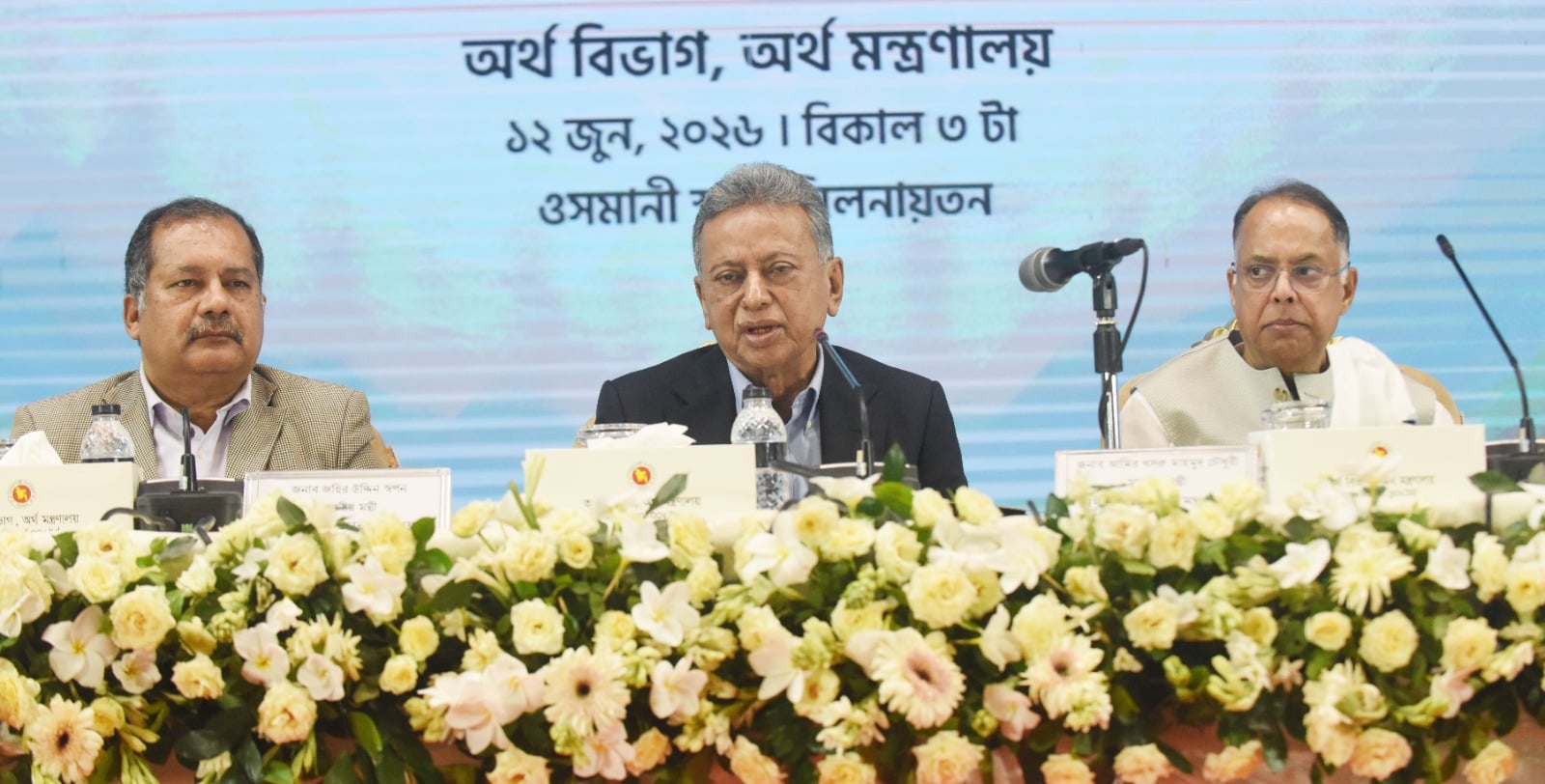
Finance Minister Amir Khasru Mahmud Chowdhury announced a Tk 800 crore ‘Creative Economy’ project aimed at transforming culture into an economic asset. Speaking at a post-budget press conference at Osmani Memorial Auditorium in Dhaka on June 12, he said the initiative seeks to link tourism with theatre, music, film, and visual arts to create new sources of economic growth. The minister explained that expanding domestic tourism could accelerate local economic development, employment, and the entertainment sector. He emphasized that the government is prioritizing the development of Bangladesh’s soft power through cinema, music, and theatre. A special creative hub outside Dhaka is planned under the project, marking the first initiative of its kind in the country. Chowdhury added that cultural and traditional sectors must be made economically viable to ensure sustainability. The project aims to create opportunities for young artists and creative entrepreneurs, helping Bangladesh strengthen its global image while advancing its tourism and cultural industries.
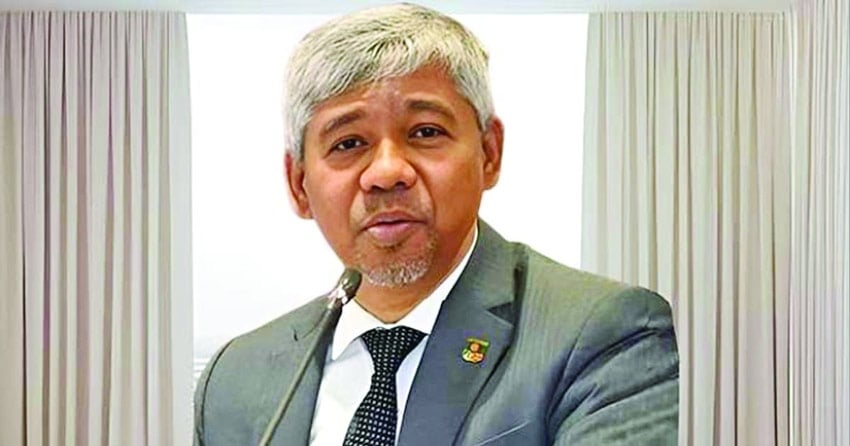
Bangladesh Khelafat Majlis Secretary General Maulana Jalaluddin Ahmad has called on the government to reconsider its decision to close Ad-Din Hospital following the deaths of six newborns. In a statement issued to the media on Friday, he urged authorities to immediately resume the hospital’s medical operations while ensuring justice through a fair investigation. He expressed condolences to the bereaved families and prayed for the deceased infants. Ahmad described the incident as deeply tragic and emphasized that the real culprits must be identified and punished through a transparent investigation. He criticized the June 11 decision to shut down the entire hospital, saying it has caused severe suffering for hundreds of admitted patients and many low- and middle-income people who rely on its affordable services. He argued that closing an entire institution is not a lasting solution to medical negligence. He further urged the government to strengthen accountability, safety, and quality control in the health sector through long-term measures while allowing Ad-Din Hospital to continue operations under strict supervision.
An eleven-party alliance organized a protest rally in the border area of Phultola Bazar in Juri upazila of Moulvibazar district on Friday, June 12, 2026. The demonstration was held to protest against alleged indiscriminate killings of innocent people by Indian forces along the international border and to demand an end to the practice of push-in across the frontier. The event took place under the initiative of the alliance and drew participation from local political and social leaders. The rally was presided over by Md. Farid Uddin, acting president of Phultola Union Jamaat, and conducted by union secretary Maulana Abdul Halim. Among the speakers were Master Md. Azim Uddin, secretary of Juri Upazila Jamaat and a key leader of the alliance, Rumel Ahmad, joint member secretary of Moulvibazar district NCP, Abdullah Al Mamun, assistant secretary of Juri Upazila Jamaat and president of the local Workers Welfare Federation, Master Mostakim Ali, and Tariq Mia from the Anti-Discrimination Student Movement. The protest reflected growing local concern over cross-border incidents and called for adherence to international boundary laws.

National Board of Revenue (NBR) Chairman Md. Abdur Rahman Khan has stated that the 2026–27 national budget does not include any provision for legalizing undeclared or 'black' money. He made the clarification on Friday afternoon at a post-budget press conference held at the Osmani Memorial Auditorium in Dhaka, responding to questions from journalists about public confusion on the issue. The NBR chairman explained that instead of allowing the legalization of black money, the budget proposes a measure to resolve tax complications through the declaration of actual property transaction values. He noted that in the previous fiscal year, a special rule was introduced for land sellers, as many registered their properties at lower prices than the actual sale value. This often caused difficulties when explaining the source of additional income. According to Khan, if sellers can provide proof of transactions through banking channels and present sale agreements, they may pay capital gains tax at the regular rate to validate the income legally.
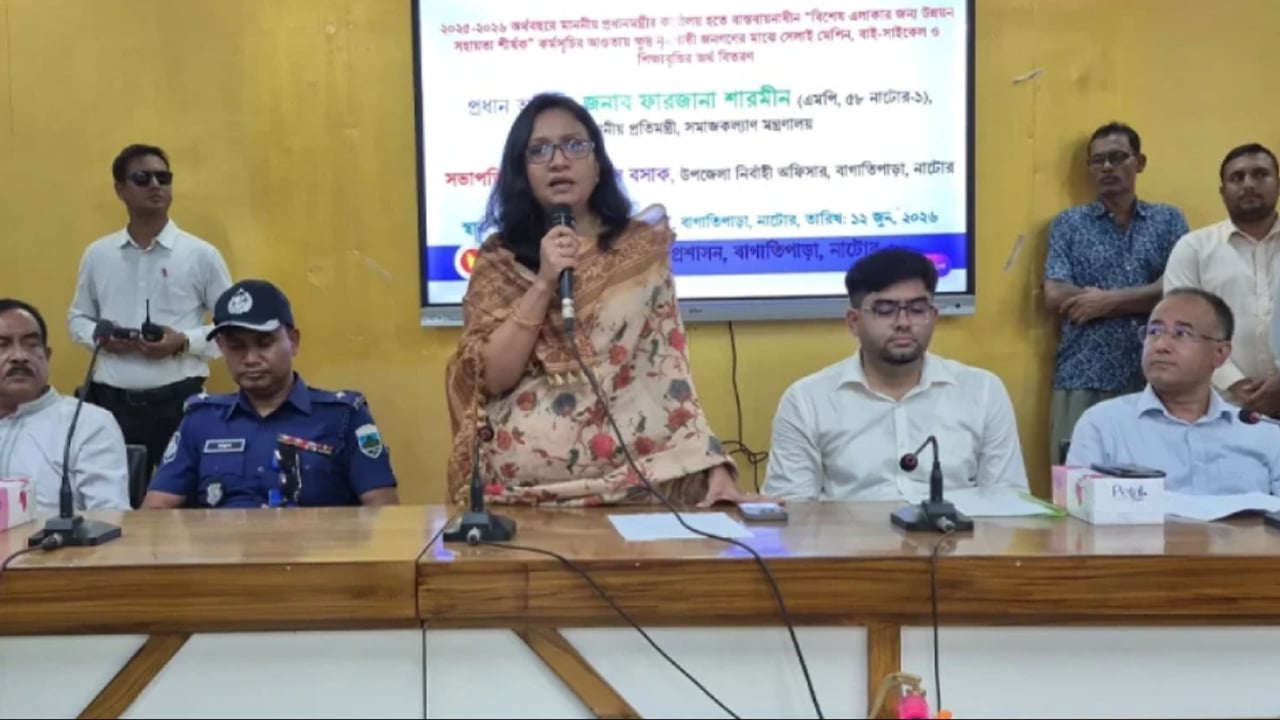
State Minister for Social Welfare Farzana Sharmin Putul announced that 4.1 million women across Bangladesh will receive family cards in the upcoming fiscal year. The government also plans to expand the coverage of various social allowance programs and increase medical assistance for patients with critical illnesses from 50,000 to 100,000 taka. She made the announcement on Friday, June 12, during a program at Bagatipara Upazila Parishad auditorium in Natore. The minister said the government is working to improve living standards through welfare-oriented initiatives and has increased allocations for social safety and welfare programs in the new budget. She emphasized that no professional or social group will be left behind. The government has also taken steps to improve education quality, making education up to the undergraduate level free for female students, and urged teachers and parents to protect youth from social problems such as drugs and online gambling. During the event, equipment and scholarships were distributed among poor families, farmers, ethnic minorities, and students. The minister also highlighted efforts to strengthen rural justice through village courts and expand free legal aid services at the district level.
China’s Ministry of State Security has accused foreign intelligence agencies of deploying ‘spy turtles’ and ‘spy fish’ in its territorial waters to collect sensitive maritime data. In a statement published on WeChat on Friday, the ministry claimed that these marine animals were equipped with sensors capable of transmitting information such as water temperature, salinity, and ocean currents to foreign satellites. The ministry described the activity as part of an ‘invisible secret war’ at sea but did not specify which countries or organizations were involved or where the animals were found. The statement also said that Chinese authorities had detected floating buoys and wave-powered ‘wave gliders’ allegedly installed by a foreign marine research institution. These devices were reportedly fitted with weather and acoustic sensors that could monitor the acoustic signatures of Chinese submarines and transmit military-use environmental data abroad. China has long accused foreign powers of espionage and surveillance in the South China Sea, East China Sea, and Taiwan Strait, areas known for ongoing strategic tensions. According to Chinese media, fishermen who discover or recover suspicious surveillance devices in national waters can receive rewards ranging from 50,000 to 500,000 yuan.

Bangladesh Jamaat-e-Islami Ameer Dr. Shafiqur Rahman expressed deep concern after 18 hours had passed without the rescue of Jisan Ahmed, a former president of the Bangladesh Islami Chhatra Shibir Cumilla district west branch and current central assistant international secretary. In a Facebook post on Friday afternoon, he stated that Jisan Ahmed was abducted on the night of June 11 and questioned the actions of law enforcement agencies. Dr. Rahman urged authorities to rescue Jisan Ahmed immediately and return him to his family. His statement highlighted the party’s growing anxiety over the incident and called for swift intervention by the relevant agencies. The report also mentioned other political developments, including protests by an 11-party alliance in border districts and participation of Jamaat leaders in Russia’s National Day event, but provided no further details on the abduction case or investigation progress.

Opposition Whip and National Citizens Party (NCP) convener Nahid Islam stated that the proposed national budget, despite containing some positive and creative measures, cannot bring about the fundamental economic reforms the country needs. He made the remarks on Friday, June 12, 2026, after attending Friday prayers at Dayem Nazir Jame Mosque near Jameya Ahmadia Sunnia Alia Madrasa in Chattogram, accompanied by NCP chief coordinator Nasiruddin Patwari. Nahid Islam said that while the budget includes tax reductions on some products and increased allocations for social, education, and health sectors, its implementation is unlikely. He criticized the unprecedented rise in commodity and electricity prices across the country. He also announced that on June 13, the 11-party alliance would hold a divisional rally at Laldighi in Chattogram to demand reforms based on referendum results and measures to control price hikes. Nasiruddin Patwari alleged that Sheikh Hasina had fled to India and accused the government of following a submissive foreign policy, claiming that Muslims identified as Bangladeshis in India were being sent back and suffering near the border.
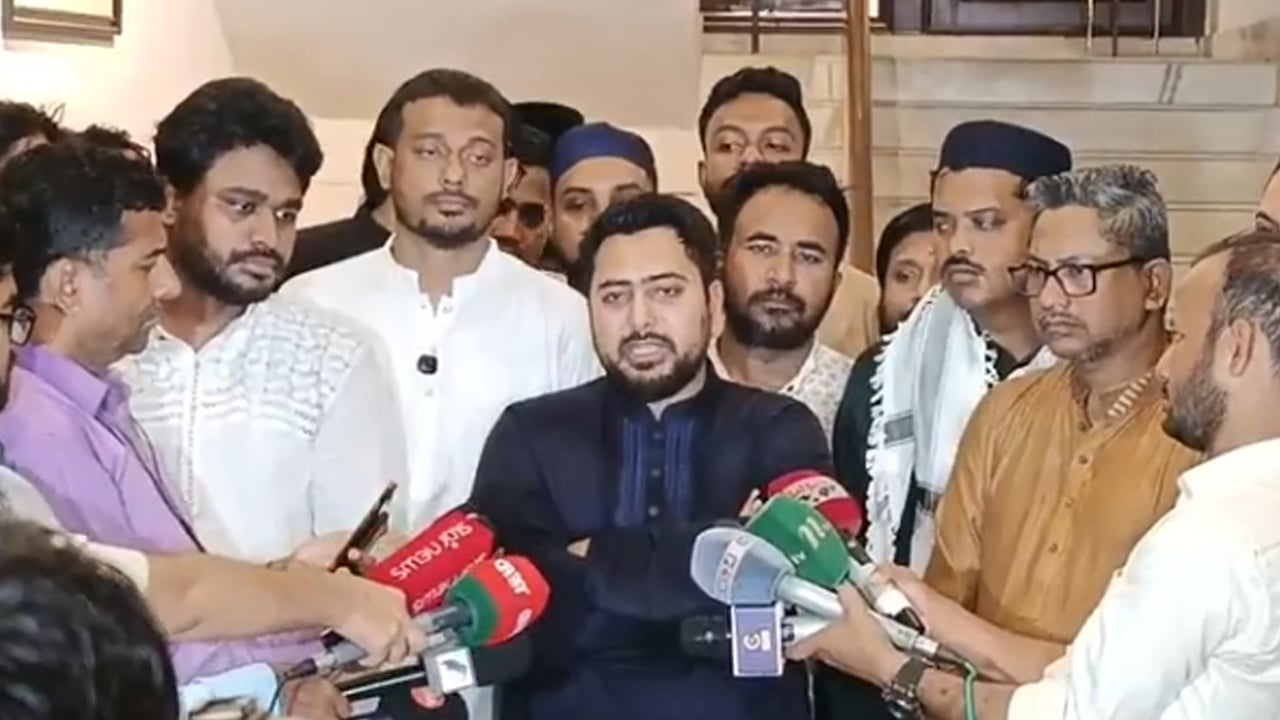
Bangladesh Khelafat Majlis Ameer Maulana Mamunul Haque issued a statement on June 12, 2026, criticizing the proposed national budget for the 2026–27 fiscal year. He described the Tk 9.38 trillion budget, presented in parliament on June 11, as an overly ambitious project that would make the country economically dependent. Haque argued that the Tk 2.43 trillion deficit would lead the government to excessive borrowing from foreign and domestic sources, harming private investment and endangering public deposits. He said the budget fails to reflect the real needs of the nation, calling it deficit-driven and detached from public reality. Haque highlighted rising prices, unemployment, and stagnation in agriculture and industry, accusing the government of imposing heavy tax burdens on middle- and low-income groups while favoring the wealthy. He also criticized the allocation disparities, noting low funding for agriculture, technical and madrasa education, and health compared to internal security spending. Haque urged the government to revise the budget before final approval by increasing allocations for agriculture, education, health, and social security, and to create special funds for families of those killed in national movements, including the 2013 Shapla Chattar incident.

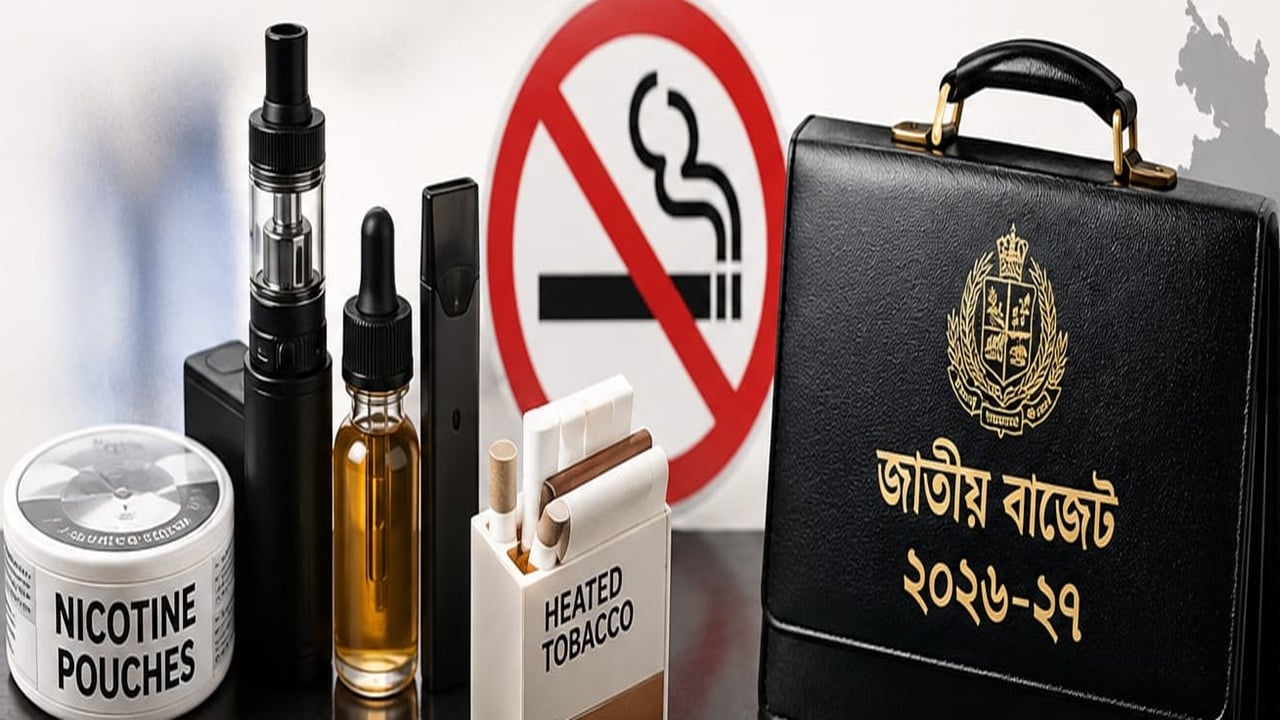
The Bangladesh Tobacco Control Advocates (BTCA) has alleged that the proposed 2026–27 national budget prioritizes the interests of the tobacco industry over public health protection and tobacco use reduction. In a joint press statement released on Friday, BTCA leaders said the decision to bring nicotine pouches, heated tobacco products, e-cigarettes, and vaping items under the tax framework effectively legitimizes them, posing new health risks. According to BTCA, the government’s move conflicts with its commitment to a tobacco-free Bangladesh. The group warned that legitimizing new nicotine products could expose millions of youths to addiction and increase future health costs. It also criticized the nominal two-taka price hike for low-tier cigarettes, which account for about 75 percent of sales, calling it ineffective amid high inflation. BTCA further noted that ignoring expert recommendations for a specific excise tax would deprive the government of revenue while boosting tobacco company profits. However, BTCA welcomed initiatives such as adding QR codes to cigarette tax stamps, introducing a digital track-and-trace system, and tightening oversight of raw material supply chains, urging the government and NBR to revise the budget with public health as the top priority.
The ‘1 Nojor’ media platform is now live in beta, inviting users to explore and provide feedback as we continue to refine the experience.