

The ‘1 Nojor’ media platform is now live in beta, inviting users to explore and provide feedback as we continue to refine the experience.
Prime Minister Tarique Rahman is scheduled to exchange Eid greetings with diplomats, academics, and people from all walks of life at the state guesthouse Jamuna in Dhaka on Saturday, March 21, 2026. The event is set to begin at 10 a.m., marking a traditional celebration where citizens meet the head of government on Eid day. From early morning, large crowds began moving toward the Jamuna premises to meet the prime minister. Entry for the general public opened at 8:30 a.m., leading to a rapid increase in attendance. People from various professions and political affiliations gathered in groups, creating a festive atmosphere that extended as far as the Intercontinental Hotel area. Law enforcement personnel were visibly active across the zone to maintain order and security. The report also notes that Prime Minister Rahman visited his parents’ graves earlier in the day and sought prayers from the nation on this special occasion.

Opposition Leader and Jamaat-e-Islami Ameer Dr. Shafiqur Rahman MP performed Eid-ul-Fitr prayers at the Manipur Girls High School ground in Mirpur, Dhaka, on Saturday morning. The congregation began at 8 a.m., where he delivered a brief message wishing peace and prosperity for the people of Bangladesh and the global Muslim community. After the prayers, he exchanged Eid greetings with residents from all walks of life in the area. Dhaka North Jamaat Ameer Mohammad Selim Uddin, Nayebe Ameer Abdur Rahman Musa, and other metropolitan and local leaders were present at the event. Later in the day, Dr. Rahman was scheduled to receive diplomats from various missions at his official residence on 29 Minto Road between 11 a.m. and 12:30 p.m., followed by meetings with political leaders and representatives from different professions from 3 p.m. onward. The program reflected the opposition leader’s engagement in Eid festivities across both community and diplomatic circles in the capital.
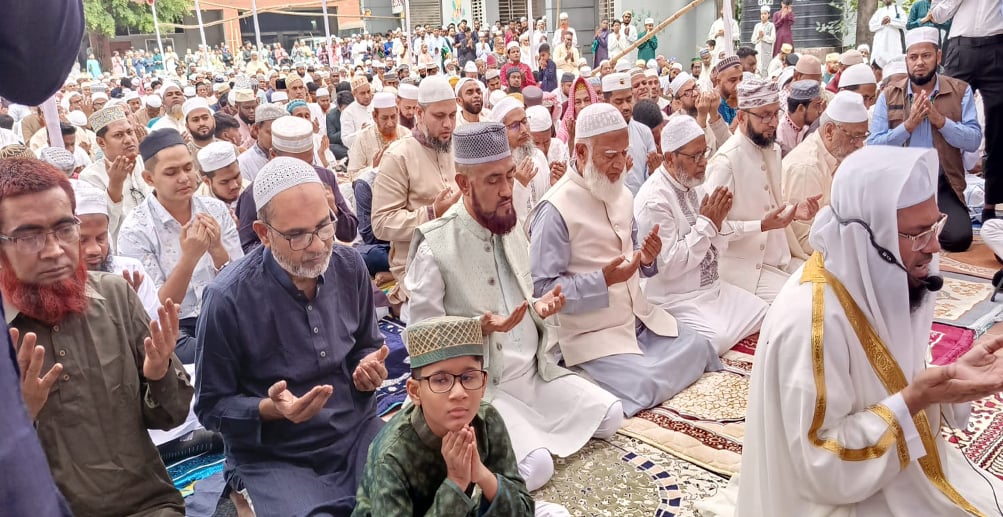
Worshippers at the Baitul Mukarram National Mosque in Dhaka offered prayers for the welfare of the nation following Eid congregational prayers on March 21, 2026. The special supplication included prayers for the acceptance of Ramadan fasting and other acts of worship, as well as for the forgiveness of sins and blessings for deceased relatives. Participants were seen praying with emotion, seeking divine mercy and protection for oppressed Muslims around the world. The mosque hosted five successive Eid congregations, scheduled at 10:00 a.m. and 10:45 a.m. for the later sessions. The third congregation was led by Islamic Foundation Deputy Director Maulana Md Zakir Hossain, the fourth by Imam Training Academy instructor Maulana Zubair Ahmed Al Azahari, and the fifth and final by Islamic Foundation Mufti Maulana Mohammad Abdullah. Assistant librarian Maulana Shahidul Islam was designated as an alternate imam. The event reflected a collective spiritual observance marking the end of Ramadan, emphasizing unity, repentance, and prayers for peace and well-being.
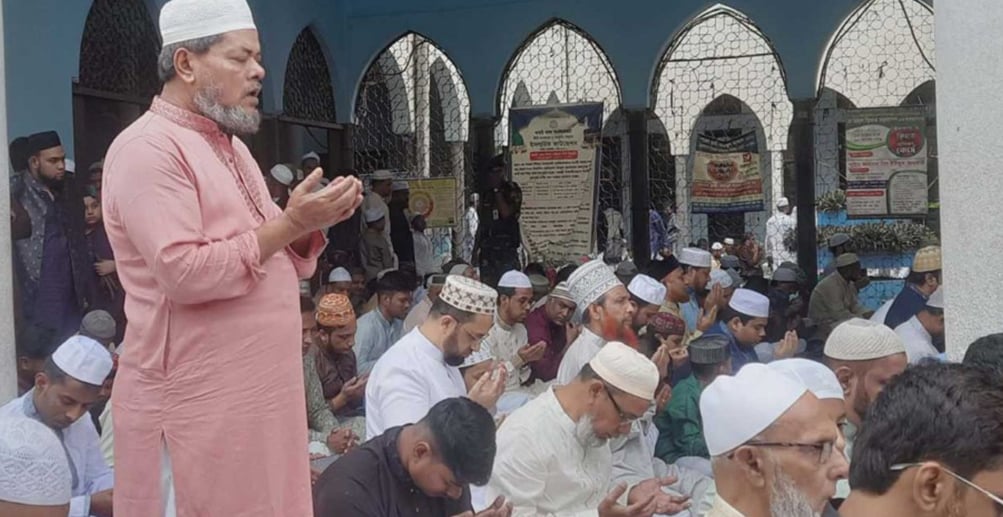
The main Eid-ul-Fitr congregation was held at the National Eidgah in Dhaka on Saturday morning, attended by President Md. Shahabuddin and Prime Minister Tarique Rahman. The prayer began at 8:30 a.m., where both leaders performed the Eid prayer together along with thousands of worshippers. The congregation also included Dhaka South City Corporation Administrator Abdus Salam, cabinet members, state ministers, members of parliament, judges from the Supreme Court and High Court divisions, political leaders, senior government officials, and diplomats from various Muslim countries. The prayer was led by Mufti Mohammad Abdul Malek, Khatib of Baitul Mukarram National Mosque, who also delivered the sermon after the two-rakat wajib prayer. Separate arrangements were made for women, including dedicated entrances, ablution facilities, and prayer areas. Special provisions were also made for VIP participants, along with medical teams and adequate ablution facilities. The Eidgah accommodated about 35,000 worshippers, including 3,500 women.
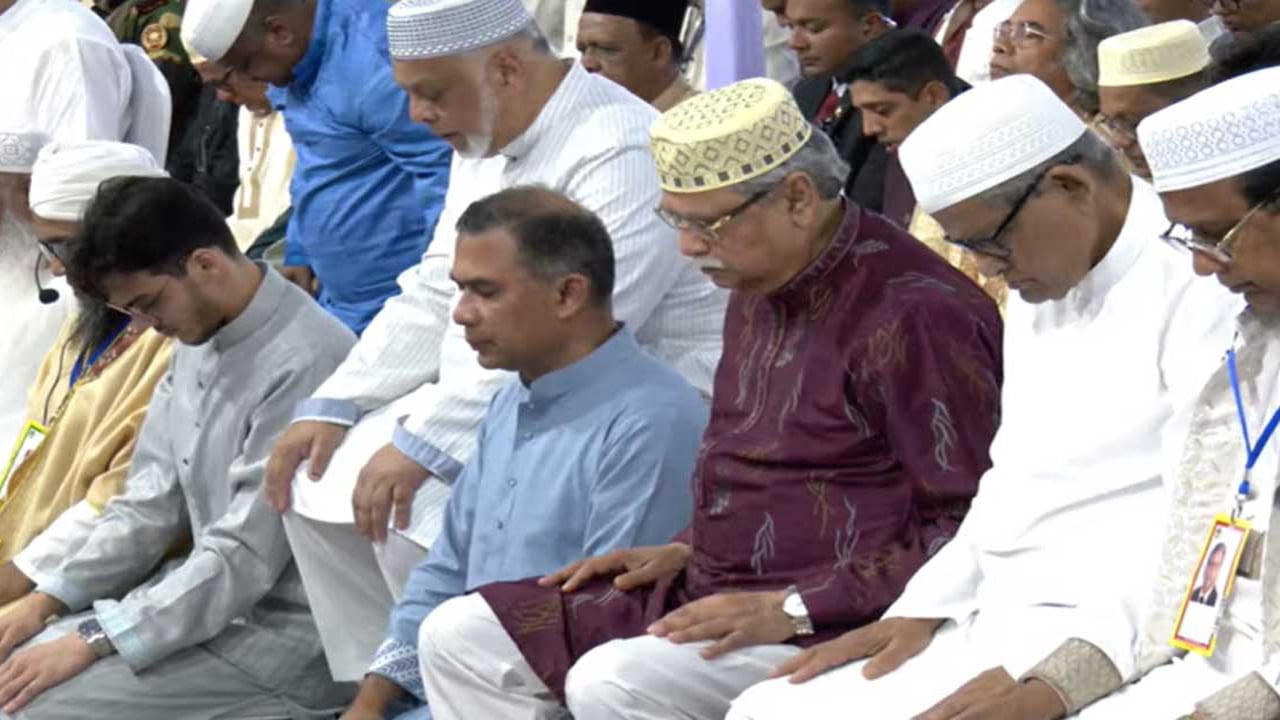
President Md. Shahabuddin and Prime Minister Tarique Rahman performed the Eid-ul-Fitr prayers together at the National Eidgah ground in Dhaka on Saturday, March 21, 2026. The main congregation began at 8:30 a.m., marking a significant moment in the country’s political and religious history as both leaders attended the same prayer session. Worshippers began arriving at the Eidgah from early morning, braving cloudy skies and light rain. The venue was filled to capacity well before the prayers started. Strict security measures were in place, with members of law enforcement, including police and RAB, conducting thorough checks at three entry points before allowing worshippers to enter. The joint participation of the president and prime minister in the same congregation was viewed as a notable event, symbolizing unity during the nation’s major religious celebration.
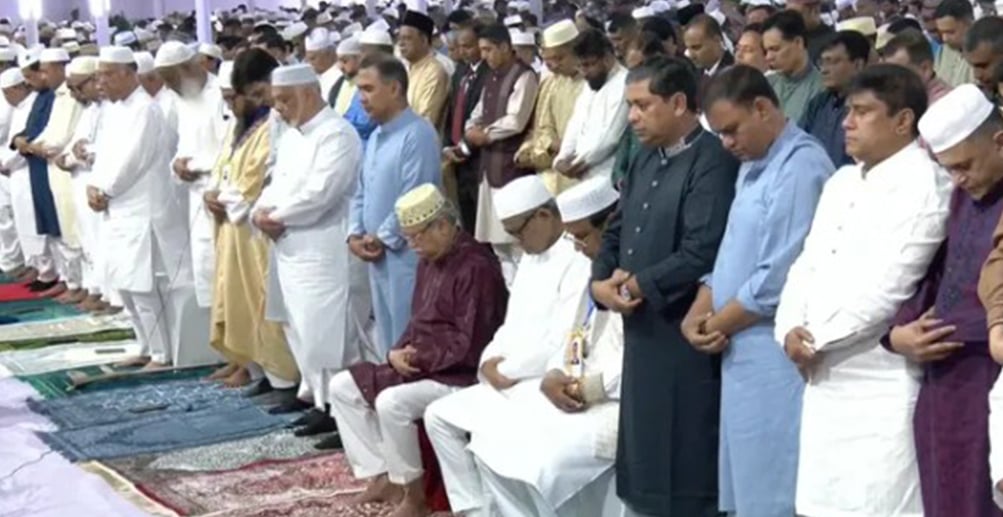
Worshippers thronged the National Eidgah in Dhaka on Saturday morning, March 21, 2026, to perform Eid-ul-Fitr prayers, undeterred by cloudy skies and light rain. From early dawn, people from across the capital began arriving at the Eidgah grounds near the High Court, filling the venue well before the scheduled start of the main congregation at 8:30 a.m. Security forces maintained strict control around the area, with long queues forming under tight supervision. Entry points were monitored by police and Rapid Action Battalion personnel, who conducted three layers of security checks before allowing worshippers inside. To prevent congestion, roads at Doel Chattar, Matsya Bhaban, and the National Press Club intersection were closed. Devotees also entered the grounds through the Dhaka University side. For the first time in several decades, both the President and the Prime Minister attended and performed the Eid prayers together at the National Eidgah, marking a notable moment in the day’s celebrations.
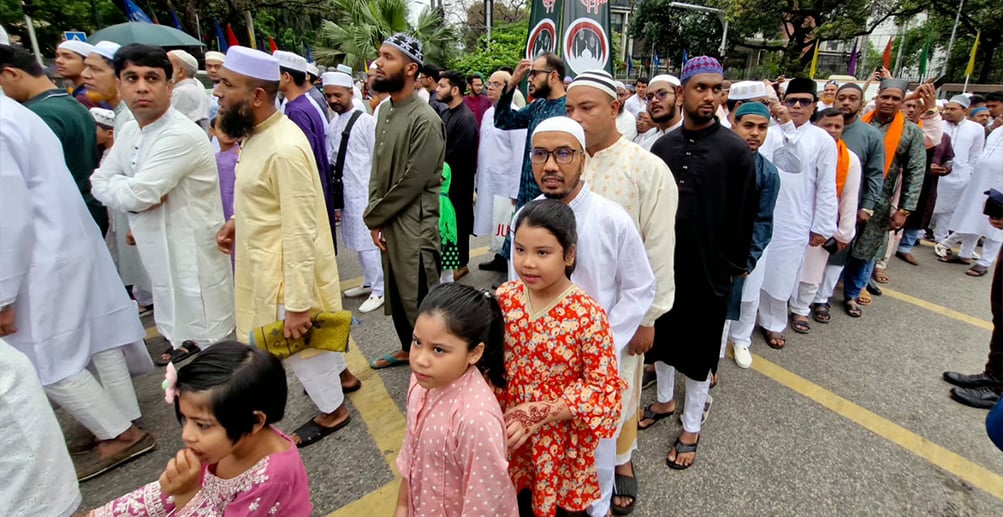
The Bangladesh Meteorological Department has forecast prolonged drizzle across Dhaka and several other regions on Saturday, coinciding with the holy Eid-ul-Fitr. Meteorologist A K M Nazmul Haque said a broad rain belt stretching from Barguna to Naogaon has formed, likely causing light rain from around 7:30 a.m. for four to five hours. However, Cox’s Bazar and Panchagarh districts may remain outside the rain zone. According to the department, the rain belt’s effect may continue until Sunday, though rainfall is expected to decrease by then. Compared to Friday, a higher amount of rainfall is likely on Saturday. On Friday, Madaripur recorded the highest rainfall at 33 millimeters, while Dhaka saw 17 millimeters, with rain reported in almost all divisions. The meteorologist added that despite the extended drizzle, there is no possibility of a nor’wester storm. Winds are expected to flow from the southwest, resulting in light rain with low wind speed for several hours.

Iran has threatened to expand its attacks to entertainment and tourism centers worldwide as its conflict with the United States and Israel enters the third week. The warning came from General Abolfazl Shekarchi, Iran’s top military spokesperson, who stated that parks, leisure areas, and tourist destinations across the world would no longer be safe for Iran’s enemies. The announcement has sparked renewed concern in international circles. Analysts cited in the report suggest that Iran may employ asymmetric tactics beyond the Middle East to increase pressure on its adversaries. The situation intensified after Israel reportedly struck Iran’s large South Pars gas field on Wednesday, prompting Tehran to escalate attacks on energy facilities in the Gulf region. In a related development, two drone strikes hit Kuwait’s Mina al-Ahmadi oil refinery early Friday, causing a fire at one of the region’s largest refineries, which has a daily capacity of about 730,000 barrels. The incidents underscore rising regional tensions and fears of broader instability.
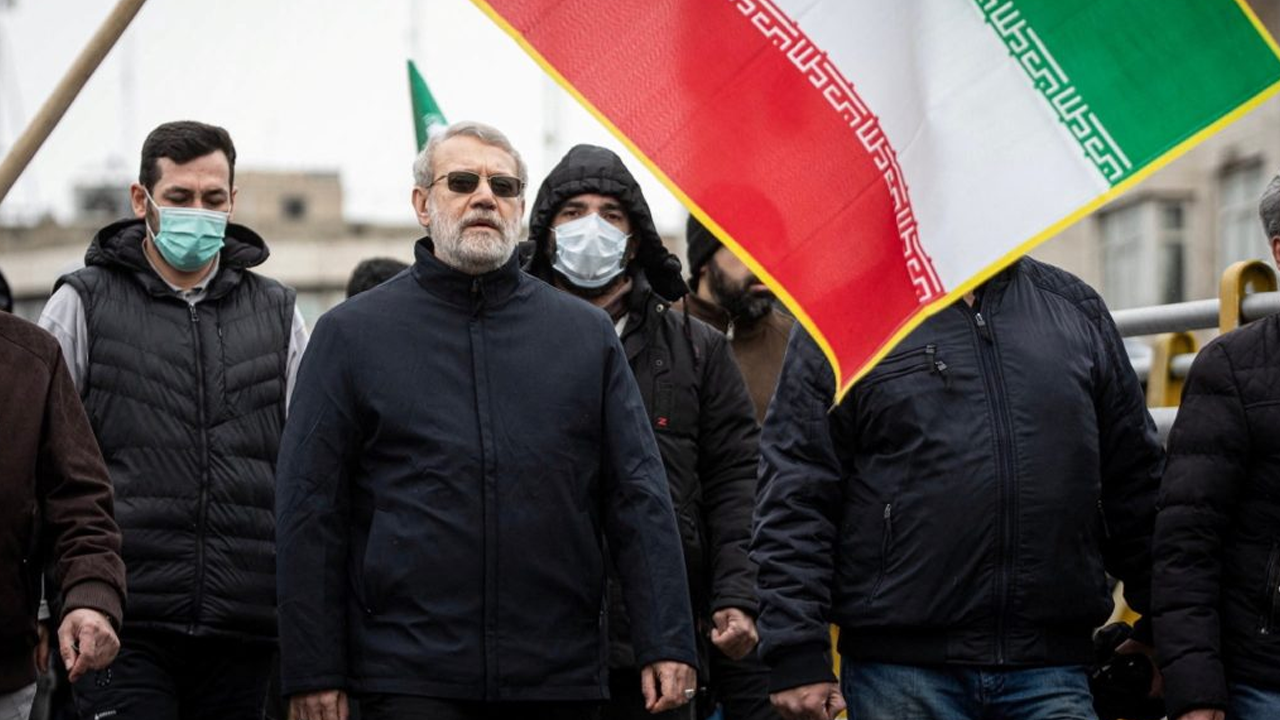
The United States has decided to ease sanctions on Iran’s crude oil and petroleum products for 30 days, according to a statement from the US Treasury Department. The move comes in response to global oil price and supply instability caused by the ongoing Iran-Israel war, Al Jazeera reported. Treasury Secretary Scott Bessent clarified that the temporary authorization applies only to oil shipments already in transit, not to new orders. Iran, meanwhile, stated that it has been targeting ships linked to the United States and Israel, disrupting oil and gas transport through the Strait of Hormuz. This disruption has contributed to volatility in global energy prices and raised concerns about broader economic impacts. Earlier, Bessent had told Fox Business that the relaxation could allow about 140 million barrels of Iranian oil currently at sea to reach the market. Following Bessent’s remarks, Iran’s Oil Ministry spokesperson Saman Goddosi said the country has no additional crude oil available for export, either at sea or in storage, suggesting the US statement was intended to encourage potential buyers.

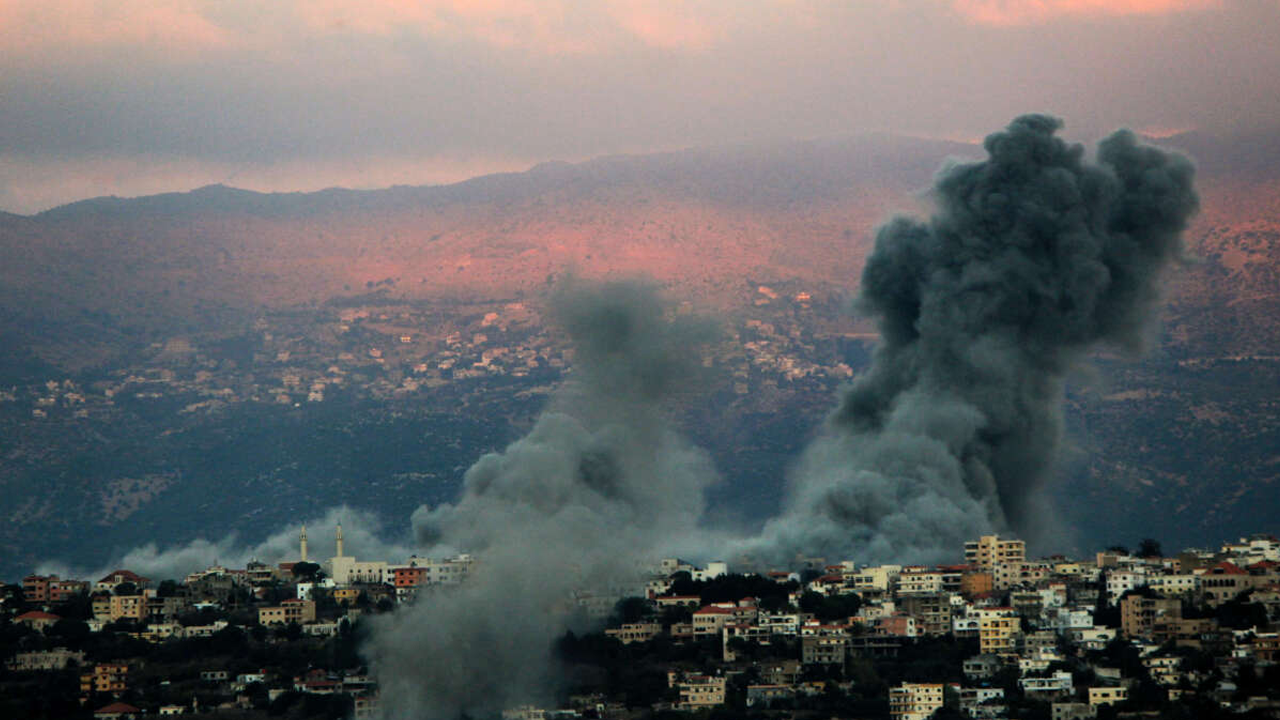
At least 20 people were killed and 57 others injured in the latest Israeli airstrike in Lebanon, according to the country's Disaster Risk Management Unit. The attack took place on Friday, marking another escalation in the ongoing Israeli military operations in the region. Lebanon’s state-run National News Agency reported that with these new casualties, the total number of people killed in Israeli attacks since March 2 has risen to 1,021. The total number of injured has reached 2,641, while 134,616 people have been registered as displaced in various shelters across the country. The figures highlight the growing humanitarian toll of the continued Israeli strikes in Lebanon, as reported by Al Jazeera and local authorities.
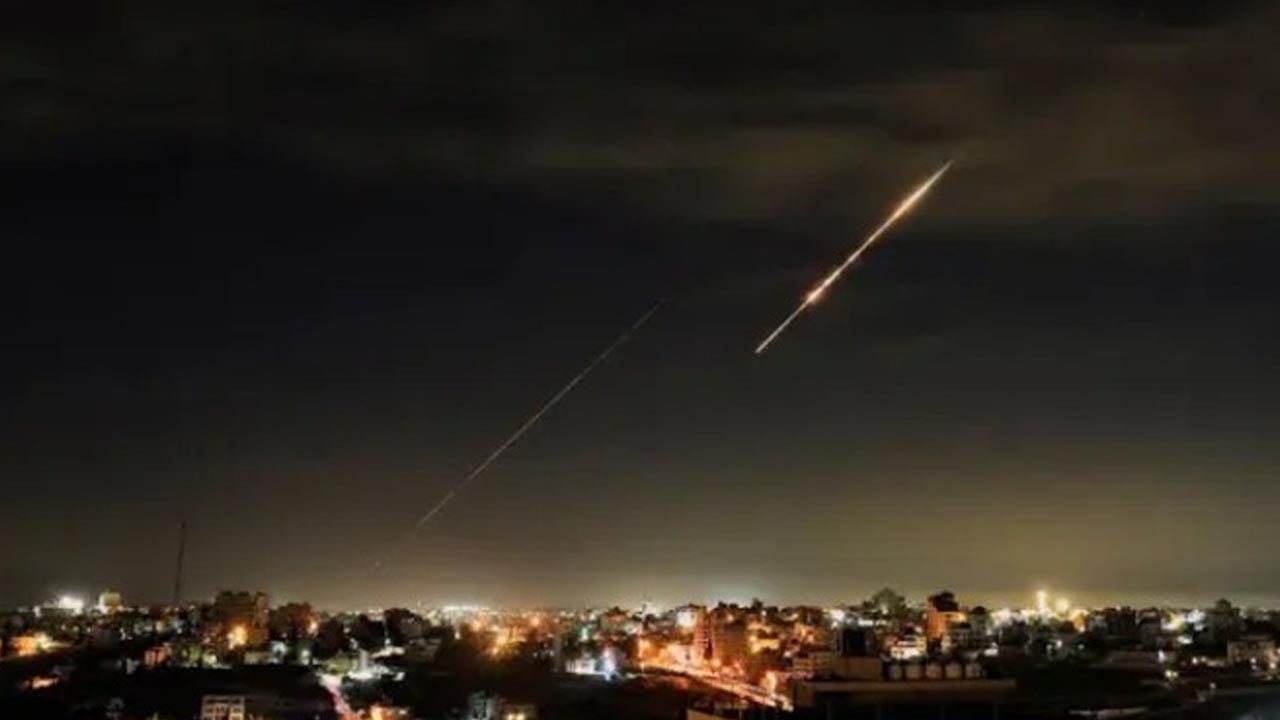
The Israeli military reported detecting another wave of Iranian missiles heading toward its territory, stating that air defense systems were actively working to intercept them. According to The Times of Israel, sirens could be sounded in central Israel amid fears of further attacks. Throughout Friday, Israeli authorities were forced to activate warning sirens at least ten times across the country due to repeated Iranian missile strikes. In northern Israel, sirens also sounded frequently following continuous rocket fire from Lebanon’s Hezbollah group. Although civilian casualties were limited, the attacks caused significant damage in several areas. In occupied East Jerusalem, debris from an intercepted missile reportedly fell dangerously close to the Al-Aqsa Mosque compound, damaging nearby vehicles. The mosque remains closed under Israeli control, and officials described the incident as a serious safety concern.
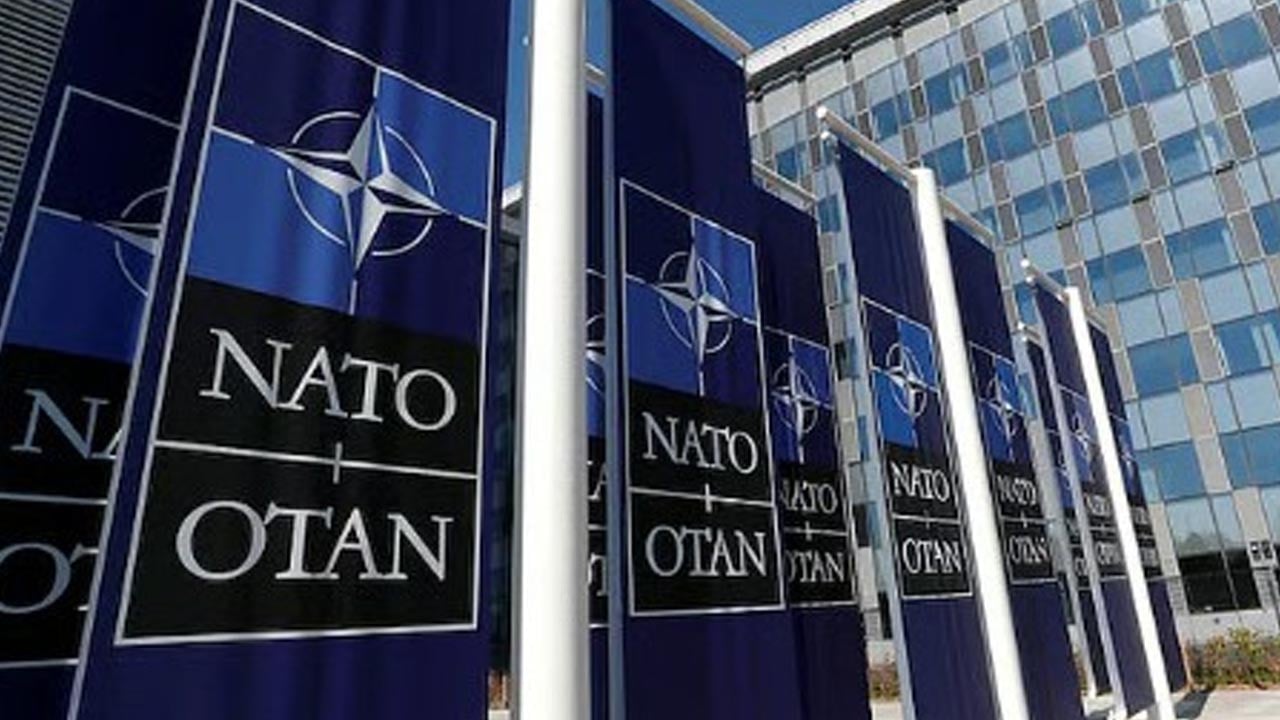
NATO has withdrawn almost all of its personnel from Iraq amid regional instability triggered by the ongoing Iran war, according to Iraqi National Security Advisor’s office officials cited by AFP and Al Jazeera. The withdrawal, described as temporary, follows repeated attacks on the NATO mission in Baghdad after U.S.-Israeli strikes on Iran. Only a small team remains in Iraq, while the rest have been relocated to NATO’s command center in Naples, Italy. NATO expressed gratitude to Iraq and allied nations for ensuring the safe transfer of its staff. In a statement, General Alexus Grynkewich, NATO’s Supreme Allied Commander Europe, praised the professionalism of the mission’s members. The alliance confirmed that the last personnel left Iraq and will continue operations from Naples. The NATO Mission Iraq is a non-combat advisory and capacity-building mission aimed at helping Iraq strengthen its security institutions, stabilize the country, combat terrorism, and prevent the resurgence of ISIL.
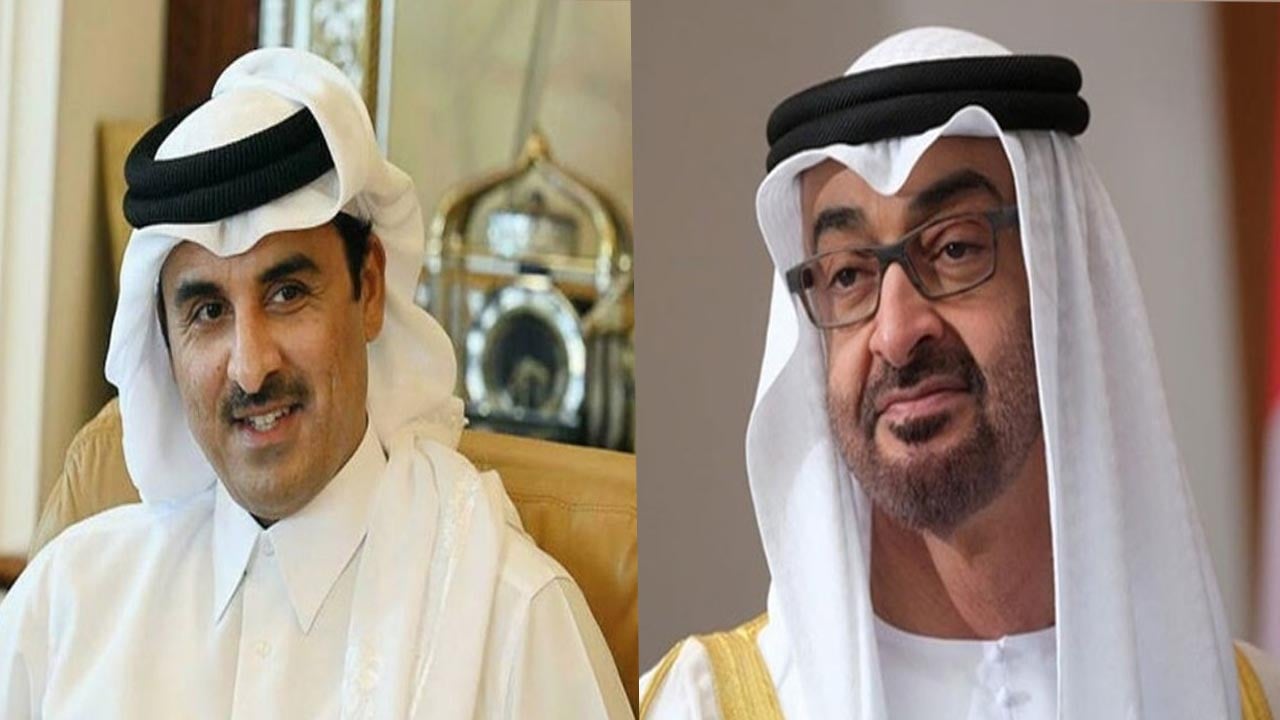
Qatar’s Emir Sheikh Tamim bin Hamad Al Thani and the United Arab Emirates’ President Sheikh Mohammed bin Zayed held a phone conversation to discuss the latest developments following Iran’s attacks. According to a statement from the Qatari Emir’s office, the two Gulf leaders examined the serious impact of these attacks on regional security and stability. Both leaders described the attacks as a grave violation of state sovereignty and the principles of international law. They emphasized the urgent need to end all forms of conflict, reduce tensions, and strengthen regional and international diplomatic efforts to restore calm. Their discussion reflects growing concern among Gulf states about the potential escalation of violence in the region and highlights a shared call for diplomatic engagement to prevent further instability.
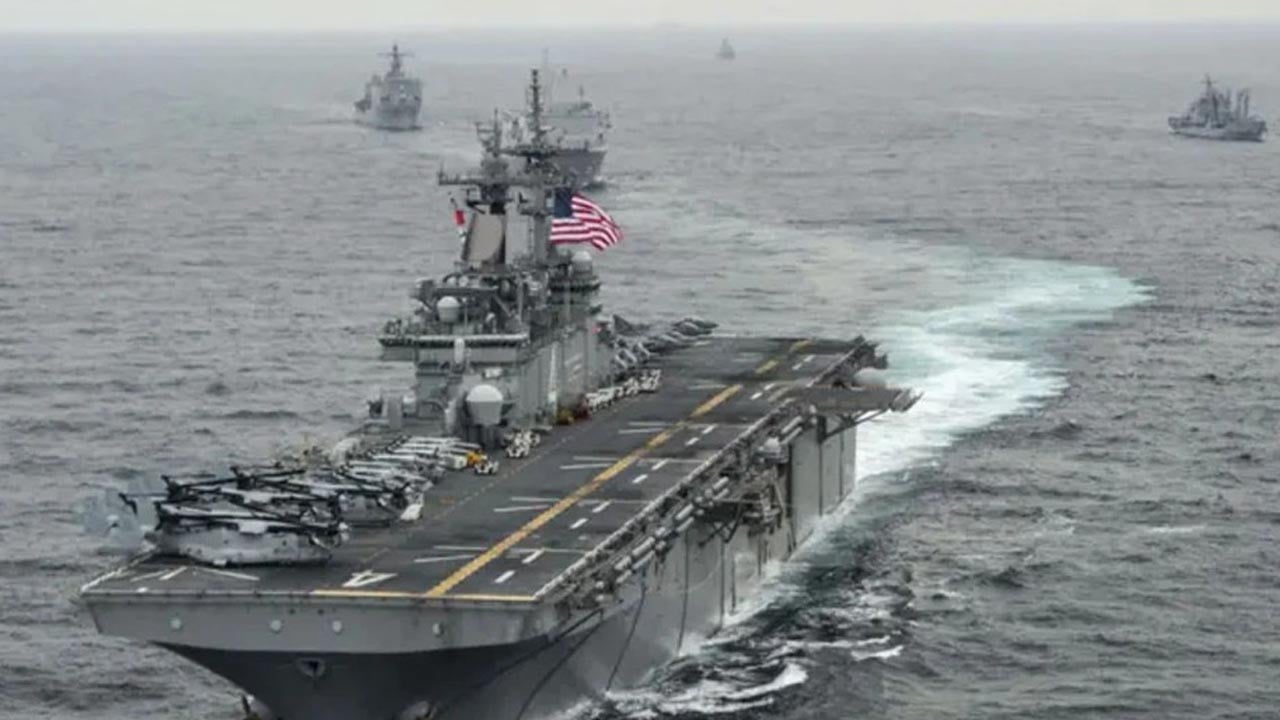
The United Kingdom has granted the United States permission to use British military bases for operations targeting Iranian facilities or positions involved in attacks in the Strait of Hormuz. The decision was made during a cabinet meeting on Friday, according to the UK government. Previously, Downing Street had allowed the US to use British bases only to intercept Iranian missile attacks that could endanger British interests or lives. The new authorization expands that permission, enabling US forces to use British bases to protect shipping in the Hormuz Strait. Downing Street clarified that the UK will not directly participate in any such attacks and that its policy toward the conflict remains unchanged. A government spokesperson said ministers agreed that US forces could use British bases for defensive operations aimed at capabilities used in attacks on ships in the region. The decision reflects continued coordination between the UK and the US over maritime security in the Persian Gulf amid heightened tensions involving Iran.
Chinese Foreign Minister Wang Yi told French presidential adviser Emmanuel Bonne that China and France should work together to resolve the ongoing Middle East crisis. During a telephone conversation, Wang emphasized that despite difficulties, dialogue and negotiation remain the correct path to overcome the crisis. He stated that both countries should cooperate toward this goal. According to the report, China has adopted a pragmatic approach that prioritizes regional stability and its economic interests over direct intervention. While Beijing has said that U.S. and Israeli attacks on Iran violate international law, it has refrained from providing direct military support to its ally Iran. Instead, China has focused on diplomatic mediation and calls for a ceasefire. The discussion reflects Beijing’s preference for diplomatic engagement in regional conflicts and its interest in working with European partners like France to promote stability in the Middle East.

The ‘1 Nojor’ media platform is now live in beta, inviting users to explore and provide feedback as we continue to refine the experience.