

The ‘1 Nojor’ media platform is now live in beta, inviting users to explore and provide feedback as we continue to refine the experience.
Finance Advisor Dr. Salehuddin Ahmed has assured that the government will not adopt a tight-fisted approach in allocating funds for the upcoming national parliamentary elections. Speaking to reporters after a Cabinet Committee meeting on government purchases, he emphasized that necessary funds have been allocated for the electoral process, and there will be no hesitation in spending where needed. His statement comes amid growing discussions on election spending and signals the government’s commitment to ensuring a smooth and adequately funded electoral process.
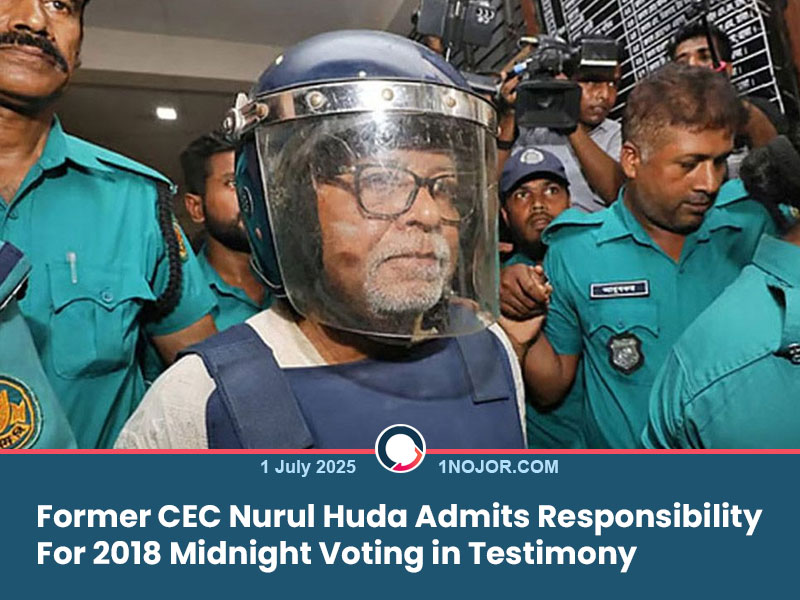
Former Chief Election Commissioner Nurul Huda voluntarily confessed in court to responsibility for the controversial midnight voting during the 2018 elections. After eight days in remand, the PBI presented him before the court to record his statement. This case, filed by BNP leader Salah Uddin Khan, names Prime Minister Sheikh Hasina and three Chief Election Commissioners and commissioners involved in the 2014, 2018, and 2024 elections as accused.
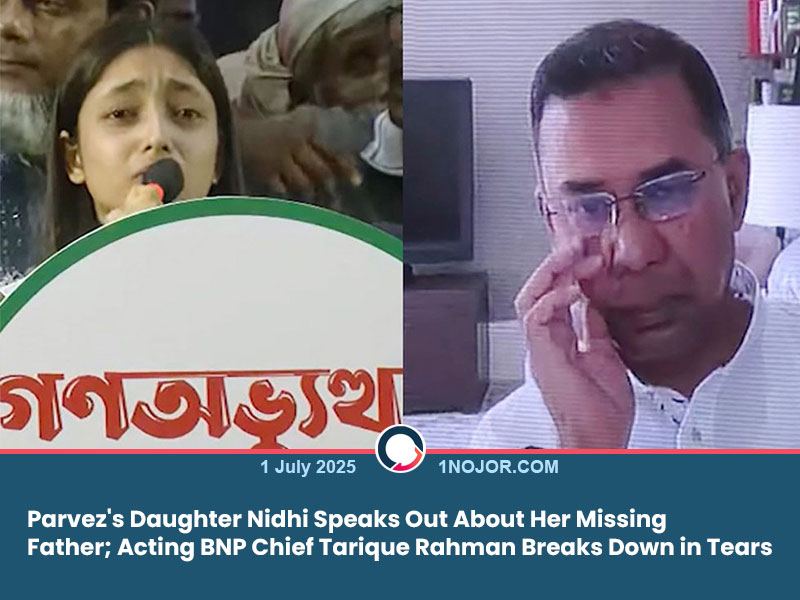
Nidhi, daughter of the disappeared student leader Parvez, has not seen her father for many years. Her emotional words brought BNP’s acting chairman Tareq Rahman to tears during the event titled “National Unity and Democratic Journey” held at the China-Bangladesh Friendship Conference Center in Dhaka. When Nidhi asked, “Will my brother and I ever be able to embrace our father again?” Tareq was seen wiping away tears. Several relatives of those who have been victims of enforced disappearance and torture also shared their painful stories at the event. Sanjida Islam Tuli of the organization Mayer Dak emphasized the urgent need to hold Prime Minister Hasina and others responsible for the disappearances accountable.
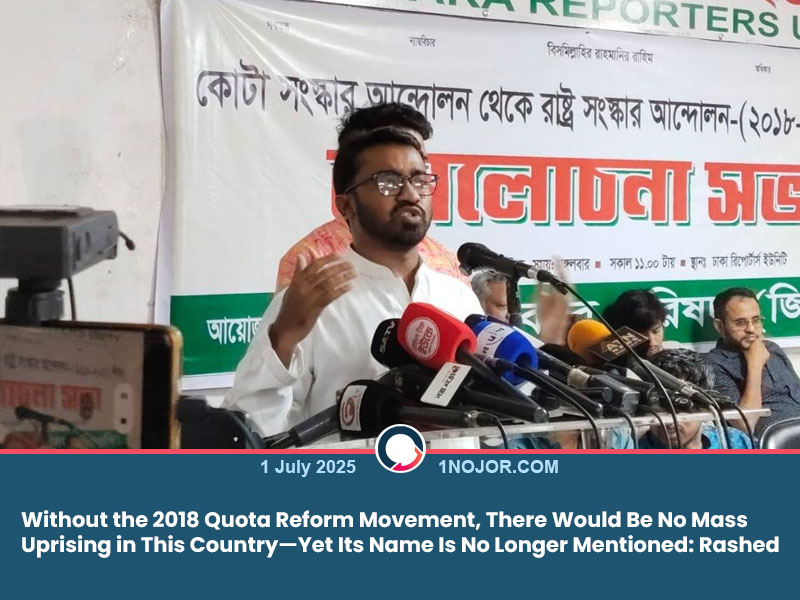
Rashed Khan, a key leader of the Gono Adhikar Parishad and a prominent figure in the 2018 quota reform movement, has criticized the erasure of that movement's historical significance. He emphasized that the quota reform protests were the precursor to any modern mass uprisings in Bangladesh. Khan warned that ignoring the contributions of real activists only deepens divisions within the anti-authoritarian movement. He cautioned that such disunity could pave the way for the return of the Awami League and renewed suppression of dissent. He called for unity built on mutual respect and tolerance.
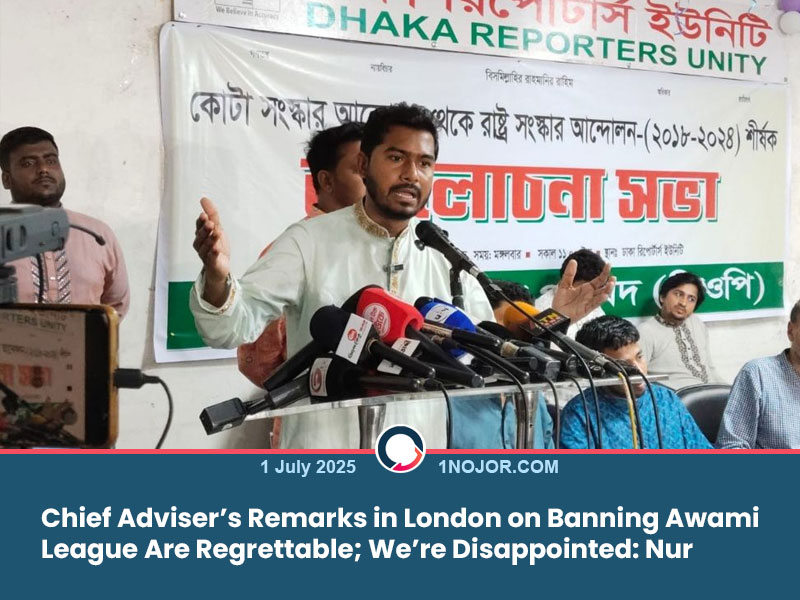
At a recent discussion commemorating the July uprising, Nurul Haque Nur, President of the Gono Adhikar Parishad, expressed disappointment over remarks made in London by the group's chief advisor, suggesting a temporary ban on the Awami League for national security reasons. Nur stated, “We are deeply disheartened by such comments. There will be no compromise on this issue.” He added that the government's failure to act on proposals for a national unity government has only deepened political divisions. He urged all political forces to rally around the ideals of the July uprising and avoid further polarization.
In a moving scene in Pirganj, Rangpur, Monowara Begum, mother of martyred activist Abu Sayeed, tearfully blessed Nahid Islam, Convener of the NCP, by placing her hand on his head. The moment marked the beginning of the party’s nationwide "July March." Following a visit to Abu Sayeed’s grave, NCP leaders met with his family. Party representatives reaffirmed their commitment to building a new Bangladesh by realizing Abu Sayeed's dreams.

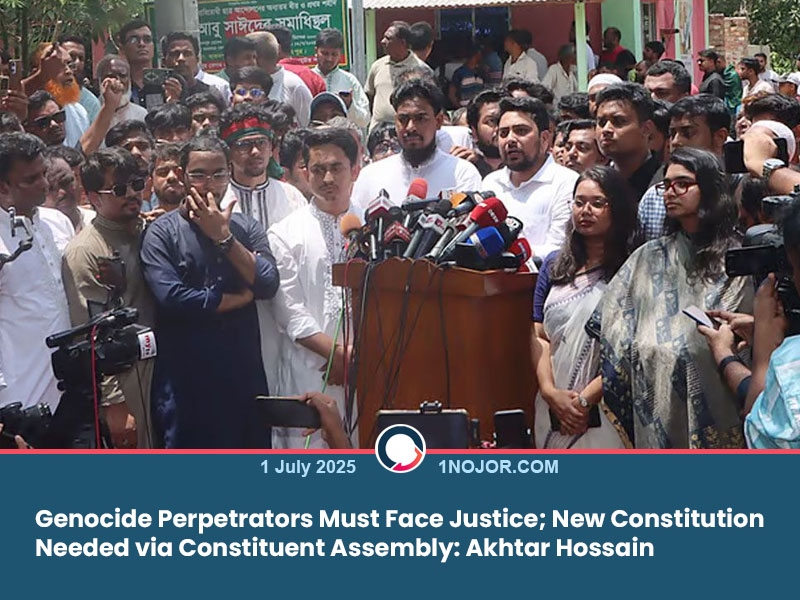
Akhtar Hossain, Member-Secretary of the National Citizen Party (NCP), has called for the prosecution of those responsible for genocide and crimes against humanity during the July uprising. Speaking in Rangpur after paying respects at the grave of martyred activist Abu Sayeed, Hossain demanded the abolition of the existing "Mujibist" constitution and the drafting of a new one through an elected constituent assembly. He described Abu Sayeed as a symbol of resistance against inequality and pledged that the NCP, alongside students and citizens, would carry forward his legacy through continued struggle.
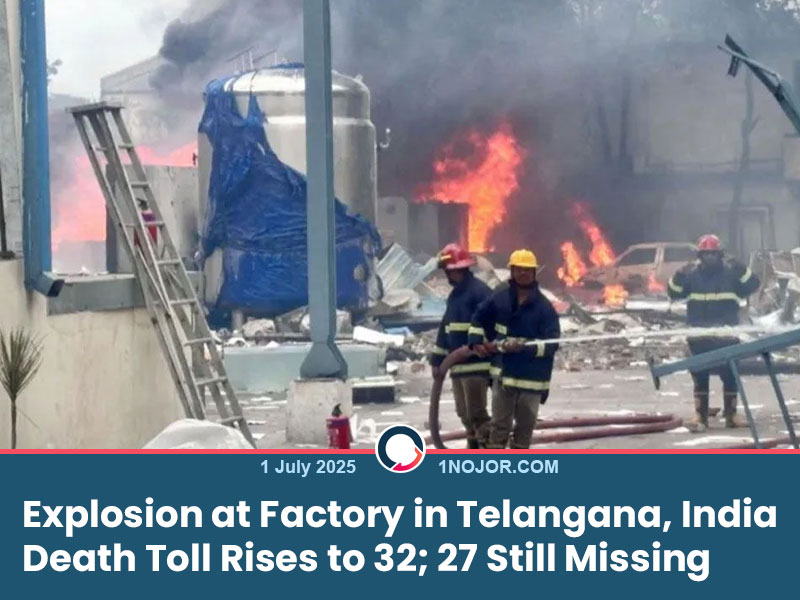
A devastating explosion at a pharmaceutical factory in Sangareddy district, Telangana, has killed at least 32 people, with 27 still reported missing. At the time of the blast, 108 workers were on-site—many of them migrant laborers from Bihar, Uttar Pradesh, and Odisha. The explosion was so intense that parts of the building collapsed, making body identification difficult. Rescue operations continue amid the rubble. While the exact cause remains unknown, preliminary suspicions point to a malfunction in the air dryer system. The Chief Minister is scheduled to visit the site on Tuesday.
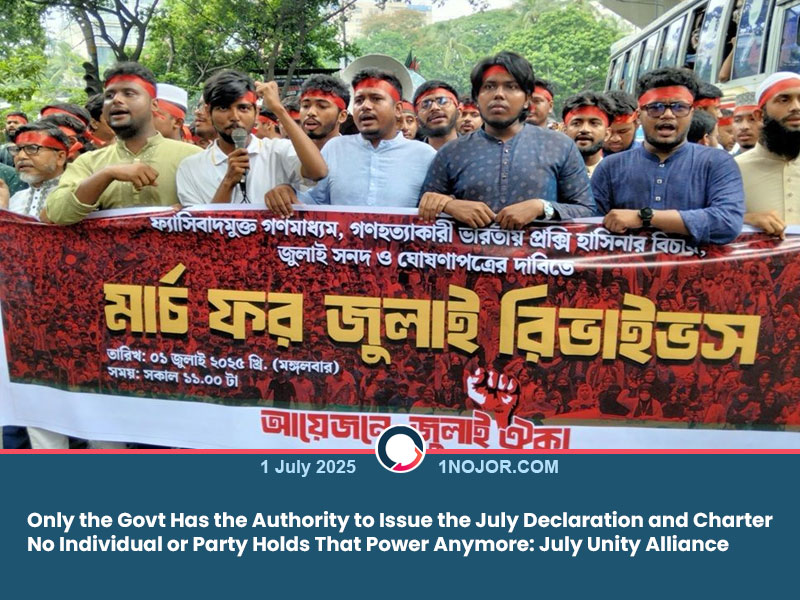
Leaders of the July Unity Platform have asserted that only the government has the authority to issue the "July Declaration and Charter" going forward. At the 'March for July Revives' rally held outside the National Museum, speakers criticized the government for failing to issue the declaration even 11 months after it was first demanded. They warned that if the government continues to delay, the people—particularly students and youth—will take matters into their own hands. The platform also called for constitutional recognition of July uprising veterans, justice for persecuted journalists, and sweeping reforms in public administration.
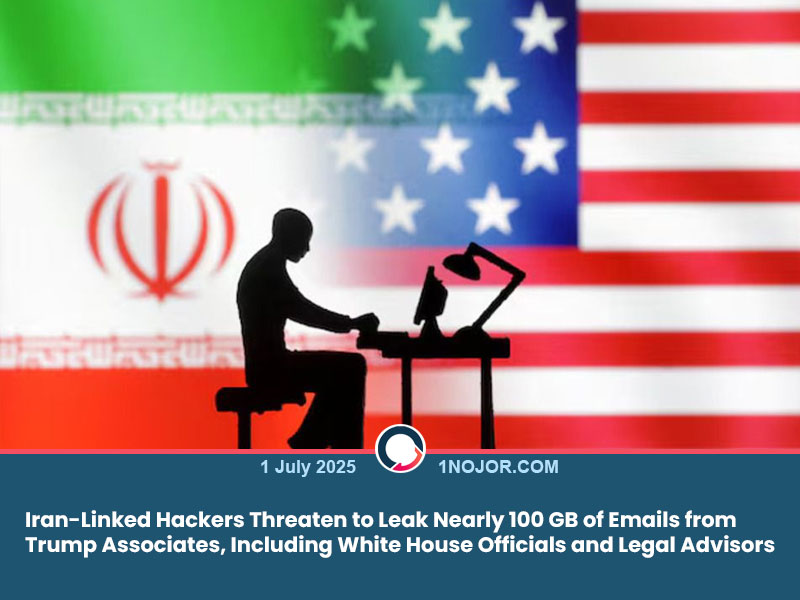
A hacker group with alleged ties to Iran has threatened to leak nearly 100 gigabytes of emails belonging to former U.S. President Donald Trump's inner circle. The group claims to have breached the email accounts of several White House officials, Trump’s legal advisors, and senior aides. During the 2024 U.S. presidential election, the same hackers reportedly leaked emails to the media, though the leaks did not significantly impact the outcome. Despite a stern announcement of investigation by U.S. authorities, the hackers have remained silent. The U.S. Department of Justice suspects that Iran’s Islamic Revolutionary Guard Corps (IRGC) may be behind the attack. Sources also indicate that efforts are underway to sell the stolen emails, with Reuters allegedly being approached to publicize the breach.
Fayez Ahmed, senior assistant press secretary to the Chief Adviser, accused the Awami League of once again mocking the nation, stating this proves the party is incapable of reform. In a social media post, he said if given another chance, the party would act even more brutally. He claimed the party cannot return to power unless it admits to the crimes of the July massacre and other offenses committed over the past 16 years—something he says Prime Minister Hasina would never do. He added that Hasina’s leadership is now being rejected even within her own party.

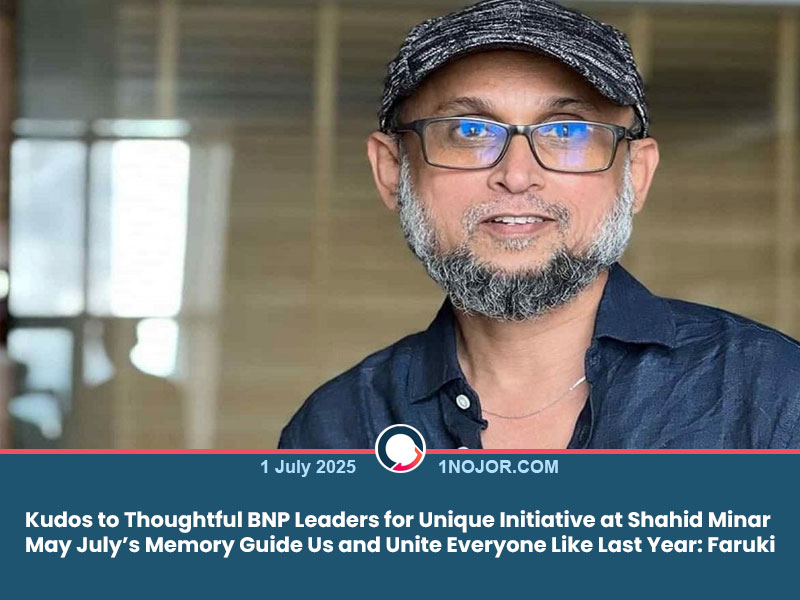
Advisor and filmmaker Mostofa Sarwar Farooki lauded BNP leaders for their initiative to organize a "July Remembrance" event at the Shaheed Minar, calling it a high-quality and meaningful gesture. He urged everyone to participate in national remembrance events as well as programs by all stakeholders. Farooki also thanked the creators of The Red July video, noting the powerful impact of the theme song, especially in Arko Mukherjee’s rendition.
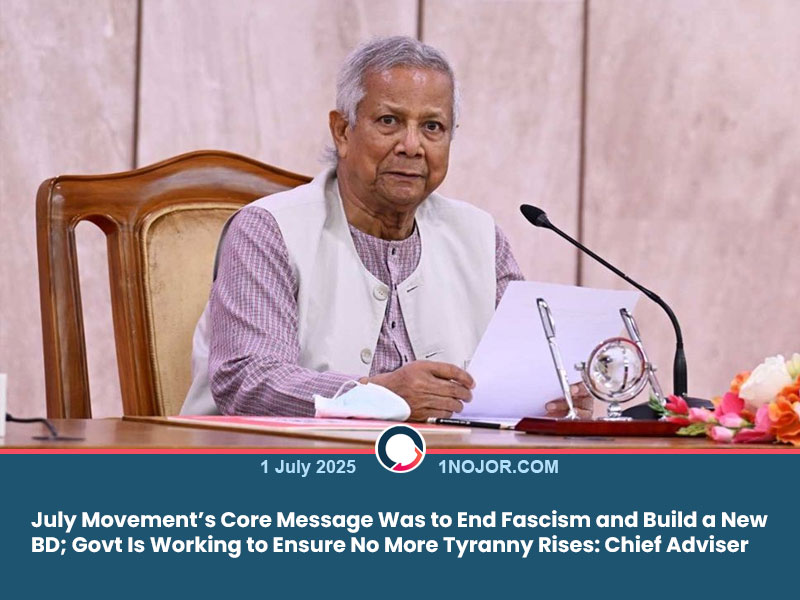
Chief Adviser Dr. Muhammad Yunus stated that the July uprising was aimed at eliminating fascism and building a new Bangladesh, and that the government is working to realize this vision. Speaking at the launch of a month-long program marking the anniversary of the July uprising, he said the movement serves not only as a remembrance but as a renewed pledge. He called on all citizens to make July a month of democratic awakening and national unity.
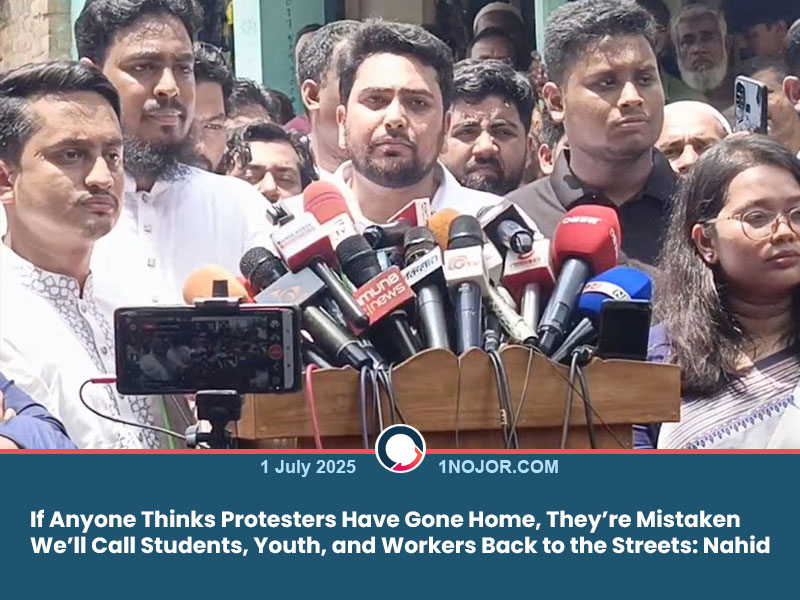
Nahid Islam, convener of the National Consensus Platform (NCP), announced from the grave of martyr Abu Sayeed in Pirganj that activists will return to the streets if demands from the July Declaration are not met. He asserted that the movement has not ended and called for a mass rally in Dhaka on August 3 involving students, workers, and citizens. Describing the visit as the launch of a nationwide dialogue, he reaffirmed the movement’s goals: justice, reform, and a new constitution.
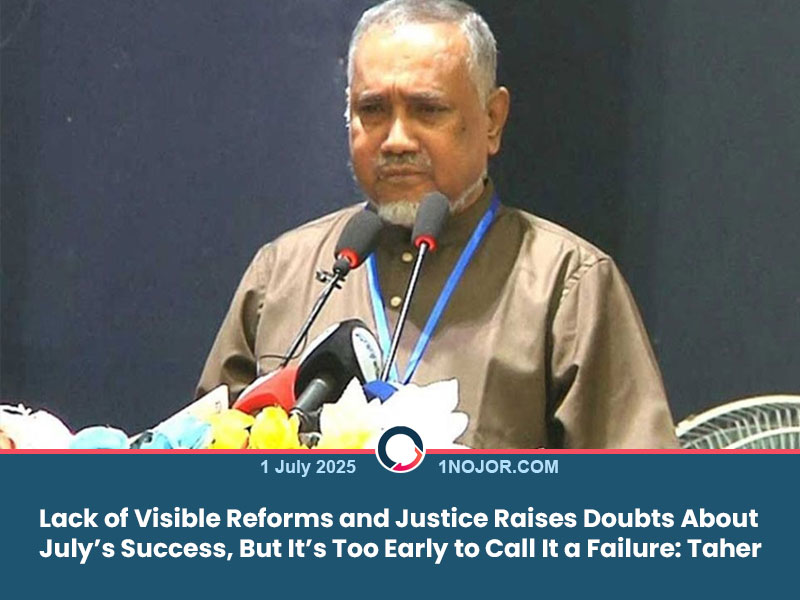
Syed Abdullah Mohammad Taher, deputy leader of Jamaat-e-Islami, said although some remain skeptical due to a lack of visible reforms and justice, it's premature to declare the July movement a failure. He stressed that the ousting of authoritarian rule and the pursuit of public liberation remain the movement's most significant achievements. He warned that any future election without true reform would plunge the nation into deeper crisis and urged all parties to unite for fundamental change.
The ‘1 Nojor’ media platform is now live in beta, inviting users to explore and provide feedback as we continue to refine the experience.