

The ‘1 Nojor’ media platform is now live in beta, inviting users to explore and provide feedback as we continue to refine the experience.
Football fans around the world are anticipating a potential clash between Brazil and Argentina in the 2026 FIFA World Cup, marking what could be their first World Cup encounter in 36 years. The two South American giants last met in the tournament in 1990, when Argentina edged out Brazil in the Round of 16. The possibility of a new showdown depends heavily on how both teams perform in the group stage of the expanded 2026 edition. If both Brazil and Argentina top their respective groups, they would only meet in the semifinals or later. Even if both finish as runners-up, a semifinal meeting would remain the earliest possible stage. However, if one team qualifies as a third-placed side, the knockout bracket could create an earlier encounter, though the exact stage would depend on final group standings and FIFA’s knockout schedule. The official knockout pathway is expected to be clarified once FIFA finalizes the 2026 World Cup bracket, fueling excitement among fans and analysts awaiting a possible renewal of one of football’s fiercest rivalries.

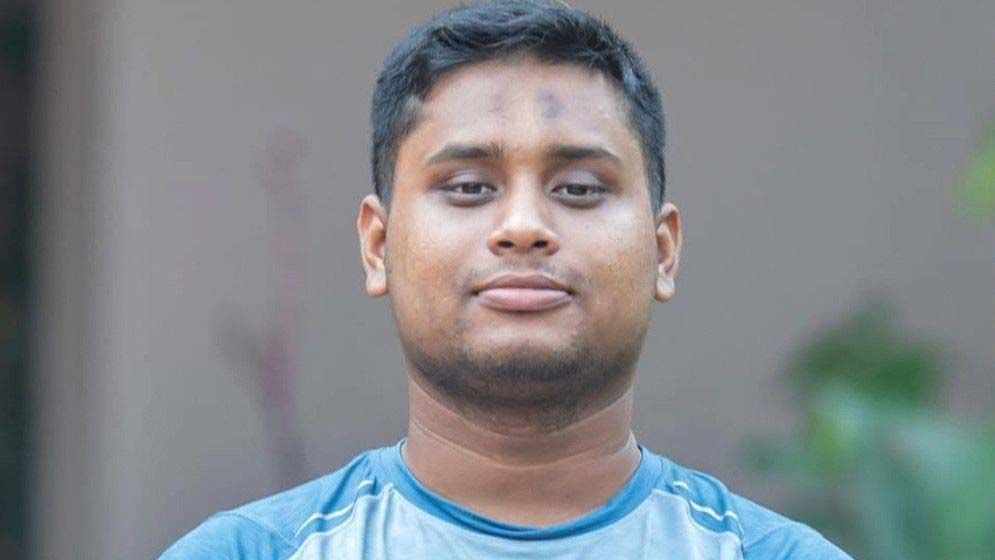
National Citizen Party (NCP) South Region chief organizer Hasnat Abdullah has declared that he will contest the upcoming election in Devidwar independently, without forming any alliance. Speaking at a courtyard meeting in Rajamehar Union on Friday night, he said he would continue working for the people even if he received only ten votes, emphasizing his commitment to the constituency over electoral success. Hasnat addressed speculation that he would not secure more than 500 votes without joining a coalition, asserting that he is personally engaging with voters across Devidwar. He noted that many local elders have urged him to consider alliances, but he remains determined to stand alone. According to him, educated youths and students from various universities have already joined the NCP and are actively supporting his campaign. He added that young people and women are increasingly aligning with his party’s symbol, the Shapla (water lily), and expressed confidence that his campaign would rely on grassroots volunteers rather than financial resources or formal agents.
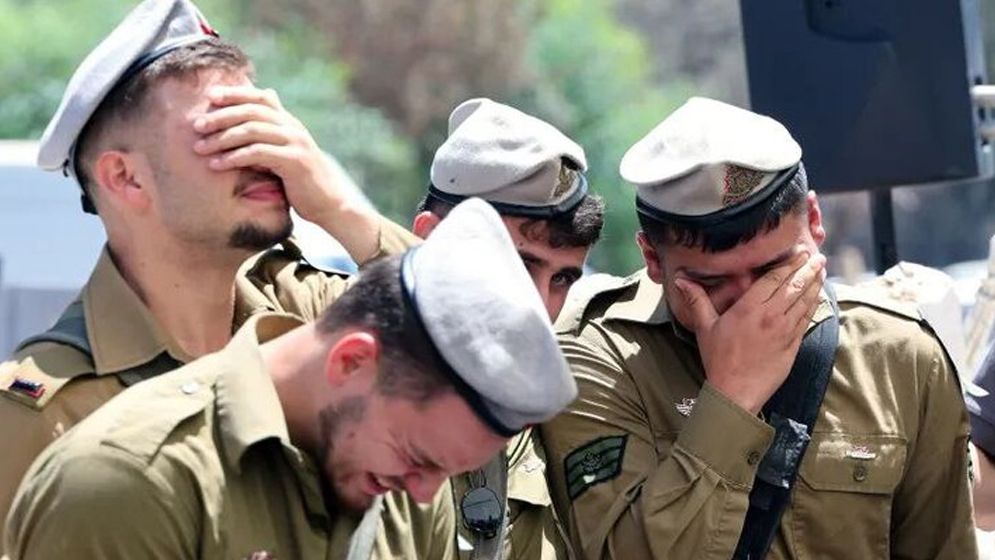
Israel’s military has reported an unprecedented rise in suicides among its soldiers since the Gaza war began on October 7, 2023. According to official data released by the Israel Defense Forces (IDF), the number of suicides has sharply increased each year since the conflict started, reflecting a growing mental health emergency within the ranks. Between October and December 2023, seven active soldiers took their own lives. The figure rose to 21 in 2024, and at least 20 more suicides have been recorded in early 2025. Before the war, the annual average was around 12 cases, meaning the rate has nearly doubled. Analysts and mental health experts attribute the surge to prolonged combat exposure, traumatic battlefield experiences, and sustained psychological stress. The findings have sparked debate within Israel about the adequacy of mental health support for soldiers and the long-term human cost of the Gaza conflict. Military officials are reportedly reviewing counseling programs and considering expanded psychological services to address the crisis.
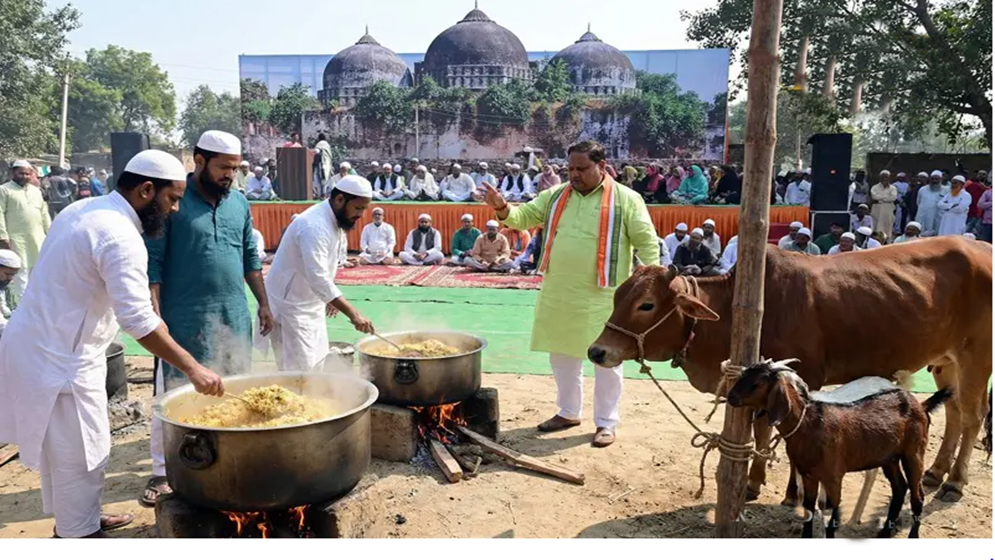
In West Bengal’s Murshidabad district, expelled Trinamool Congress MLA Humayun Kabir initiated the foundation-laying ceremony for a new mosque named 'Babri Masjid' in Beldanga on Saturday. The event, organized across 25 bighas near Moradighi, is expected to draw nearly 300,000 attendees, including religious scholars from Saudi Arabia. Around 40,000 biryani packets have been prepared for guests, with total event costs estimated between ₹6–7 million. Kabir, recently ousted from the Trinamool Congress for anti-party activities, has continued the initiative despite political backlash. Local police, following Calcutta High Court directives, have deployed about 3,000 officers to maintain order and traffic flow along National Highway 12. Authorities have expressed concern over potential congestion due to the large turnout. The event has stirred unease within the Trinamool Congress, as Kabir’s move is seen both as a show of defiance and a test of his local influence. The ceremony, beginning with Quran recitations, is scheduled to conclude by late afternoon under police supervision.
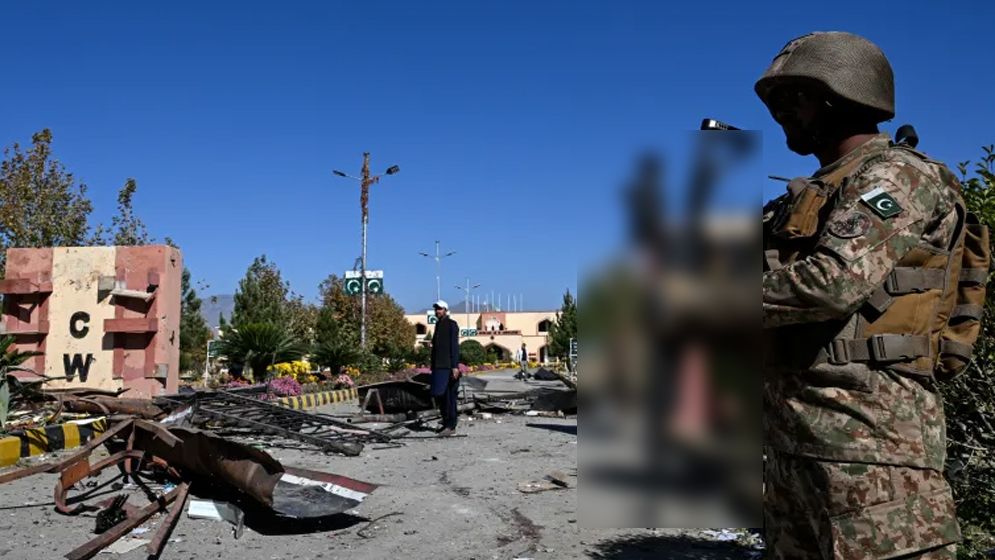
A deadly overnight exchange of fire between Pakistani and Afghan forces broke out along the Spin Boldak border, killing at least four civilians, Afghan officials confirmed on Saturday. The four-hour-long clash marked a serious breach of the fragile ceasefire brokered less than two months ago by Qatar and Turkey. Residents fled the border town as gunfire continued through the night, while hospitals in Kandahar reported receiving multiple casualties. Both Islamabad and Kabul acknowledged the incident but traded blame over who initiated the attack. Pakistan’s spokesperson for Prime Minister Shehbaz Sharif accused the Taliban of unprovoked firing, asserting that Pakistani forces responded decisively to protect national security. The Taliban, however, claimed Pakistan launched the assault first, forcing them to retaliate. The renewed violence comes shortly after both sides met in Saudi Arabia for a fourth round of talks aimed at resolving broader disputes. Despite agreeing to uphold the ceasefire, the latest confrontation underscores persistent mistrust and heightens concerns over regional stability along the 2,574-kilometer border.
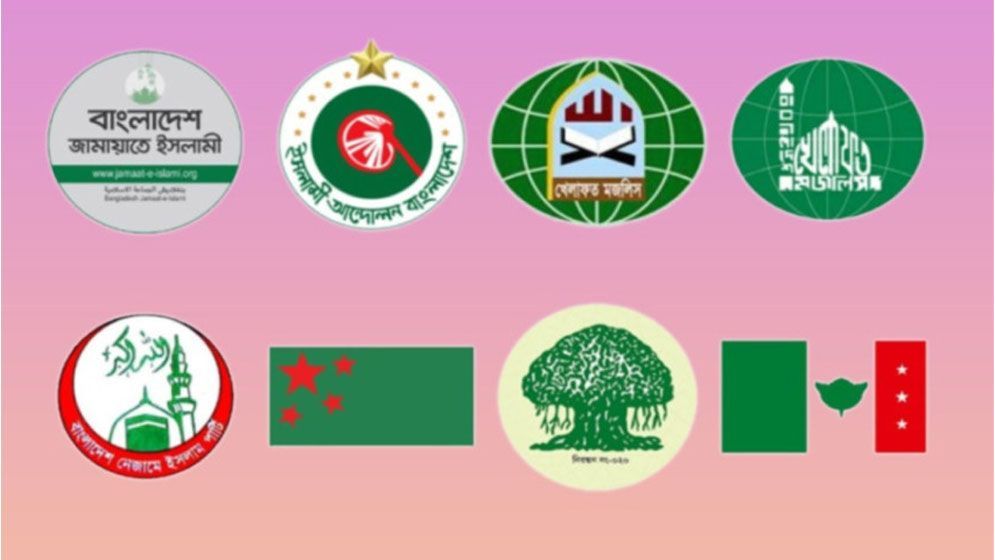
Eight Islamist and like-minded political parties held a large-scale rally in Sylhet’s historic Alia Madrasa field today, aiming to demonstrate unity and public strength ahead of Bangladesh’s upcoming national election. Central leaders from all eight parties attended, with speeches scheduled from noon to late afternoon. Organizers built a large stage and installed around 100 microphones to accommodate the expected massive turnout. The rally, coordinated by Jamaat-e-Islami’s Sylhet city leader Muhammad Fakhrul Islam, focused on five key demands, including a referendum on the July National Charter Implementation Order and ensuring a level playing field in the election. The city was decorated with banners, arches, and posters, as organizers anticipated attendance from across the Sylhet division. Political observers note that the gathering could signal renewed cooperation among Islamist parties seeking greater influence in national politics. The event’s outcomes may shape future alliances and policy debates around electoral reform and Islamic governance principles.
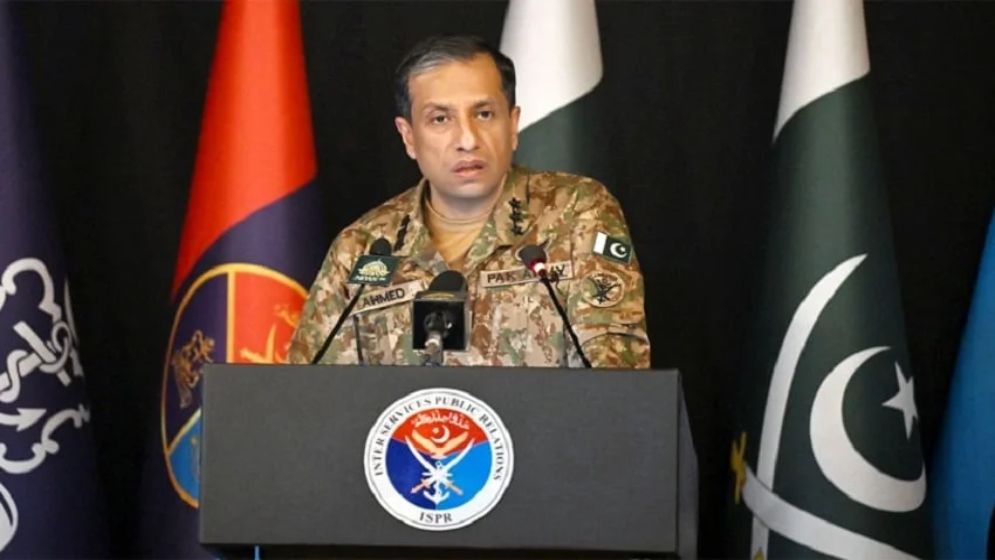
Pakistan’s military spokesperson, Lieutenant General Ahmed Sharif Chaudhry, stated that jailed former Prime Minister Imran Khan’s recent remarks pose a threat to national security. Speaking at a press conference on December 5, the Inter-Services Public Relations (ISPR) Director General said Khan continues to believe that the country cannot function without him in power, describing his political career as over and driven by ego and emotion. Chaudhry accused Khan of inciting citizens to withhold electricity bill payments and discouraging overseas remittances, actions he said undermine the state. He also warned that negative comments against the army’s leadership would not be tolerated. The ISPR chief emphasized that the army remains apolitical and loyal to the constitution, rejecting any attempt to drag it into politics. The statement comes amid growing tensions between Khan’s Pakistan Tehreek-e-Insaf (PTI) party and the military establishment. Analysts suggest the remarks signal a hardening stance by the army, potentially deepening Pakistan’s political polarization ahead of future elections.
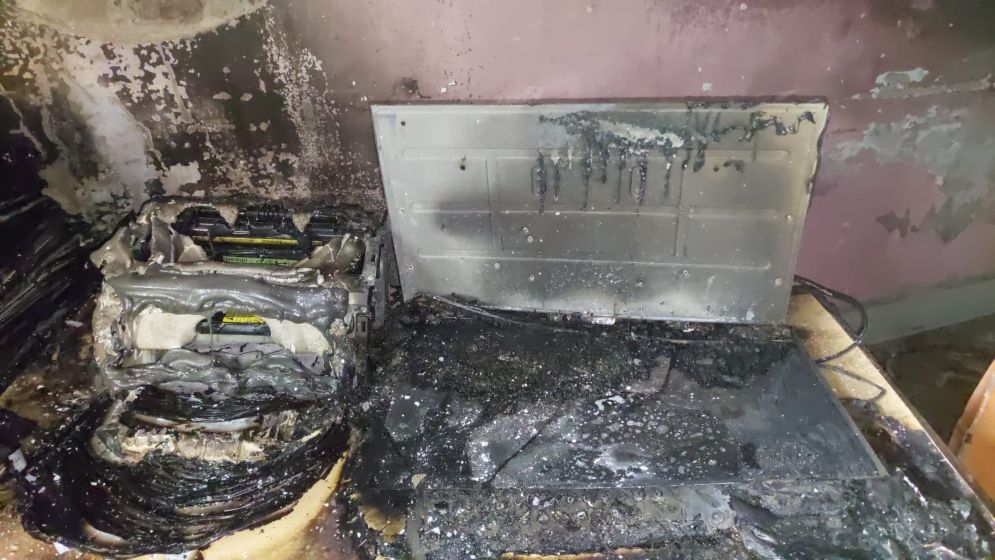
Two key government offices in Magura — the Assistant Land Commissioner’s office and the District Sub-Registrar’s office — were set on fire early Saturday morning, reportedly by unidentified miscreants. The attackers allegedly poured petrol through windows and door gaps before igniting the blaze around 4 a.m. The fire damaged crucial land records, cash stamps, computers, and other official documents before firefighters managed to bring it under control. According to police sources, bottles and petrol residues were recovered from the scene. The night guard alerted emergency services by calling 999, prompting a rapid response from the fire service. Additional Superintendent of Police Mirajul Islam stated that no formal complaint had yet been filed by either office, but law enforcement had already begun an independent investigation to identify those responsible. Authorities are assessing the extent of the damage and potential data loss. The incident has raised concerns about the security of sensitive land and registration records in the district, prompting calls for enhanced surveillance and fire safety measures in government facilities.
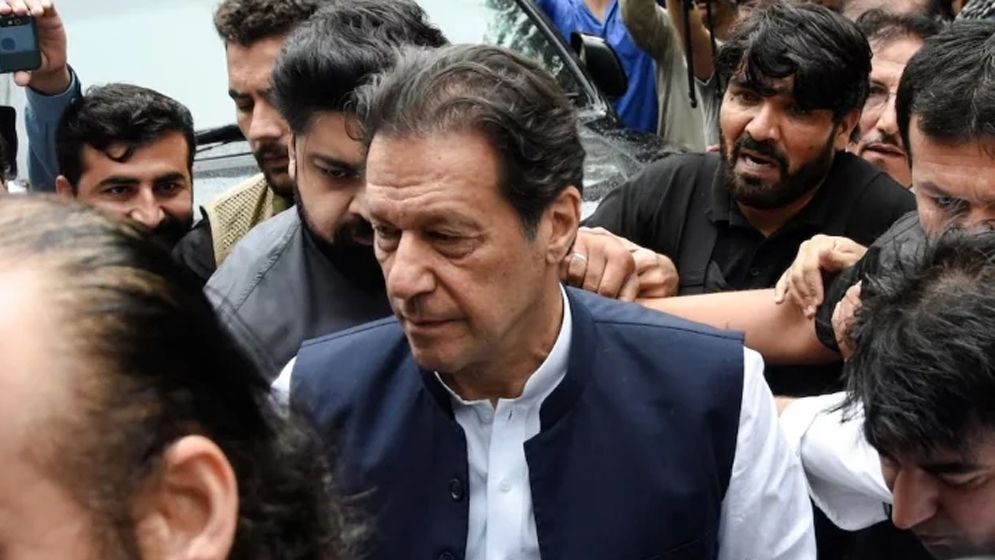
Pakistan’s federal government has imposed a complete ban on all meetings with former Prime Minister Imran Khan inside Adiala Jail, Information Minister Attaullah Tarar announced on Friday. The minister described Khan as a ‘war-mongering extremist’ and said the decision was taken under prison regulations to prevent political directives being issued from inside the facility. Tarar warned that any attempt to disrupt law and order outside the prison would be met with swift and strict action. He accused Khan and his Pakistan Tehreek-e-Insaf (PTI) party of trying to push the country toward economic default by allegedly writing to the IMF and orchestrating violent attacks on military installations on May 9. The minister also claimed that PTI members were distancing themselves from Khan’s ‘Taliban-like mindset’. The government is reportedly considering imposing governor’s rule in Khyber Pakhtunkhwa, a PTI stronghold. Tarar emphasized that there would be no dialogue with groups promoting extremism or anti-state narratives, signaling a further hardening of Islamabad’s stance against Khan and his supporters.
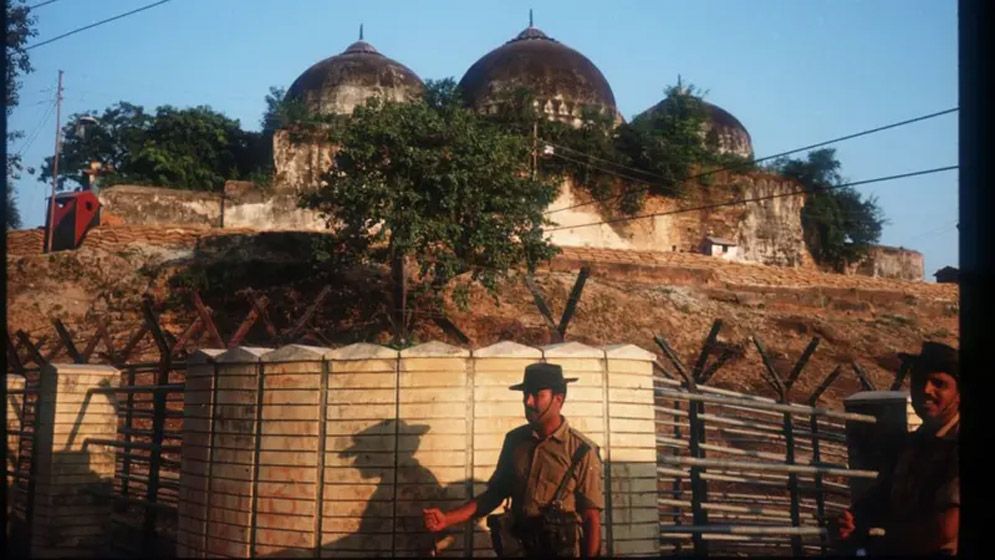
December 6 marks the anniversary of the 1992 demolition of the Babri Masjid in Ayodhya, India—an event that continues to shape South Asia’s political and cultural discourse. The destruction of the 16th-century mosque, built by Mir Baqi in 1528, was not merely the fall of a structure but a symbolic rupture in India’s pluralistic and secular fabric. The incident exposed the fragility of state institutions when confronted with religious nationalism. The Babri demolition followed decades of tension, from the 1949 idol installation to the 1980s rise of Hindutva politics and the 1990 Rath Yatra led by L.K. Advani. The Liberhan Commission later concluded the demolition was premeditated, not spontaneous. Human rights data indicate over 2,000 deaths in communal violence between 1992 and 2002, reflecting the deep societal scars left by the event. The 2019 Supreme Court verdict granting the disputed land for temple construction reignited debates on justice and secularism. Analysts argue that December 6 remains a moral reminder—civilization cannot be built on destruction but on coexistence, equality, and the courage of reason.
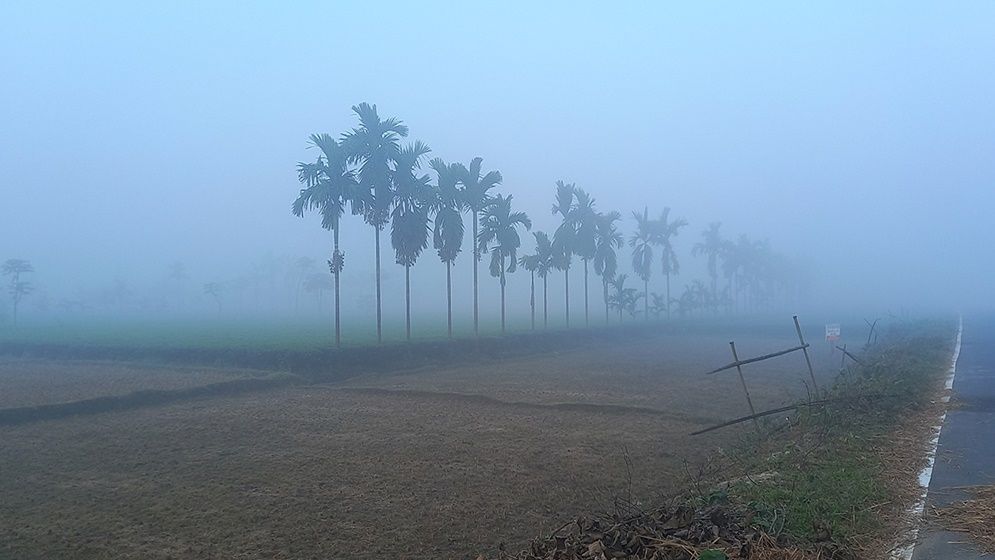
Northern Bangladesh is experiencing a sharp drop in temperature as Tetulia, in Panchagarh district, recorded 10.5°C at 9 a.m. on Saturday, marking the lowest temperature of the current winter season. The humidity level stood at 94%, intensifying the cold sensation from early morning. Earlier in the week, the temperature had remained steady around 12°C for three consecutive days. According to Jitendranath Roy, acting officer of the Tetulia Meteorological Observatory, the sudden fall in temperature signals the possibility of a cold wave in the coming days. Dense fog has also reduced road visibility, forcing vehicles to move slowly with headlights on. On Friday, the maximum daytime temperature reached 27°C, showing a wide fluctuation between day and night temperatures. Meteorologists warn that if the downward trend continues, northern districts could face an early cold wave this December, affecting daily life, agriculture, and transportation in the region.
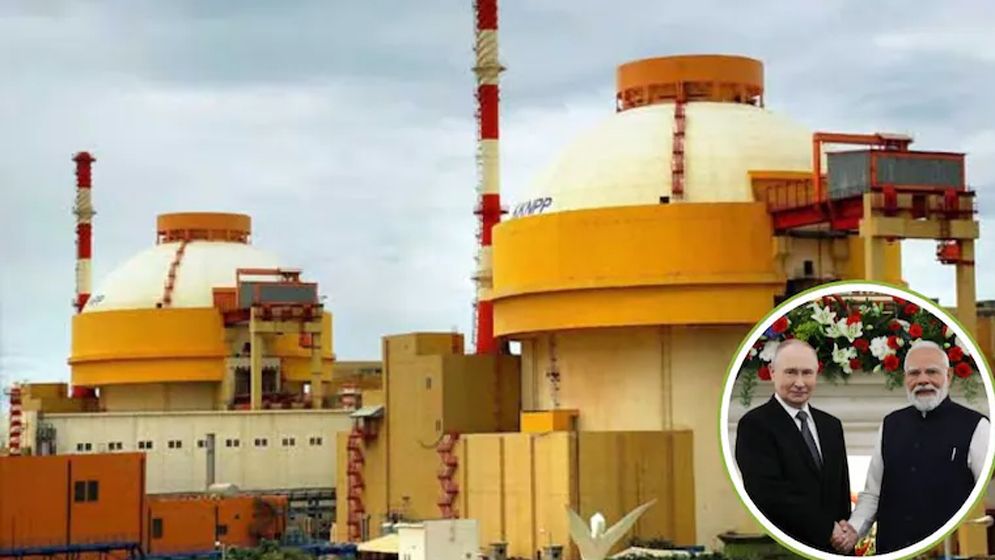
Russian President Vladimir Putin has reaffirmed his country’s commitment to bringing India’s largest nuclear power plant, located in Kudankulam, Tamil Nadu, to full operational capacity. The project, comprising six reactors with a total capacity of 6,000 megawatts, is being developed in partnership with India’s state-run agencies. Two reactors are already connected to the national grid, while construction continues on the remaining four. During a joint press conference in New Delhi with Indian Prime Minister Narendra Modi, Putin highlighted the project as a milestone in bilateral energy cooperation. Russia’s state-owned nuclear corporation, Rosatom, has already delivered the first batch of nuclear fuel for the plant’s third reactor, produced at the Novosibirsk Chemical Concentrates Plant. Under a 2024 agreement, Russia will supply fuel for the third and fourth reactors throughout their operational lifetimes. The collaboration underscores Russia’s role as a key energy partner for India, which aims to generate 100 gigawatts of nuclear power by 2070. Both nations are also exploring future cooperation on small modular reactors and floating nuclear facilities.
Ireland, Spain, the Netherlands, and Slovenia have announced they will boycott the 2026 Eurovision Song Contest in protest against Israel’s participation. The decision follows the European Broadcasting Union’s (EBU) Geneva meeting, where members voted to adopt new voting regulations but rejected calls to exclude Israel, allowing the contest to proceed as planned. Broadcasters from Spain and Ireland expressed frustration, citing humanitarian concerns over Gaza and alleged voting irregularities involving Israel’s contestant Yuval Raphael. Spain’s RTVE said the decision eroded trust in the event’s integrity, while Ireland’s RTE called participation “unacceptable” amid ongoing civilian casualties. The Netherlands and Slovenia echoed similar sentiments, emphasizing moral and public opposition. Germany and several Nordic nations, however, backed the EBU’s stance, framing Eurovision as a celebration of cultural unity rather than politics. The boycott underscores growing divisions within the Eurovision community as it approaches its 70th anniversary, raising questions about the contest’s neutrality and future cohesion.

The Bangladesh Labour Party has officially severed its two-decade-long political alliance with the Bangladesh Nationalist Party (BNP). The decision was announced on Friday, December 5, following a meeting of the party’s National Executive Committee at its Nayapaltan headquarters, chaired by party chairman Dr. Mostafizur Rahman Iran. A press release confirmed that the Labour Party will no longer maintain any political cooperation or joint programs with the BNP. Party leaders accused the BNP of showing disregard and betrayal toward its allies, breaking promises related to movements, elections, and coalition governance. They alleged that BNP’s nomination process under Tarique Rahman favored controversial figures and was influenced by financial transactions, undermining the party’s moral leadership. The Labour Party also recalled years of sacrifice, including arrests, attacks, and deaths of activists in joint movements. The decision marks a significant shift in Bangladesh’s opposition landscape, as the once 20-party alliance continues to fragment. The Labour Party announced plans to pursue its own reformist political agenda focused on social equality and democratic governance.

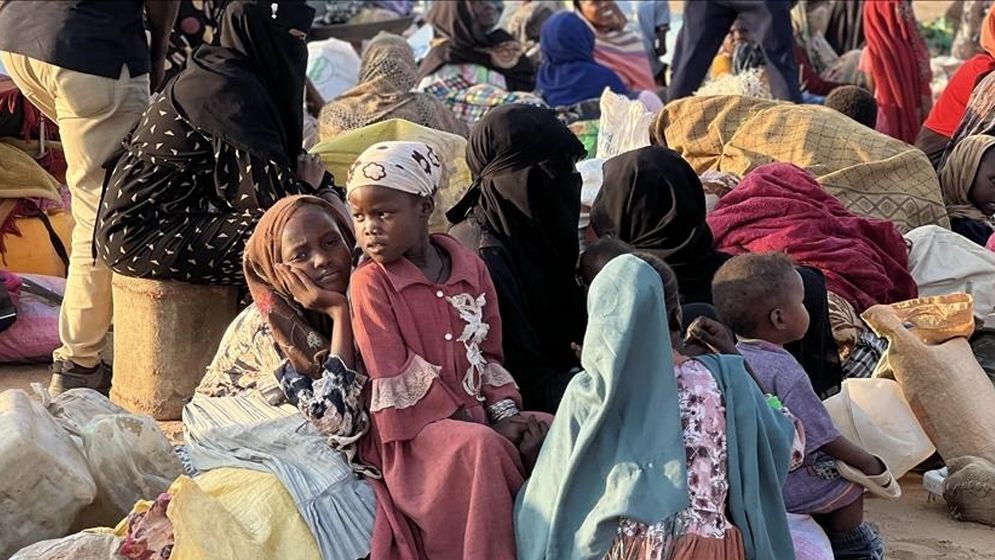
At least 79 people, including 43 children, were killed in a drone strike carried out by Sudan’s paramilitary Rapid Support Forces (RSF) in South Kordofan province, authorities confirmed on Friday. The attack, which occurred in the town of Kalogi, targeted a kindergarten, a hospital, and densely populated residential areas. Four missiles were reportedly launched from RSF drones, leaving 38 others injured. The South Kordofan state government condemned the assault as a 'heinous crime' allegedly committed by RSF-backed Sudan People’s Liberation Movement-North. UNICEF strongly denounced the attack, calling it a grave violation of children’s rights, noting that over ten victims were between five and seven years old. Local officials urged the international community to classify the RSF as a terrorist organization and take firm action to halt such violence. The incident underscores the escalating brutality of Sudan’s civil war, which began in April 2023 between the RSF and the national army. According to the World Health Organization, the conflict has already claimed at least 40,000 lives and displaced around 12 million people nationwide.
The ‘1 Nojor’ media platform is now live in beta, inviting users to explore and provide feedback as we continue to refine the experience.