

The ‘1 Nojor’ media platform is now live in beta, inviting users to explore and provide feedback as we continue to refine the experience.
The Government of Bangladesh has reassigned 158 Upazila Executive Officers (UNOs) to different ministries and departments as senior assistant secretaries. The Ministry of Public Administration issued an official notification on Wednesday night, November 26, outlining the reassignments. According to the directive, the officers must join their new workplaces by November 30. This reshuffle is part of a broader administrative move, as earlier the same day, the government appointed 166 senior assistant secretaries as UNOs in 166 upazilas. The large-scale transfer and appointment are seen as part of routine administrative restructuring aimed at enhancing efficiency and ensuring balanced distribution of experienced officers across ministries and field-level offices.

The Assam government has introduced the 'Assam Prohibition of Polygamy Bill, 2025' in the state assembly, aiming to outlaw polygamy across the state except in Sixth Schedule areas. Chief Minister Himanta Biswa Sarma presented the bill, which classifies polygamy as a criminal offense. Under the proposed law, individuals marrying again while their spouse is alive could face up to seven years in prison, while concealing a previous marriage could result in up to ten years of imprisonment and fines. The legislation also holds accountable anyone involved in facilitating such marriages, including priests, qazis, and guardians. Victims of polygamy would be entitled to compensation, and repeat offenders would face double penalties. Convicted individuals would be barred from government jobs, welfare schemes, and contesting local elections. The bill excludes Scheduled Tribes and Scheduled Castes as defined under Article 342 of the Indian Constitution. The move follows the Assam government’s ongoing efforts to reform personal laws and ensure gender justice.

A mild earthquake struck Teknaf in Cox’s Bazar early Thursday, November 27, at around 3:29 a.m. The quake, measuring 4.0 on the Richter scale, originated about 118 kilometers away in the Bay of Bengal. According to the European-Mediterranean Seismological Centre (EMSC), the tremor occurred at a depth of approximately 10 kilometers. Local authorities, including Teknaf Upazila Nirbahi Officer Sheikh Ehsan Uddin, reported that most residents did not feel the quake due to its low intensity. International monitoring site Volcano Discovery described the shaking as very light and short-lived, with no reports of panic or damage. Residents who were awake at the time said the tremor was barely noticeable. The event passed largely unnoticed as most people were asleep, and no casualties or structural impacts were reported in the area.

Guinea-Bissau’s military has seized control of the country following a disputed presidential election marked by intense rivalry between incumbent President Umaro Sissoco Embaló and opposition candidate Fernando Dias. Both contenders had declared victory before official results were announced, prompting unrest and gunfire near key government buildings. On Wednesday, senior military officers appeared on national television, declaring that they had taken 'full control' of the state to restore order. They suspended all electoral activities, closed land, air, and sea borders, and imposed a nighttime curfew. President Embaló confirmed to AFP that he had been ousted and was being held at the military headquarters. Opposition leader Domingos Simões Pereira was also detained. The coup is reportedly led by Presidential Guard chief Denis N’Kanha, who was responsible for Embaló’s security. Internet access has been disrupted as the army consolidates control. Guinea-Bissau, which gained independence from Portugal in 1974, has a long history of coups and political instability.

A Dhaka special court has sentenced former Prime Minister Sheikh Hasina to 21 years in prison in three corruption cases related to the illegal allocation of government plots under the Rajuk Purbachal New Town Project. The verdict, delivered by Judge Mohammad Abdullah Al Mamun of the Special Judge Court-5, found Hasina and 22 others guilty of abusing power, fraud, and misappropriation of state property. The cases alleged that Hasina and her associates unlawfully obtained government plots using forged documents and administrative influence. Among the co-accused are former housing ministry officials, Rajuk members, and former state minister Sharif Ahmed. This ruling follows a separate International Crimes Tribunal verdict on November 17 that sentenced Hasina to death for crimes against humanity during the July uprising. The latest judgment adds to her mounting legal troubles following her removal from power earlier this year.

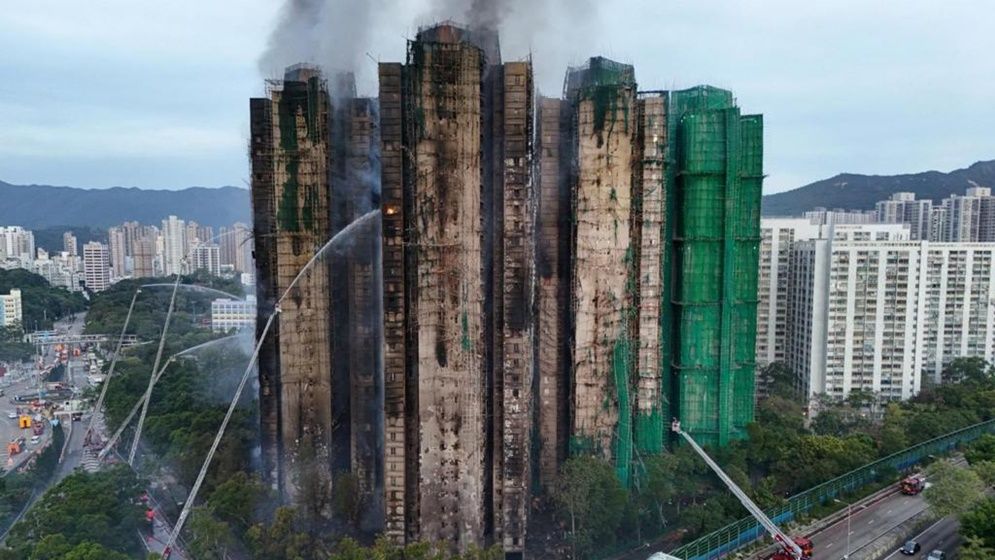
A devastating fire swept through several high-rise apartment buildings in the Wang Fuk Court residential complex in Hong Kong’s Tai Po district on Wednesday, killing at least 44 people and leaving 279 missing. The blaze, which began around 2:51 p.m. local time, quickly spread through the 31-story towers, reportedly fueled by bamboo scaffolding and construction materials surrounding the buildings. More than 800 firefighters were deployed to battle the five-alarm fire, the city’s most severe in 17 years. One firefighter was among the dead, and several others were injured while attempting to control the flames. Authorities fear the death toll could rise as many residents remain trapped inside. Hong Kong Chief Executive John Lee said the fire is now largely under control, though investigations into its cause are ongoing. The Wang Fuk Court complex, built in 1983 and undergoing renovation, contains about 2,000 residential units across eight blocks.
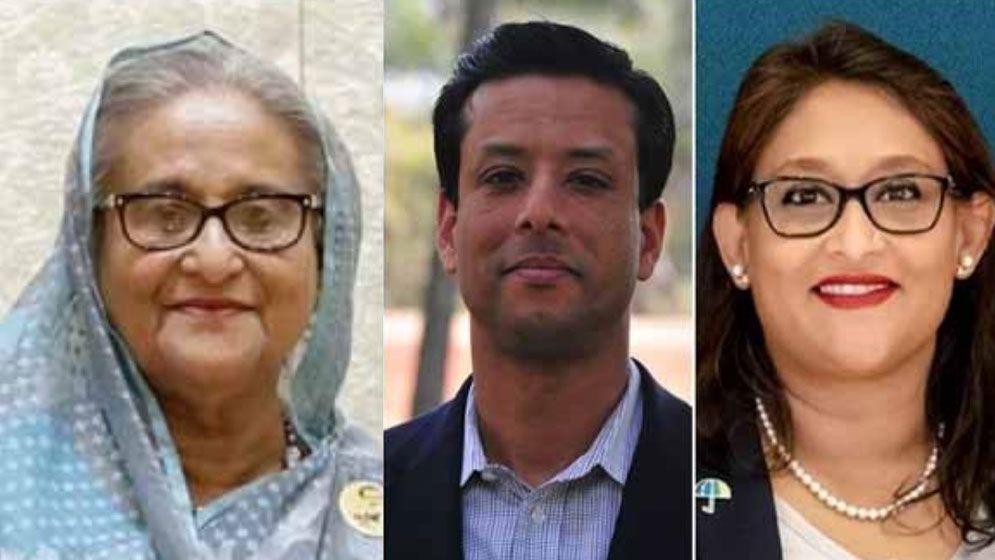
Authorities in Dhaka have heightened security around the Special Judge Court-5 as it prepares to deliver verdicts in three separate Anti-Corruption Commission (ACC) cases involving former Prime Minister Sheikh Hasina, her son Sajeeb Wazed Joy, and daughter Saima Wazed Putul. The cases concern alleged irregularities in the allocation of government plots in the Purbachal New Town Project. Judge Mohammad Abdullah Al Mamun is scheduled to announce the verdicts at 11 a.m. on Thursday, November 27. The prosecution expects life sentences for Hasina, her children, and 44 others. Former RAJUK member Mohammad Khurshid Alam, the only accused currently in custody, has been brought to court. Border Guard Bangladesh (BGB) and police have been deployed to ensure order. The ACC filed the initial case in January, later submitting a charge sheet against 12 individuals, with 29 witnesses testifying during the trial.

Bangladesh Jamaat-e-Islami held a central executive council meeting chaired by party chief Dr. Shafiqur Rahman at its Moghbazar headquarters on November 26. The meeting included prayers for the quick recovery of BNP Chairperson and former Prime Minister Begum Khaleda Zia, as well as Jamaat’s Nayeb-e-Ameer Dr. Syed Abdullah Mohammad Taher. Leaders discussed the need for a free, fair, and fear-free national election and reviewed the current political situation. The council also decided to campaign for public support in favor of the July National Charter referendum and to ensure success of upcoming rallies in seven divisional cities as part of an eight-party alliance movement. Preparations for the organization’s annual Majlis-e-Shura session, scheduled for November 28–29, were also discussed in detail.
-692790389f910.jpg)
Begum Rokeya University in Rangpur has expelled three students and issued show-cause notices to nine others following a ragging incident at Bijoy 24 Hall. The university’s 118th syndicate meeting on November 26 decided to expel Mamun Mia and Rafi Ahmed for two academic years, and Azizul Hakim for one year. The incident occurred on November 23 when senior students allegedly assaulted a junior, Din Islam, causing a ruptured eardrum. After the matter came to light through journalists, the university formed a three-member investigation committee led by Assistant Provost Dr. A.T.M. Jinnatul Basar. Based on the committee’s report, disciplinary action was taken. Vice-Chancellor Dr. Md. Shawkat Ali condemned the incident, reaffirming the university’s zero-tolerance policy toward ragging and sexual harassment in line with High Court and UGC directives. The administration emphasized that preventive measures and awareness campaigns against ragging are ongoing across the campus.

A new 'Bangladeshi Booth' has been inaugurated at Malaysia’s Prince Court Medical Centre to assist Bangladeshi patients seeking medical treatment abroad. The initiative, launched by Expat Hospital, aims to simplify the medical travel process for Bangladeshi citizens by providing services in the Bangla language and offering comprehensive support including visa and travel assistance, hotel booking, hospital appointments, coordination with specialists, halal food arrangements, and post-treatment online follow-ups. The booth serves as a reliable information and support center, helping patients overcome language barriers and logistical challenges. The inauguration follows a memorandum of understanding signed earlier in November, attended by Malaysia’s tourism minister, underscoring the importance of this collaboration. Hospital officials and guests described the booth as a milestone that strengthens medical tourism ties between Bangladesh and Malaysia, making high-quality healthcare more accessible and comfortable for Bangladeshi patients.
-692761dfe7cbb.jpg)
Unidentified miscreants set fire to an election arch built for Bangladesh Khelafat Majlis candidate Maulana Mizanur Rahman Molla in Faridpur-4 constituency on Wednesday night. The incident occurred around 8 p.m. near former mayor Fayez Mia’s residence in Bhanga municipality, where the arch had been erected along the Dhaka-Gopalganj highway. Witnesses recorded the burning structure and shared videos on social media, prompting outrage among the candidate’s supporters. Mizanur Rahman condemned the attack, urging law enforcement to identify and arrest those responsible. He warned that such acts could escalate political tensions as the 13th National Parliamentary Election approaches. Bhanga Police Station Officer-in-Charge Ashraf Hossain confirmed that police visited the scene and have launched an investigation into the arson. The incident has raised concerns about election-related violence and security in the region.

A Dhaka court is set to deliver verdicts today in three corruption cases involving former Prime Minister Sheikh Hasina, her son Sajeeb Wazed Joy, her daughter Saima Wazed Putul, and 44 others. The Anti-Corruption Commission (ACC) filed the cases over alleged irregularities in the allocation of government plots in the Purbachal New Town Project. The Special Judge’s Court-5, led by Judge Mohammad Abdullah Al Mamun, will announce the verdicts at 11 a.m. on Thursday. Prosecutors expect life imprisonment for all accused, claiming sufficient evidence was presented to prove the charges. Hasina, Joy, and Putul have been absconding since the beginning of the trial, while former RAJUK member Khurshid Alam remains in custody. The cases, filed separately in January, accuse the defendants of abusing power to obtain 10-katha plots illegally. Investigations concluded in March, and multiple witnesses testified in each case. The verdicts are expected to have significant political and legal implications in Bangladesh.
Police in Savar arrested notorious gang leader Roni Mia, known locally as 'Kutta Roni', during an attempted robbery on National Citizen Party (NCP) leader Tamim Azhar on Wednesday night. The incident occurred around 10:30 p.m. in the Dogormora area, where locals helped capture Roni and his associate Rabbi before handing them over to police. Roni, 48, has a long criminal record including murder, robbery, and drug-related cases, and leads a gang of about 30 active members. Police recovered a Chinese switchgear from Roni and a modern knife from Rabbi. Officers said Roni had been released on bail just a month earlier in a murder case and had resumed criminal activities. Authorities plan to present both suspects in court while launching a special operation to arrest other members of the 'Kutta Roni gang'. Residents expressed relief and hope that the gang will finally be dismantled and justice ensured.
-6927d626ecfea.jpg)
Indian singer Anuv Jain’s much-anticipated concert in Dhaka, scheduled for December 12, has been postponed due to security concerns. The event, organized by Hypnation and set to take place at Courtside, Madani Avenue, was called off after organizers cited their inability to ensure a safe environment for audiences, sponsors, and partners. In a Facebook post, Hypnation stated that the concert would be rescheduled once the situation stabilizes and full safety can be guaranteed. The organizers also mentioned that details regarding ticket refunds will be announced soon. This postponement follows similar cancellations of international concerts in Dhaka, including the ‘Legends Live in Dhaka’ show featuring Bangladeshi rock icon James and Pakistani singer Ali Azmat, which was canceled in November due to permission issues. Several other international performances, including those by Pakistani artists Jal, Kaavish, and Atif Aslam, are also planned in the coming weeks, though their status remains uncertain.

Liverpool’s struggles deepened as they suffered a 4-1 home defeat to PSV Eindhoven in the Champions League, marking their worst run in 71 years. The loss at Anfield was Liverpool’s ninth in their last 12 matches and their third consecutive defeat, during which they have conceded 10 goals. The team, currently 12th in the Premier League table, has lost six of their past seven league games despite heavy investment before the season. This is their first home loss to PSV since 2008 and their first group-stage home defeat in the Champions League in five years. Defensive errors, including a penalty conceded by Virgil van Dijk, and missed opportunities from Cody Gakpo contributed to the collapse. Coach Arne Slot’s decision to bench record signing Alexander Isak also failed to yield results. With qualification for the Champions League round of 16 now uncertain, Liverpool face mounting pressure to recover from their worst form since the 1953–54 season.

The ‘1 Nojor’ media platform is now live in beta, inviting users to explore and provide feedback as we continue to refine the experience.