

The ‘1 Nojor’ media platform is now live in beta, inviting users to explore and provide feedback as we continue to refine the experience.
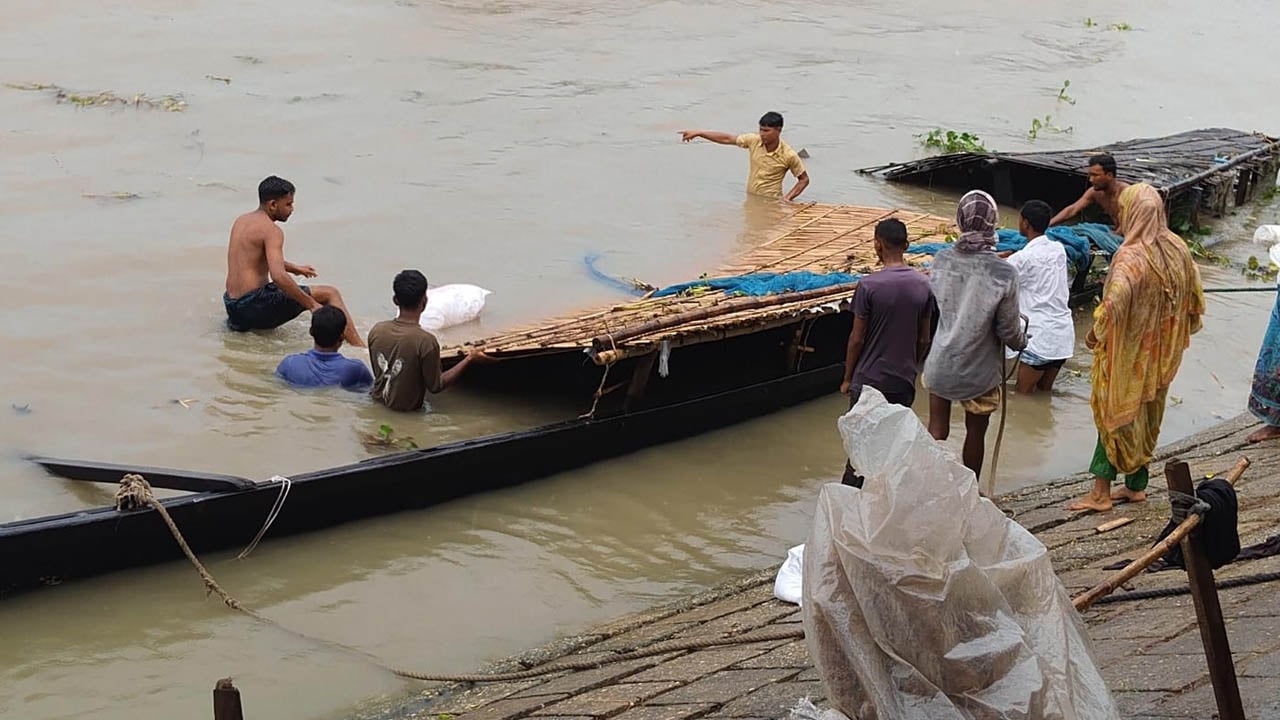
Four boats sank at Ramna Banderghat in Chilmari upazila of Kurigram after a sudden storm and unusually high waves struck the Brahmaputra River on Tuesday afternoon. Several other boats and a speedboat were also damaged. Witnesses said the sky suddenly darkened before light rain and gusty winds began, creating unexpectedly large waves that battered the moored boats against the riverbank’s block pitching. Two boats from the Roumari and Kodalkati routes and two from Chilmari were reported sunk, with their hulls ruptured by the impact. Around 50 sacks of urea fertilizer and passengers’ belongings were lost to the river. Boat owners described the event as abrupt and unlike anything they had seen before, noting that wind intensity was moderate but the waves were abnormally strong. No casualties were reported. Owners of the damaged boats are attempting to recover their vessels and goods, while local administration and relevant authorities are monitoring the situation.
Supporters of two local leaders from the BNP and Jubo Dal clashed on Tuesday afternoon in Bongram Union of Katiadi upazila, Kishoreganj. The confrontation occurred in Bongram Bazar and nearby areas, leaving several people injured. Police arrived at the scene and brought the situation under control. According to local sources, the dispute began after Member of Parliament Advocate Md. Jalal Uddin attended a rally in Dhuladia Union but did not visit Bongram Bazar as expected. This led to an argument between Bongram Union BNP General Secretary Munjurul Haque Pintu and Jubo Dal President Anwar Hossain. Witnesses said both sides used local weapons, including spears and bricks, during the clash. Anwar Hossain alleged that Pintu verbally abused a local ward member in the MP’s presence, and after the MP left, Pintu’s supporters attacked them. Attempts to reach Pintu for comment were unsuccessful. Bongram Union BNP President Nurul Amin Masud said efforts were underway to resolve the issue peacefully.

A man named Abdul Karim, aged 40, died on Tuesday afternoon while undergoing treatment at Rangpur Medical College Hospital following injuries sustained in a clash over a land dispute between brothers in Magura Union of Kishoreganj upazila, Nilphamari. The incident occurred on Monday afternoon when long-standing tensions between six brothers, including Amin Uddin and his five siblings, erupted into violence. Abdul Karim, the son of Abdul Wahab and brother-in-law of Amin Uddin, was seriously injured during the confrontation. Local sources and Magura Union Parishad Chairman Akhtaruzzaman Mithu confirmed the death and said the conflict stemmed from a long-running land dispute. Police arrived at the scene to bring the situation under control and began collecting information about those involved. Kishoreganj Police Station Officer-in-Charge Lutfor Rahman stated that police have been deployed and efforts are underway to identify and arrest the suspects. The incident has caused tension in the area, and authorities are continuing their investigation into the fatal clash.

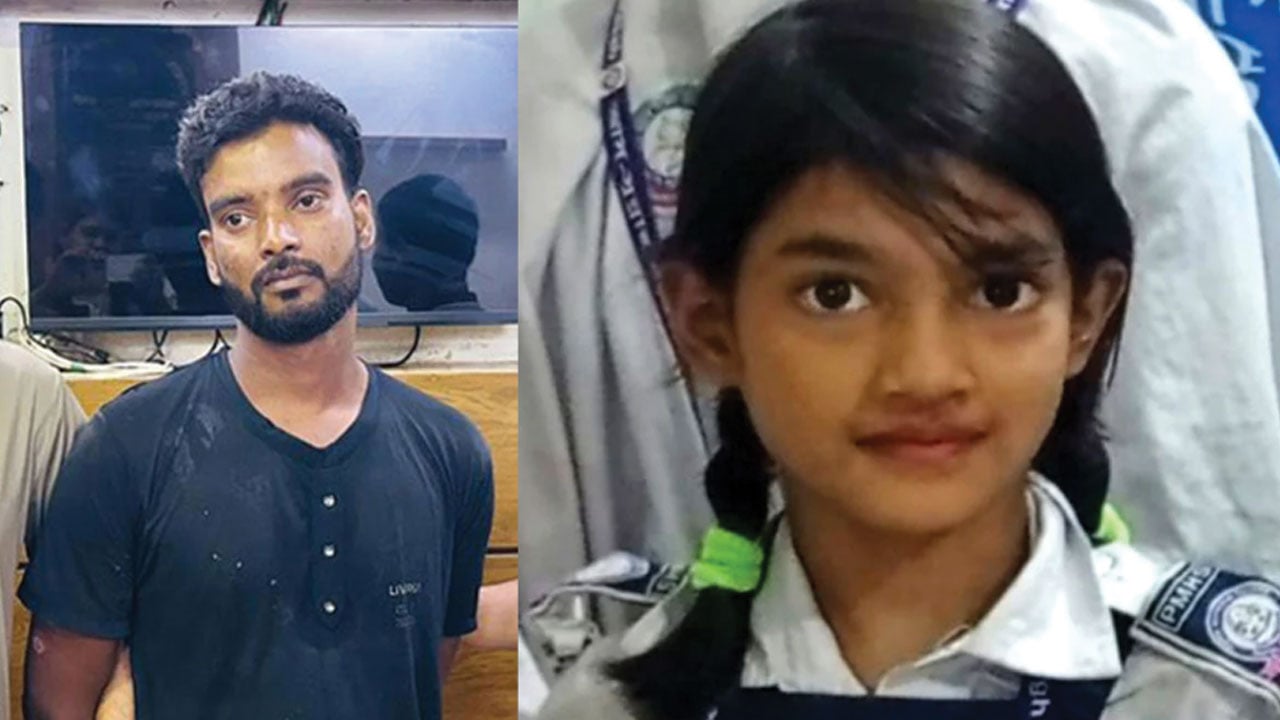
In Dhaka’s Child Violence Suppression Tribunal, accused Sohel Rana admitted guilt while co-accused Swapna Akter claimed innocence in the case of the rape and murder of child Ramisa Akter in Pallabi. The hearing took place on Wednesday, June 3, 2026, before Judge Masrur Saleqin, who read out the charges and witness statements to both defendants. Sohel asked for forgiveness, while Swapna maintained she had done nothing wrong. The court set the next hearing for Thursday to present arguments. According to the case details, Ramisa, a second-grade student at Popular Model High School, was found dead on May 19 after being lured into Swapna’s flat. Her body was discovered decapitated, and Swapna alleged that her husband Sohel committed the crime. The child’s father, Abdul Hannan Molla, filed the case the same day, leading to the arrests of both accused. Sohel later confessed in court, while Swapna was sent to jail. The tribunal earlier completed witness testimony from sixteen individuals and will now proceed to the argument phase of the trial.
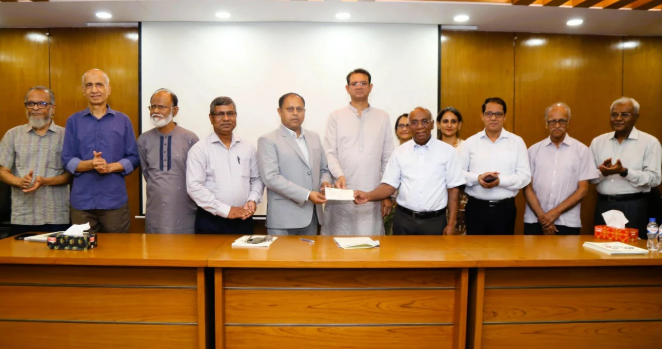
Dhaka University’s International Center for Ocean Governance and China’s First Institute of Oceanography jointly inaugurated a modern ocean observation and environmental modeling initiative in Bangladesh’s coastal waters. The daylong seminar marking the launch was held on June 2, 2026, at Dhaka University, with Vice-Chancellor Professor Dr. A. B. M. Obaidul Islam as chief guest. Participants included academics, researchers, students, and representatives from national institutions such as the Ministry of Fisheries and Livestock, the Bangladesh Navy, and SPARRSO, alongside Chinese scientists. Speakers emphasized the importance of international collaboration in marine science, coastal monitoring, and climate resilience. The Vice-Chancellor noted that the partnership between Bangladesh and China opens new opportunities for sustainable resource management and coastal risk mitigation. He highlighted that Bangladesh’s economy, coastal livelihoods, and biodiversity depend on sustainable ocean resource management. The initiative will enhance researchers’ capacity in real-time buoy data analysis, oceanographic modeling, and environmental monitoring. It will also support scientific assessment of microplastic, heavy metal, and oil pollution, creating a platform for data-driven environmental decision-making.
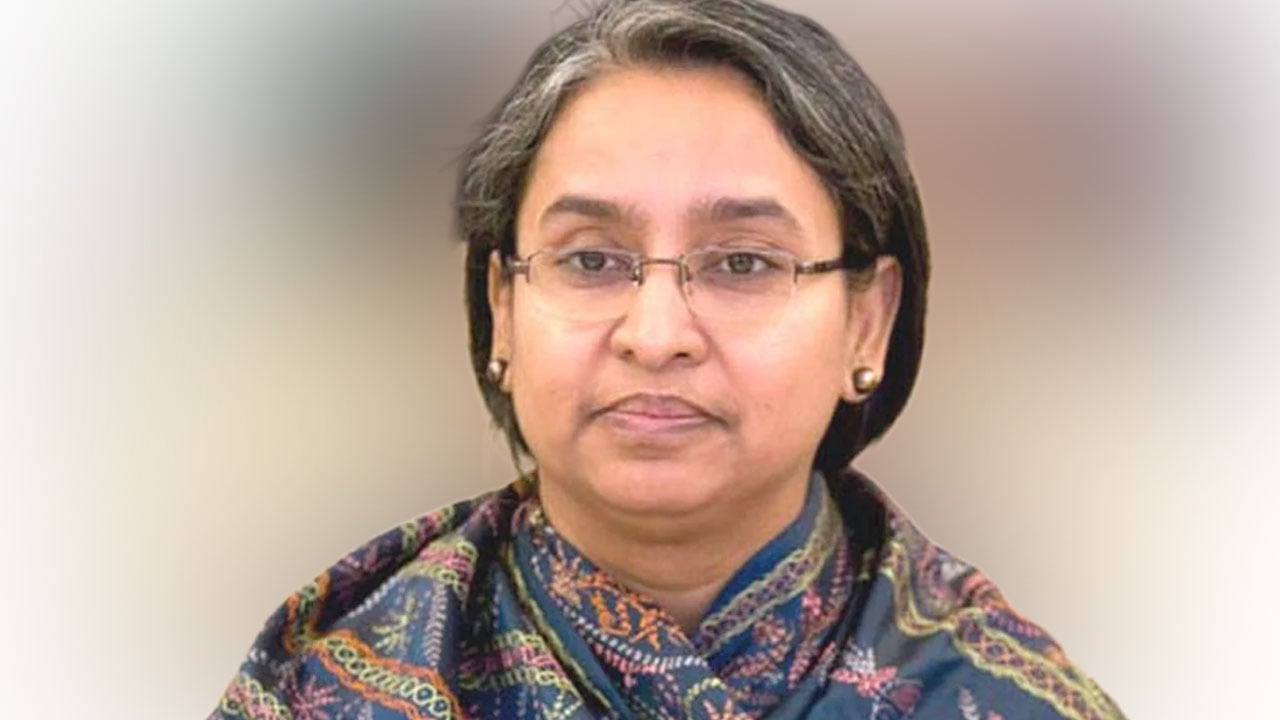
Former minister and Awami League joint general secretary Dr. Dipu Moni has filed bail petitions in seven cases lodged at various police stations in Dhaka. The High Court is scheduled to deliver its order on these petitions today, June 3, 2026. The bench comprising Justice Md. Khairul Alam and Justice Sheikh Abu Taher will announce the decision in the afternoon. The hearings on the bail petitions concluded on June 2, and the court fixed June 3 for the order. Dr. Dipu Moni previously served as foreign minister, education minister, and social welfare minister during the Awami League’s 15-year tenure in government. Following the fall of the Awami League government on August 5, 2024, amid student and public protests, police arrested Dipu Moni on August 19 from Baridhara in Dhaka. She faces more than 38 cases, including charges of murder, crimes against humanity, corruption, and incitement to violence.
A man named Tanzirul Islam Samrat from Char Darbesh Union in Sonagazi upazila of Feni has applied to the Ministry of Home Affairs for a shotgun license to protect his daughter. Samrat submitted the application on May 31 and shared the information on June 2, 2026. He stated that the license is sought specifically for the safety of his seven-year-old daughter. According to Samrat, he is concerned about his child’s safety due to the current social situation and various unwanted incidents in the country. He described himself as a responsible father who wants to ensure family security and self-defense through legal means. In his application, Samrat pledged to strictly follow all existing laws and regulations regarding firearm use and to exercise maximum caution to prevent misuse of the weapon.

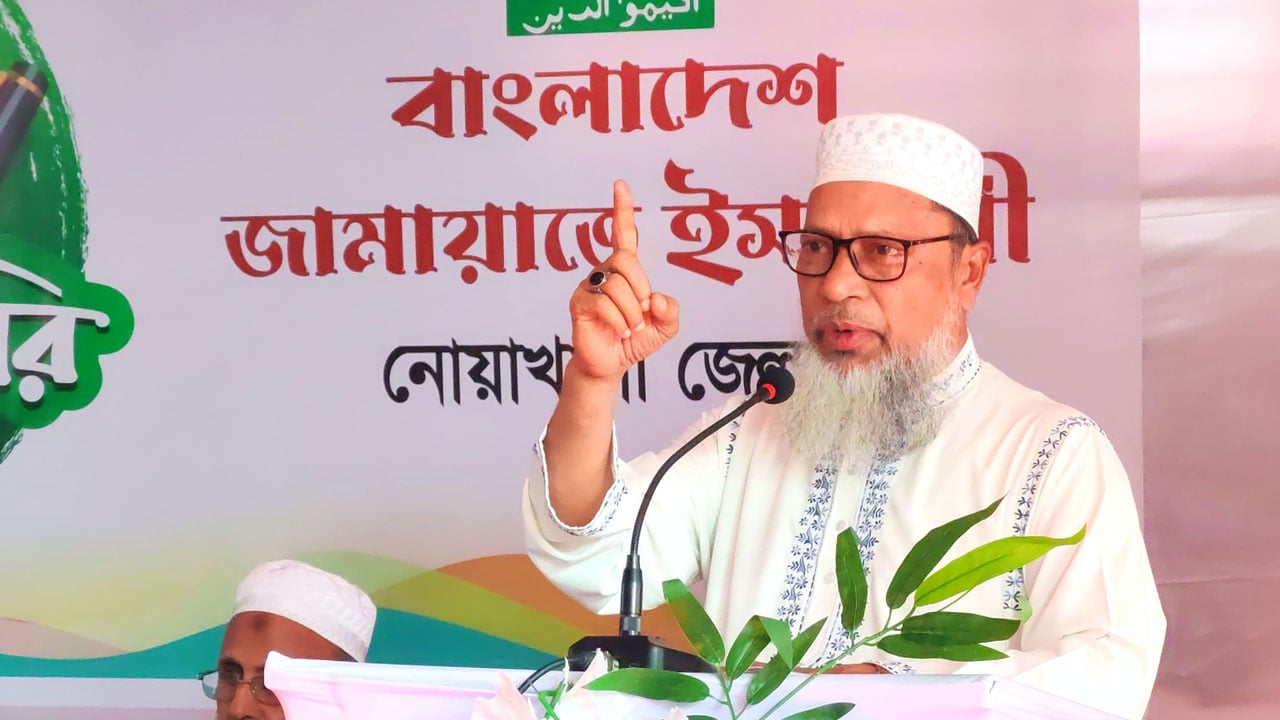
Jamaat-e-Islami Central Assistant Secretary General ATM Masum has warned that the current government will not survive even a year if it continues to ignore public opinion. Speaking on Tuesday, June 2, 2026, at a day-long 'Advanced Worker Training Camp' organized by Noakhali District Jamaat, he accused the government of betraying the ideals of the July fighters and failing to reform the state and constitution in line with the July Charter. Masum sharply criticized the government’s performance over the past three months, citing rising murder, rape, extortion, and commodity prices, as well as political favoritism in administration and education. He also alleged failures in attracting donors and investment, and in maintaining Bangladesh’s international image and diplomacy. The event was chaired by Noakhali District Ameer Ishaq Khondaker and conducted by District Secretary Maulana Md. Borhan Uddin, with central leader Maulana Mohammad Shahjahan attending as a special guest. Masum further expressed anger over remarks by government figures about Sharia law and Qurbani, warning against the rise of new authoritarianism and vowing resistance to any form of tyranny or conspiracy.
A youth was killed and three others were injured in a clash that broke out during a wedding ceremony in the Challisha area of Netrakona Sadar on Monday night. The incident occurred around 11:45 p.m. in front of the Bamnikona Sangsad Bazar Mosque. The deceased was identified as Faisal Mia, 18, son of Nazrul Islam from Bamnikona village. The injured were Robin, 18, Saurav, 18, and Sadekul Islam, 42, all residents of the same village. According to police, an argument erupted between Faisal and his companions and several others from the same area during the wedding. The altercation escalated, and the opposing group attacked them with bamboo sticks, leaving them seriously injured. Locals rescued the victims and took them to Netrakona Modern Sadar Hospital, from where Faisal and Sadekul were later transferred to Mymensingh Medical College Hospital due to their critical condition. Faisal died around 2 a.m. Additional Superintendent of Police Sajal Kumar Sarkar said that police have launched an operation to arrest those involved and are proceeding with legal action.

Police in Godagari upazila of Rajshahi seized a shipment of firearms and ammunition being smuggled from the Chapainawabganj border area to Kushtia. Acting on a tip-off, a team from the Premtoli Police Investigation Center conducted an operation at Rajabarihat on Tuesday afternoon. During the search of a private car, officers recovered two foreign pistols, four magazines, and 53 rounds of ammunition. A young woman and a man were arrested at the scene. The detainees were identified as Dulal Sheikh, 36, and Sanjida Akter Shimu, 18, both residents of the Bottoli Charmatha area in Kushtia Sadar upazila. Police said they had received reliable information around 2 p.m. that a car carrying arms had left Kansat in Chapainawabganj for Kushtia. A checkpoint was set up on the Rajshahi–Chapainawabganj highway, where the vehicle was intercepted and searched. Authorities are interrogating the detainees to gather information about other members of the arms smuggling network. A case under the Arms Act is being prepared, and the two suspects will be sent to court on Wednesday.
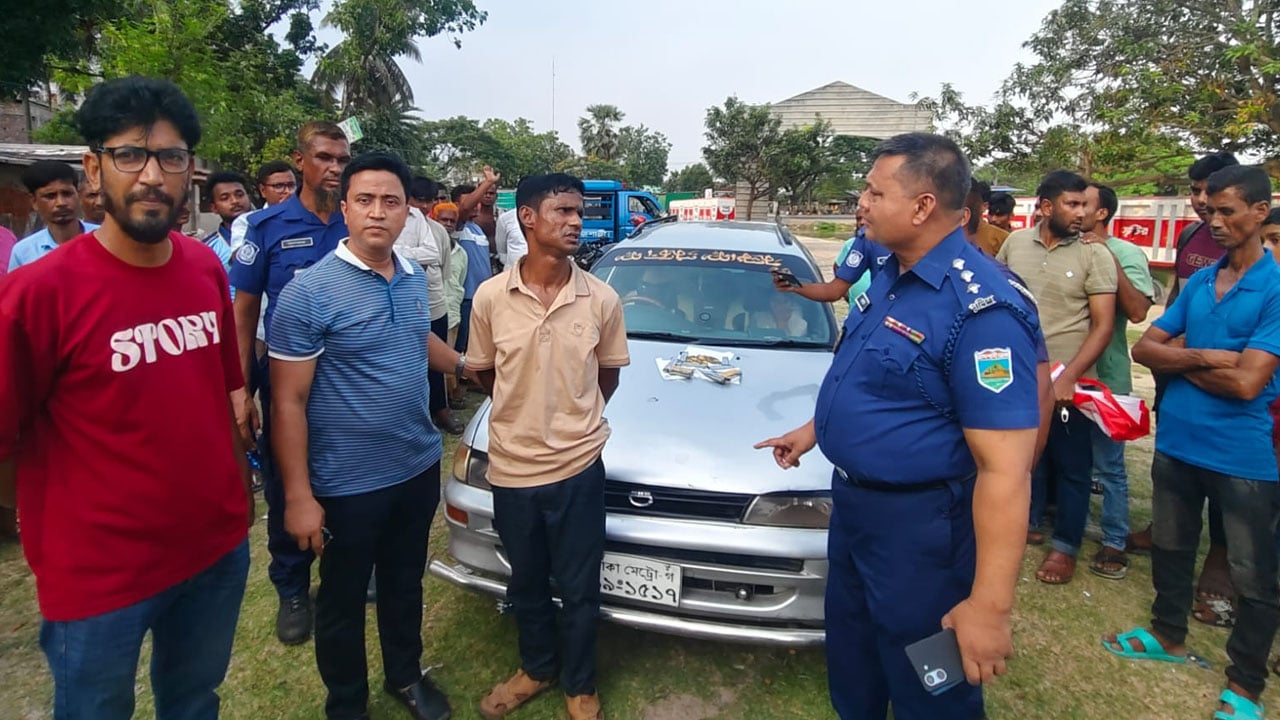
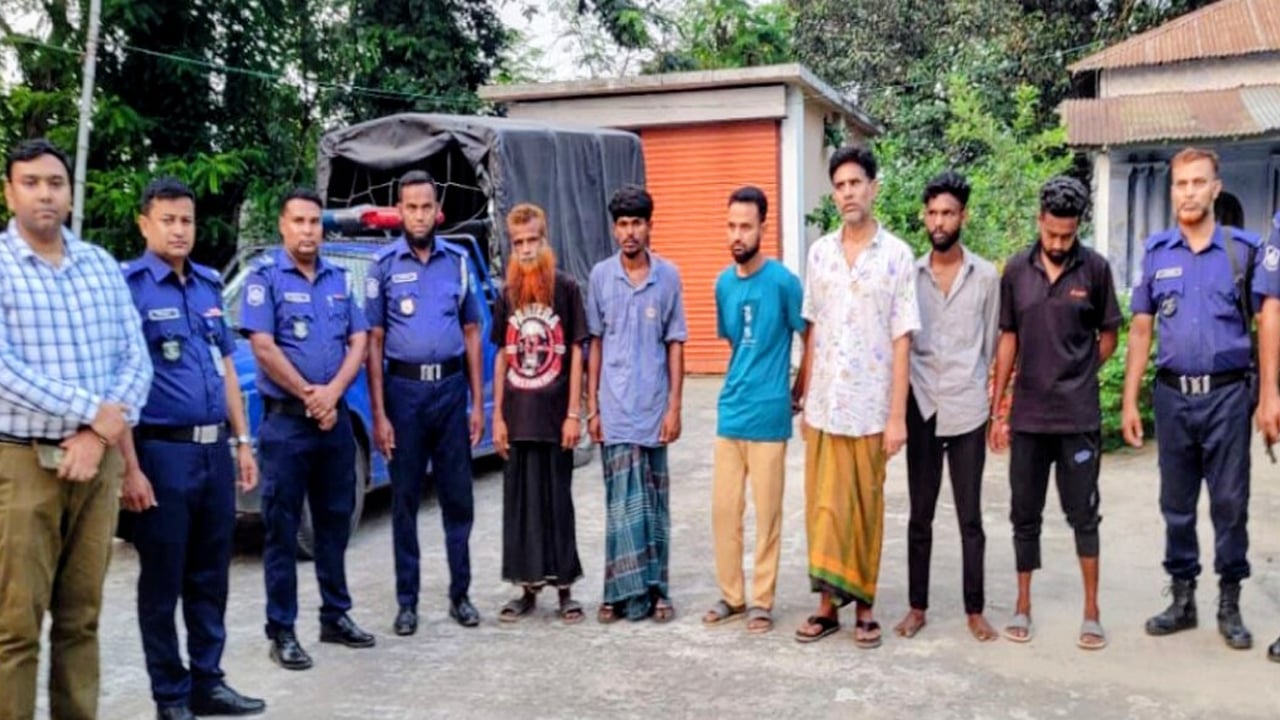
A mobile court in Sherpur upazila of Bogura district sentenced six individuals to varying jail terms on Tuesday for drug use and transportation offenses. The operation took place between 4 p.m. and 7 p.m. across different locations in the upazila. The mobile court was led by Mahmudul Hasan, Assistant Commissioner (Land) and Executive Magistrate of Sherpur. According to the verdict, Tushar Khandakar (42) received three months’ imprisonment, Mukul Hasan (28) two months, Tanmoy Sarkar (26) three months, Abdur Rahman Sabbir (32) two months, Zahidul Islam (40) two months, and Md. Rumel Bijoy (22) one month. The sentences were handed down under charges of drug consumption and transportation. The upazila administration stated that anti-drug drives like this will continue in the future to build a drug-free community in Sherpur.
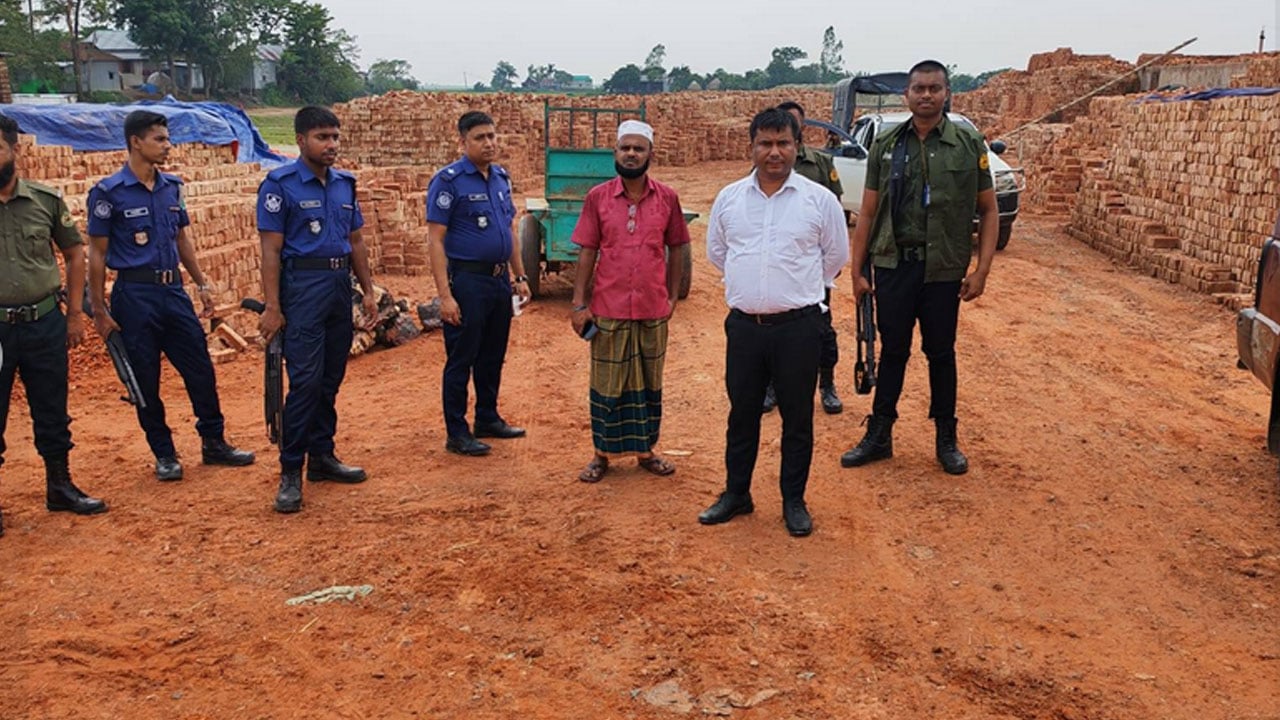
A mobile court in Lakhai upazila of Habiganj fined two brick kilns a total of six lakh taka for operating without valid licenses. The operation took place around 3 p.m. on Tuesday at Morakuri Uttar Madanpur area, targeting Messrs Titas Bricks Field and CMC Brick Kiln. The drive was led by Lakhai Upazila Nirbahi Officer and Executive Magistrate Syed Murad Islam. According to the report, the fines were imposed under the Brick Manufacturing and Brick Kiln Establishment (Control) Act, 2013, as both kilns had failed to renew their licenses. Each owner was fined three lakh taka. The upazila executive officer stated that the penalties were imposed in the public interest due to the absence of valid licenses. He further mentioned that similar monitoring and enforcement drives would continue across the upazila to ensure environmental protection and compliance with government regulations.
The Ministry of Local Government has suspended the planned France visit of Rajshahi City Corporation Administrator Mahfuzur Rahman Riton and Executive Engineer (Electricity) A.B.M. Asaduzzaman Sweet. The visit was intended to gain direct experience in energy-efficient and modern urban lighting technology. Rajshahi City Corporation announced the suspension in a press release on Tuesday evening. According to the statement, some online and social media reports had circulated partial and misleading information about the planned trip. The invitation for the visit came from Signify Bangladesh Limited, which offered to bear all expenses. The corporation clarified that no city funds were to be used and that the inviting company had no involvement in any ongoing or past development projects of the city. The release further stated that no final decision had been made regarding the trip, and no government approval or order had been issued. The ministry has now suspended all such foreign visits until further notice.
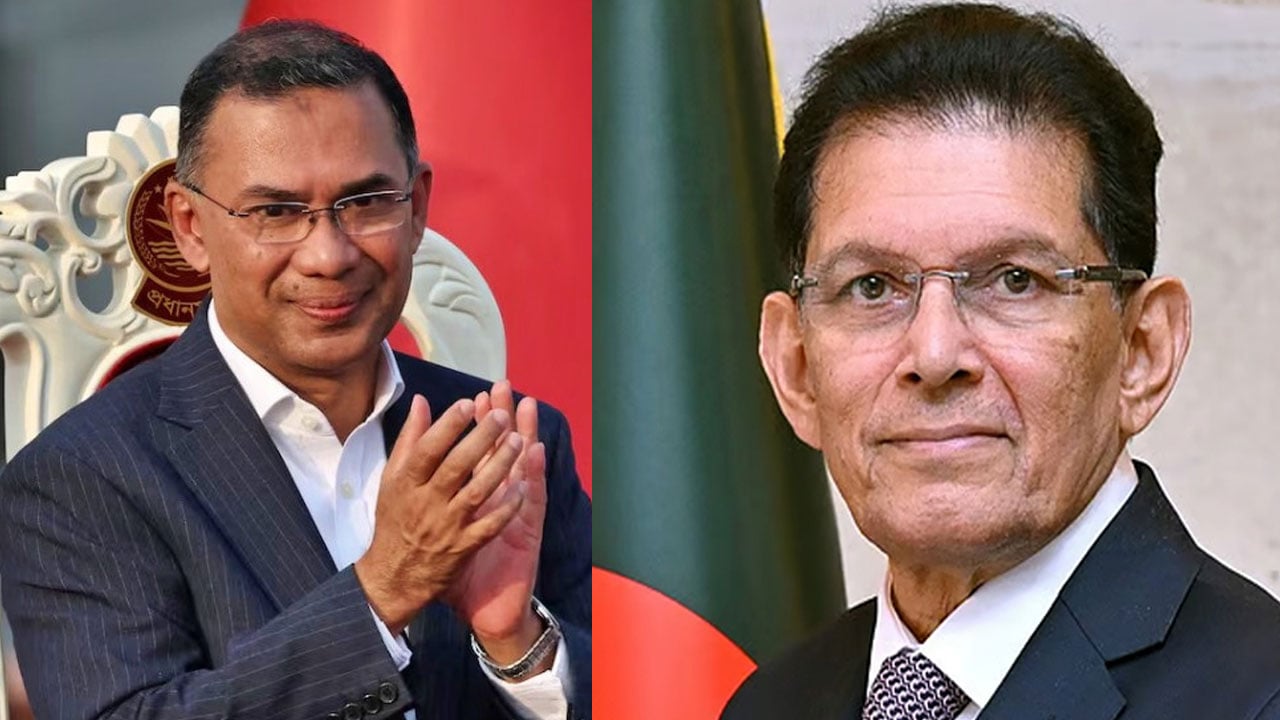
Prime Minister Tarek Rahman has congratulated Foreign Minister Khalilur Rahman on being elected President of the 81st session of the United Nations General Assembly. The election took place on Tuesday at the UN headquarters in New York, where Khalilur Rahman defeated Cyprus’s candidate Andreas S. Kakouris. He will succeed former German Foreign Minister Annalena Baerbock and serve as President for one year. In a Facebook post, the Prime Minister said the achievement reflects Bangladesh’s growing contribution and credibility on the global stage. He expressed confidence that Khalilur Rahman will represent Bangladesh with pride and foster connectivity, dialogue, and cooperation in addressing multilateral and shared challenges. A total of 190 countries participated in the election, with Khalilur Rahman receiving votes from 99 countries and his opponent securing support from 91 nations.
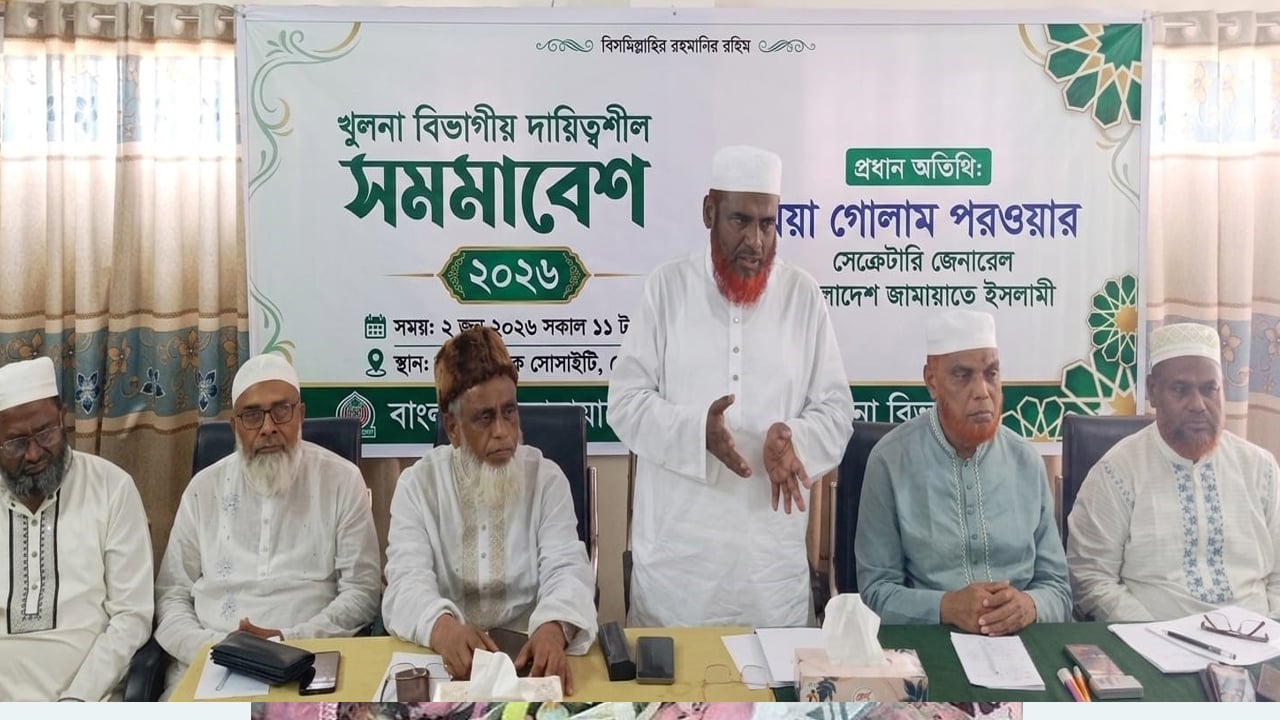
Bangladesh Jamaat-e-Islami Secretary General Mia Golam Porwar has alleged that the government has failed to bring stability to the country even after three and a half months in power. Speaking at a divisional gathering of party officials in Khulna’s Sonadanga area, he said severe disorder prevails in the energy sector and the government cannot control market conditions. He accused the authorities of creating new opportunities for corruption by rehabilitating looters in the banking sector and urged party leaders to raise public awareness on the issue. The event was chaired by Jamaat’s central executive member and Khulna regional director Principal Izzat Ullah MP, with several other central and regional leaders addressing the gathering. Porwar expressed concern over the deteriorating law and order situation, blaming the government for failing to ensure public safety. He stated that the current administration cannot avoid responsibility for the decline in national security. He also called on party officials to work for the success of the upcoming Khulna divisional rally of the 11-party alliance scheduled for June 20.
The ‘1 Nojor’ media platform is now live in beta, inviting users to explore and provide feedback as we continue to refine the experience.