

The ‘1 Nojor’ media platform is now live in beta, inviting users to explore and provide feedback as we continue to refine the experience.
US Senator Chuck Schumer has called on Republican lawmakers to support efforts to pressure President Donald Trump to end the ongoing conflict with Iran. Amid rising fuel prices and economic strain, Schumer said that the continuation of the war is driving up living costs for ordinary Americans. In a post on social media platform X, he criticized Trump for refusing to stop the war, noting that Americans are paying more than $4.50 per gallon of gasoline. Schumer argued that if Republicans truly care about reducing expenses and protecting US troops, they should support the Democrats’ War Powers Resolution aimed at ending the conflict with Iran. The Democratic Party has launched its seventh attempt to pass the resolution, which seeks to ensure that no president can conduct military operations for more than 60 days without congressional approval. Previous Democratic efforts have failed due to their minority position in Congress and partisan divisions. However, with rising energy prices, military spending, and concerns over troop safety, the opposition is renewing political pressure on the administration.

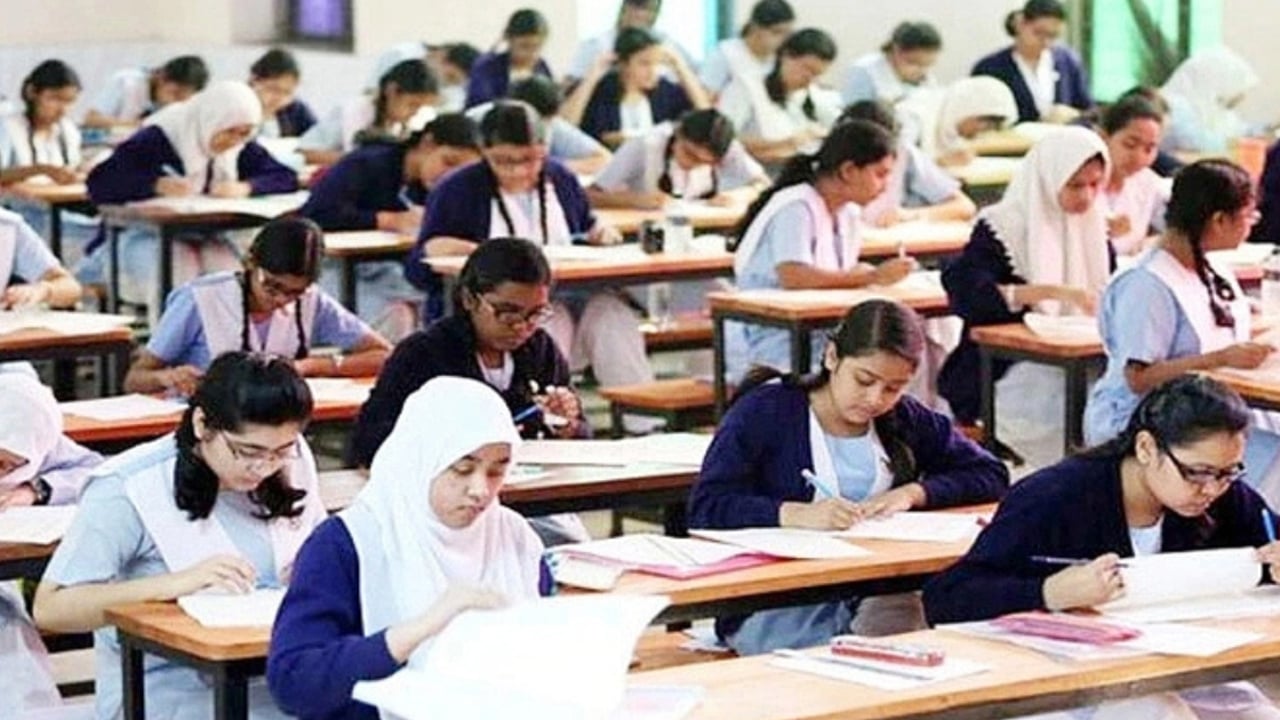
Students and parents across Bangladesh are facing severe uncertainty following the education minister’s announcement that the 2027 Secondary School Certificate (SSC) and equivalent exams will be held in December 2026. Despite only six months remaining, education boards have yet to receive any formal instructions from the government, raising doubts about whether the exams can be organized within such a short timeframe. Officials from the Dhaka and Madrasa education boards confirmed that no official directives have been issued, though mental preparation has begun. The announcement, made by Education Minister Dr. Ehsanul Haque Milan in April, has sparked widespread concern among students, teachers, and parents. Frequent curriculum and schedule changes in recent years have already disrupted academic continuity, and the sudden advancement of exam dates has intensified pressure on students. Coaching centers are adding extra classes to complete syllabuses, leaving students physically and mentally exhausted. Education experts and psychologists have urged the government to adopt a stable, long-term academic calendar and implement exam schedule changes gradually to reduce stress and prevent further disruption to students’ learning and mental health.
A violent attack took place on Tuesday night, May 12, 2026, at a shop in Haji Kachom Ali Fakir Super Market in Mulaid village of Sreepur, Gazipur. The incident occurred after a dispute over unpaid dues and refusal to sell goods on credit. Witnesses reported that several rounds of gunfire were heard, causing panic in the area. Five people, including the market owner’s son Kamal Fakir, his nephew Siam, the shop manager Shahin, and employees Shanto and Shyamal, were injured. According to shop owner Faisal Ahmed, accused Rana Bhandari and his brother Mamun, residents of Kewa village, had an outstanding balance from previous purchases. On May 9, Rana bought goods worth 72,000 taka, paying 30,000 in cash and promising to clear the remaining 42,000 later. When asked to pay the balance on Tuesday, Rana allegedly assaulted an employee. Later that night, Rana and Mamun led a group of 25–30 people who attacked, vandalized, and looted the shop. Police said they were investigating the incident and would take legal action. The attack has left the local community in fear as investigations continue.

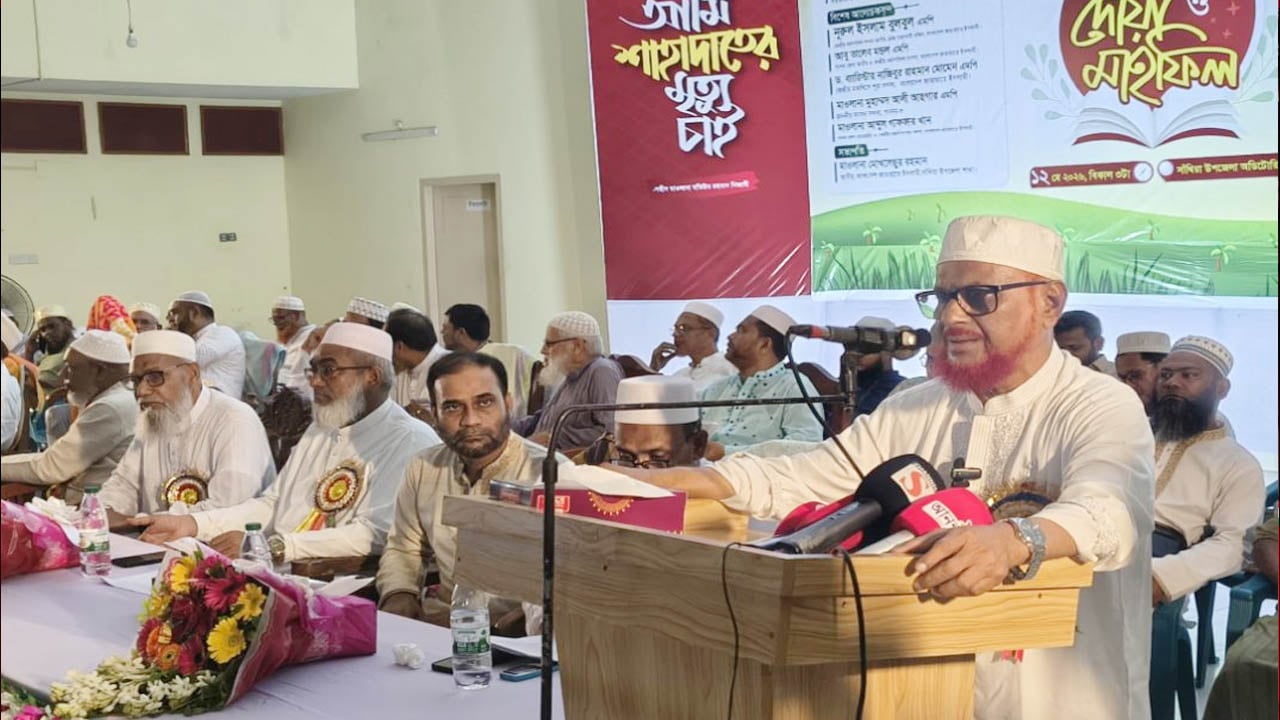
Bangladesh Jamaat-e-Islami’s Nayeb-e-Ameer and Rangpur-2 MP ATM Azharul Islam alleged that former party chief Maulana Matiur Rahman Nizami was killed through an imperialist conspiracy. He made the claim on Tuesday afternoon at a discussion and prayer meeting titled “Life and Work” marking Nizami’s 10th martyrdom anniversary at the Santhia District Council auditorium in Pabna. Azharul Islam demanded the arrest of those involved in Nizami’s killing and warned that failure to do so would suggest government collusion. He stated that killing leaders like Nizami or Mujahid could not end the Islamic movement and asserted that Islam would eventually prevail in the country. Referring to the recent national election, he alleged vote manipulation, claiming the people voted for Jamaat’s symbol but another party took power. He also criticized India, accusing it of border killings and withholding Teesta water, saying such a country could not be a true friend. Other speakers, including Jamaat’s Assistant Secretary General and opposition whip Rafiqul Islam Khan, called Nizami’s execution unjust and the trial process illegal, demanding accountability for those involved.
A Russian cargo ship named Ursa Major sank about 60 miles off the Spanish coast on December 23, 2024, following multiple unexplained explosions. According to a CNN investigative report, the vessel was likely carrying two nuclear reactors intended for North Korean submarines. The incident has been described as potentially indicating direct Western military intervention to prevent Russia from transferring advanced nuclear technology to its ally North Korea. Fourteen Russian crew members survived and were taken to the port city of Cartagena, where Spanish police questioned them. Opposition lawmakers said the ship’s captain initially refused to discuss the cargo but later admitted that items listed as “manhole covers” were actually parts of submarine nuclear reactors. The ship’s owner, Oboronlogistics, later called the event a “planned terrorist attack,” reporting three explosions and a 50-by-50-centimeter inward-bent hole in the hull. CNN’s report added that the damage might have been caused by a Barracuda supercavitating torpedo, a weapon known to exist only in a few countries, including the United States, some NATO allies, Russia, and Iran.

Hefazat-e-Islam Bangladesh has announced a protest rally and demonstration in Chattogram on Friday to condemn alleged persecution of Muslims in West Bengal and Assam. The group’s Amir, Allama Shah Muhibbullah Babunagari, called for formal condemnation and diplomatic action from Bangladesh regarding the incidents. He demanded that the Indian government ensure the safety of minority Muslims. Speaking at a protest rally organized by Hefazat’s Hathazari unit on Monday afternoon, Babunagari alleged that extremist supporters of India’s ruling Bharatiya Janata Party (BJP) were involved in the violence, citing information from media and local sources. He said attacks based on religious identity are unacceptable in any civilized, democratic, and pluralistic society. Babunagari also blamed BJP leader Suvendu Adhikari’s provocative remarks after the election for inciting anti-Muslim sentiment and indirectly encouraging the attackers. Several Hefazat leaders, including central and local officials, also addressed the gathering.

Sarjis Alam, chief organizer of the National Citizen Party (NCP) for the northern region and head of its local government election committee, stated that his party is not anti-state toward India or any other country. Speaking at a discussion titled 'Shapla Massacre; A Decade of Impunity' organized by the National Olama Alliance at the Institute of Diploma Engineers in Dhaka on May 12, he emphasized that Bangladesh cannot maintain friendship with any country that approaches it with a mindset of dominance or exploitation. Alam criticized remarks made by Indian state leaders about Bangladesh’s border issues, calling it shameful that Bangladesh’s home minister dismissed such comments as unofficial. He accused Indian politics, particularly in West Bengal, of promoting communalism and anti-Muslim sentiment, and said Bangladesh should have the courage to express opinions on such human rights violations despite them being internal matters of another country. He further warned that any foreign government attempting to sustain power in Bangladesh by ignoring the people’s will would fail in the future, urging Bangladesh’s civil administration, police, and army to uphold national dignity and independence.
The popular speedboat service on the Sitakunda-Sandwip route in Chattogram is at risk of permanent closure as operators consider halting operations due to financial losses under new government fare regulations. On Tuesday, without prior notice, speedboat movement was suspended at the Kumira-Guptachhara terminal, leaving thousands of passengers stranded on both sides. Operators, including R K Enterprise, said it is impossible to sustain business at the government-fixed fare of 260 taka per trip, which was only a 10-taka increase from the previous 250 taka. They cited rising fuel prices, maintenance costs, and terminal lease fees as key reasons for the losses. In comparison, fares on similar routes such as Noakhali-Hatia exceed 300 taka, which owners claim highlights an unfair disparity. The speedboat service is the fastest transport link between Sandwip and the mainland, vital for medical, educational, and administrative needs. The Bangladesh Inland Water Transport Authority (BIWTA) said discussions are ongoing to resolve the issue, while the local administration insisted that operators must adhere to the government-set fare but promised a quick resolution to minimize passenger hardship.

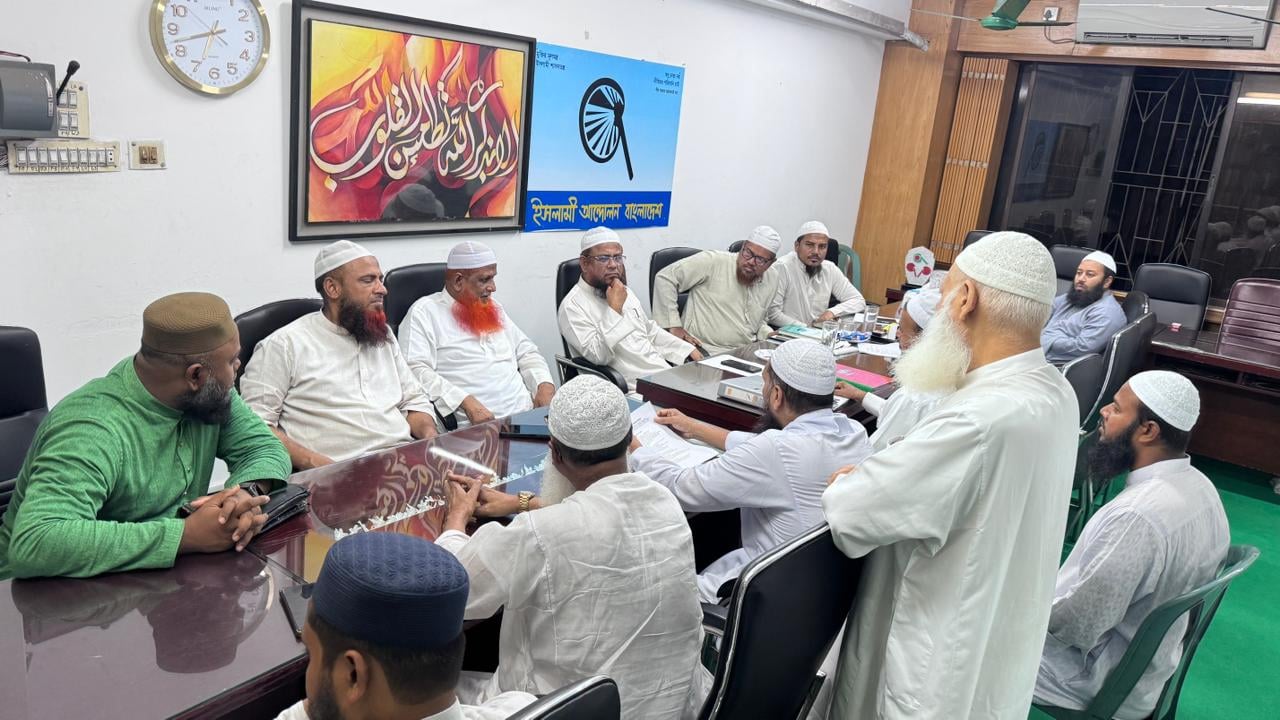
Islami Andolan Bangladesh’s Secretary General, Principal Hafiz Maulana Yunus Ahmad, stated that the party will not tolerate any killings of Bangladeshi citizens along the border. Speaking at a regular meeting held on Tuesday at the party’s central office in Purana Paltan, Dhaka, he criticized India’s decision to build barbed-wire fencing in West Bengal following the Bharatiya Janata Party’s (BJP) rise to power, calling it politically motivated rather than a security measure. Ahmad said that while India has the right to manage its own borders, any form of brutality against Bangladeshis is unacceptable. He noted that both countries’ citizens are involved in various cross-border activities, but Bangladesh suffers more financially. He praised Bangladesh’s border guards for their vigilance and urged the Indian Border Security Force (BSF) to act positively to ensure safety. He added that BSF’s past behavior had caused resentment but expressed hope for improvement under the new political situation in West Bengal, warning of consequences if conditions worsen. Senior party leaders including Maulana Gazi Ataur Rahman and Engineer Muhammad Ashraful Alam were also present at the meeting.
State Minister for Information and Broadcasting Yasser Khan Chowdhury said that the Bangladesh Nationalist Party (BNP) believes in politics centered on public welfare and development. He made the remarks on Tuesday while inaugurating several development projects and canal re-excavation programs in Tarakanda and Haluaghat upazilas of Mymensingh, where he served as the chief guest. The minister stated that the newly launched road construction and canal re-excavation initiatives reflect the BNP’s commitment to development-oriented work. He added that the government continues to implement various programs for the country’s overall progress, prioritizing public welfare while avoiding unnecessary expenditure. During the visit, he inaugurated multiple projects, including road improvement and canal re-excavation works in different unions. After the inaugurations, the minister visited local BNP offices and attended a meeting with party members, emphasizing the need for political stability to sustain development. He also listened to local demands for new facilities such as a mini stadium, hospital, and fire service station, assuring that these would be considered.
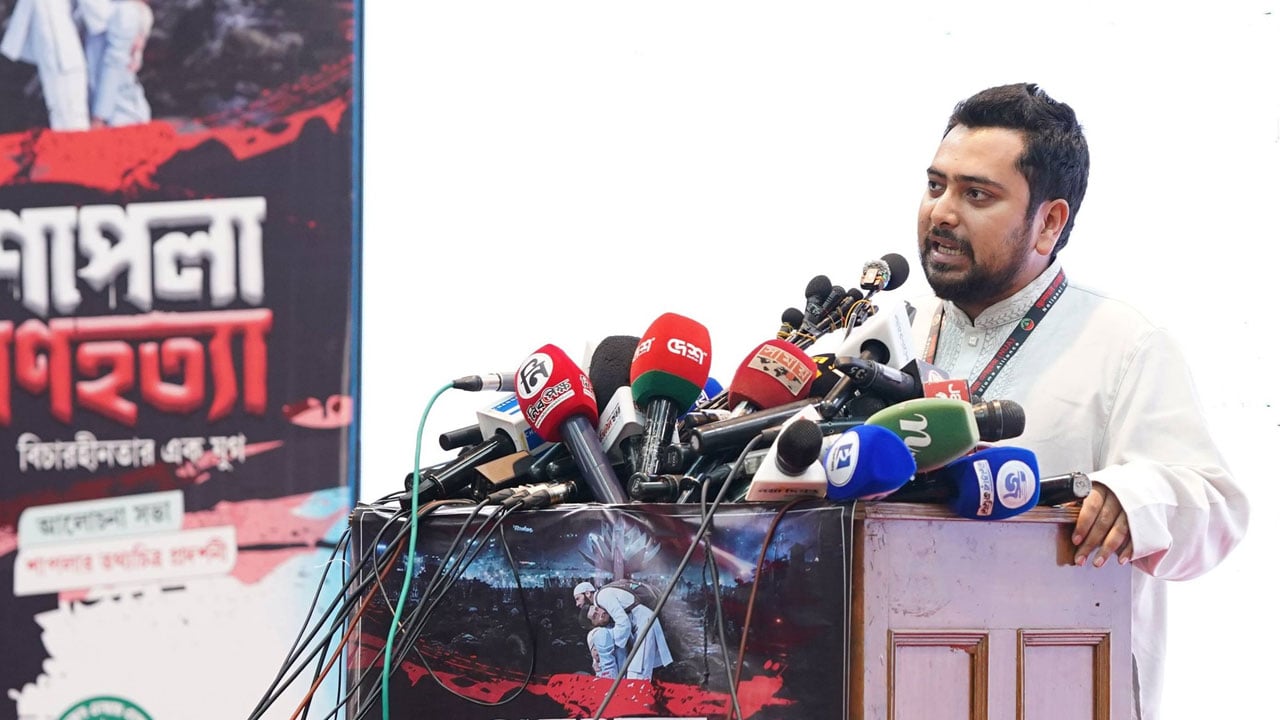
National Citizen Party (NCP) convener and opposition chief whip Nahid Islam stated that friendship cannot be achieved through barbed wire fences and killings along the border. He made the remarks on Tuesday at a discussion and documentary screening titled “Shapla Massacre; A Decade of Impunity,” organized by the National Olama Alliance at the IDEB building in Kakrail, Dhaka. Nahid Islam urged the government to take effective measures to stop border killings, protect national sovereignty, and secure the country’s fair share of water. He emphasized maintaining communal harmony and ensuring equal rights for all citizens, including Muslims, Hindus, Buddhists, and Christians. He also criticized the BNP’s role during the 2013 Shapla Chattar incident, saying it should have acted more courageously as an opposition party. He alleged that the lack of justice for the Shapla Chattar killings created conditions for later violence and called the shooting of unarmed and sleeping people a crime against humanity under international law. Nahid further said that political parties have often used religious scholars and madrasa students for political purposes and that their contributions deserve recognition in national history.
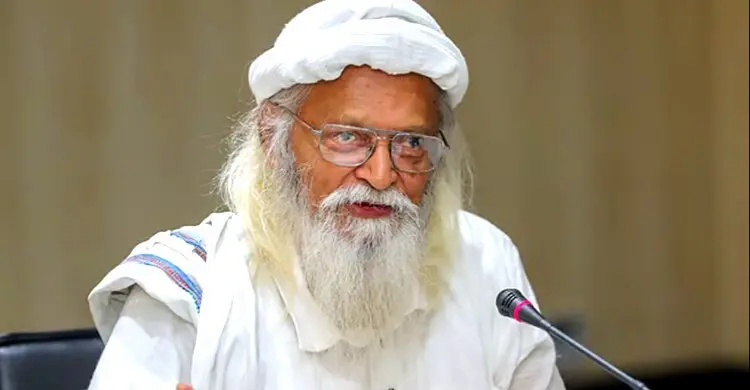
Poet, essayist, and political commentator Farhad Mazhar stated that the United States has carried out a regime change in Bangladesh and that the current power lies with them, not with local actors. He made these remarks on Tuesday at a discussion and documentary screening titled “Shapla Massacre; A Decade of Impunity,” organized by the National Olama Alliance, supported by the NCP, at the IDEB building in Kakrail, Dhaka. Mazhar also called for justice for the Shapla killings and urged unity in revolutionary spirit against what he described as internal and external dangers. At the same event, NCP leaders including MP Dr. Atik Mujahid, Sarowar Tushar, and Abdullah Al Amin emphasized the need to recognize the Shapla victims as martyrs and to bring specific perpetrators to justice. They described the Shapla incident as part of a cultural struggle that must continue in the region. The discussion was presided over by Maulana Ashraf Uddin Mahdi, with participation from leaders of Hefazat-e-Islam, Khelafat Majlish, and other allied organizations.
A political controversy erupted in India after Bharatiya Janata Party (BJP) leader and former Barrackpore MP Arjun Singh claimed that Suvendu Adhikari had banned offering prayers on public roads. Singh made the statement in an interview with India Today TV, saying that during a cabinet meeting, the chief minister instructed that prayers should not be performed on roads, though there was no objection to prayers inside mosques. The report was published by BBC Bangla and later discussed widely across national media and social platforms. The West Bengal government held its first cabinet meeting on May 11, after which several executive orders were reportedly issued to police and district officials. However, a senior police officer, speaking anonymously, said that while such orders were indeed given, they did not specifically mention banning prayers. The issue follows earlier objections by BJP leaders to road prayers, including during Eid gatherings on Kolkata’s Red Road. Human rights representative Sheikh Abdul Selim supported some of the government’s other directives, such as covering meat during sale and controlling noise levels, calling them reasonable.

Bangladesh Bank has instructed all banks to introduce a digital verification system using QR codes for visa-related financial documents. The directive, issued on Tuesday, aims to ensure that bank statements and other financial papers submitted by visa applicants can be verified online by embassies and visa centers. The move follows complaints that the absence of real-time verification has been causing administrative delays and higher processing costs. According to the circular, bank statements, solvency certificates, and investment certificates submitted for visa applications must include a QR code that allows verification of key details such as account number, account holder’s name, statement period, and issue date. Banks are also required to store this information for at least six months in a verifiable format. The central bank has given institutions 90 days to implement the necessary technological systems while maintaining compliance with existing cybersecurity and data protection regulations. The initiative is expected to streamline visa processing and enhance document authenticity for Bangladeshi applicants abroad.

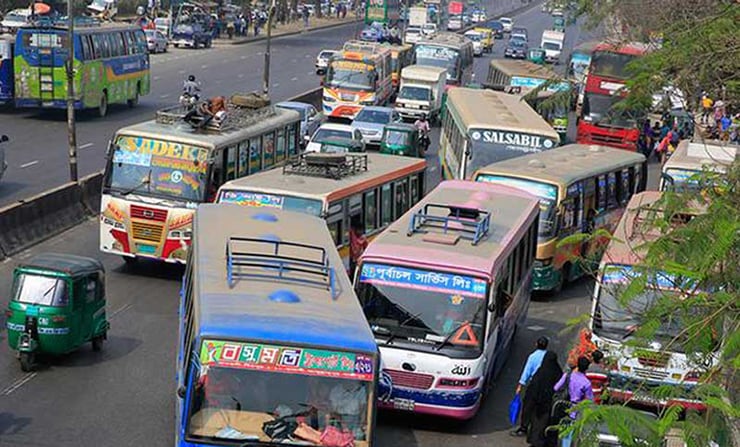
Dhaka South City Corporation (DSCC) has decided to modernize the Sayedabad Inter-District Bus Terminal in line with its original design to restore order in the capital’s public transport system. The decision was made on Tuesday at a meeting held at Nagar Bhaban, chaired by DSCC Administrator and freedom fighter Abdus Salam, with lawmaker and transport leader Advocate Shamsur Rahman Shimul Biswas attending as special guest. From now on, all unauthorized bus counters will be removed, and the use of the Sayedabad terminal will be made mandatory. The meeting outlined several key measures, including the reallocation of 110 ticket counters across six terminal blocks on a fair basis, removal of illegal structures and shops, and construction of boundary walls to ensure proper use of flyovers. Drainage improvements and removal of abandoned bus remnants were also planned. Passenger facilities will be enhanced with a modern breastfeeding center, rest areas, clean toilets, a police outpost, and neon signage. According to DSCC, full utilization of the terminal is essential for restoring road discipline, while coordinated efforts among government, owners, and workers aim to ensure safer and more efficient passenger services.
The ‘1 Nojor’ media platform is now live in beta, inviting users to explore and provide feedback as we continue to refine the experience.